Algorithme du Temps Rêveries des Secondes Register

Étude Nº1
Series of 25

A seconds complication
by Nadim Elgarhy

Mechanical, automatic
Exact at every minute

Rêveries
des Secondes

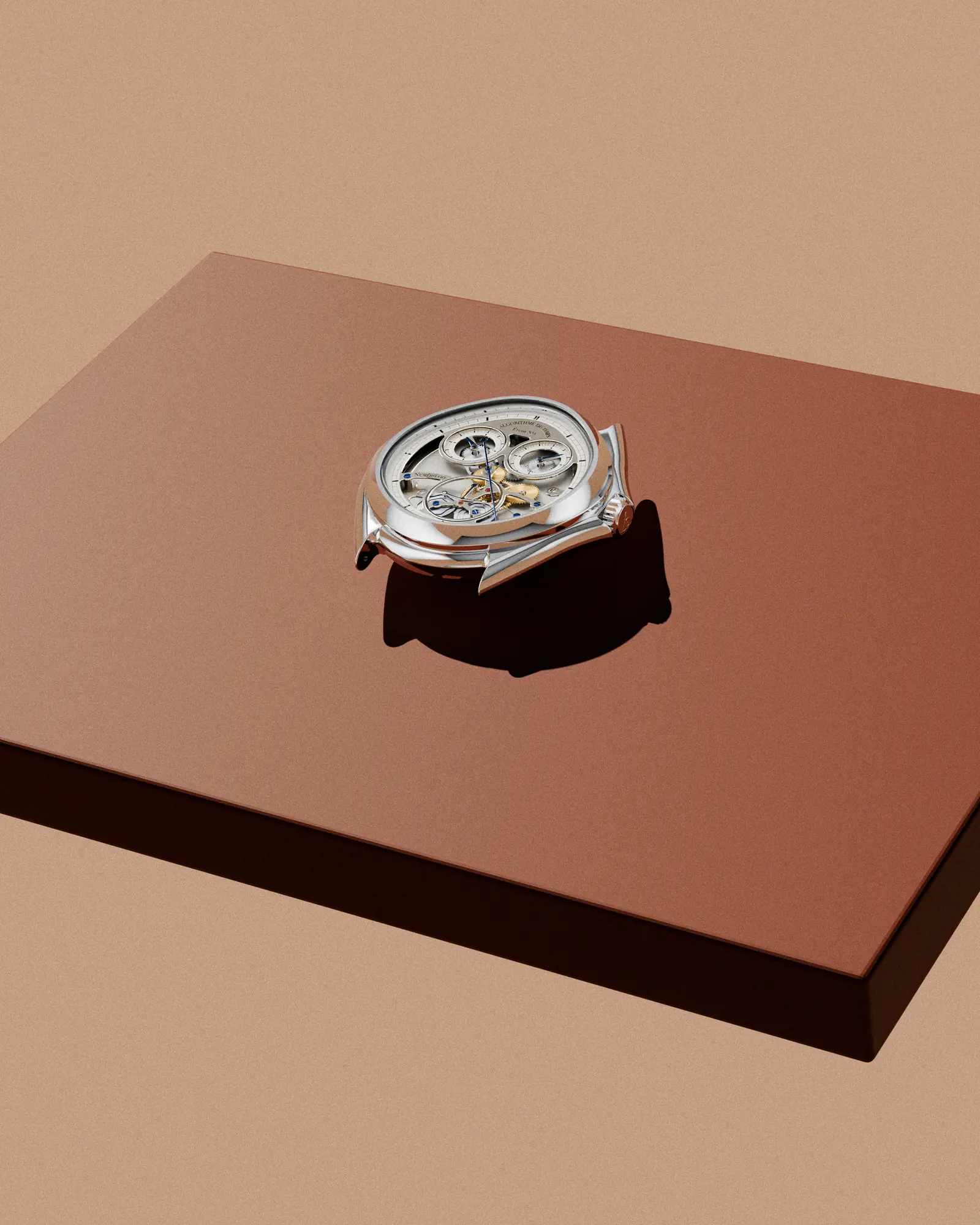
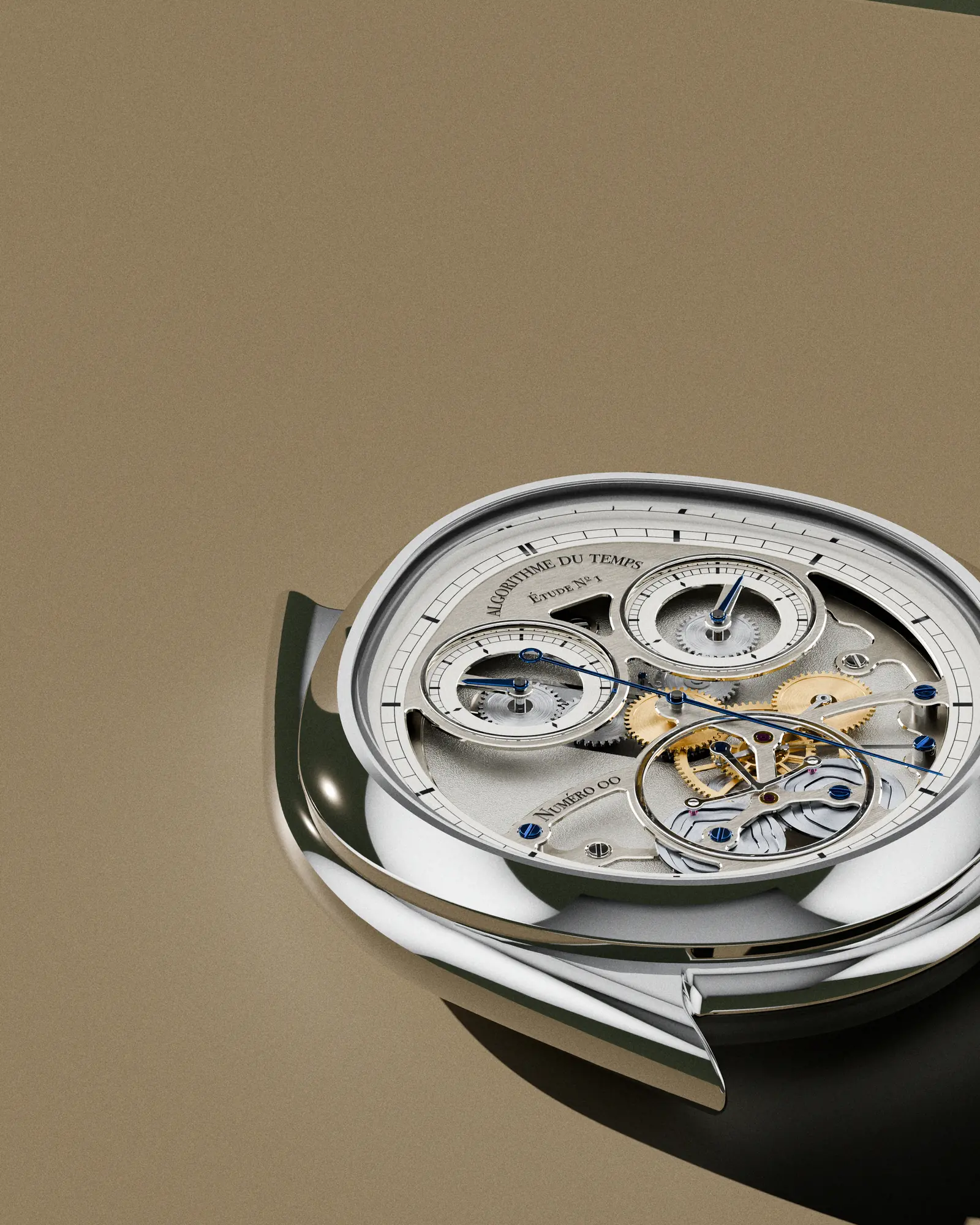
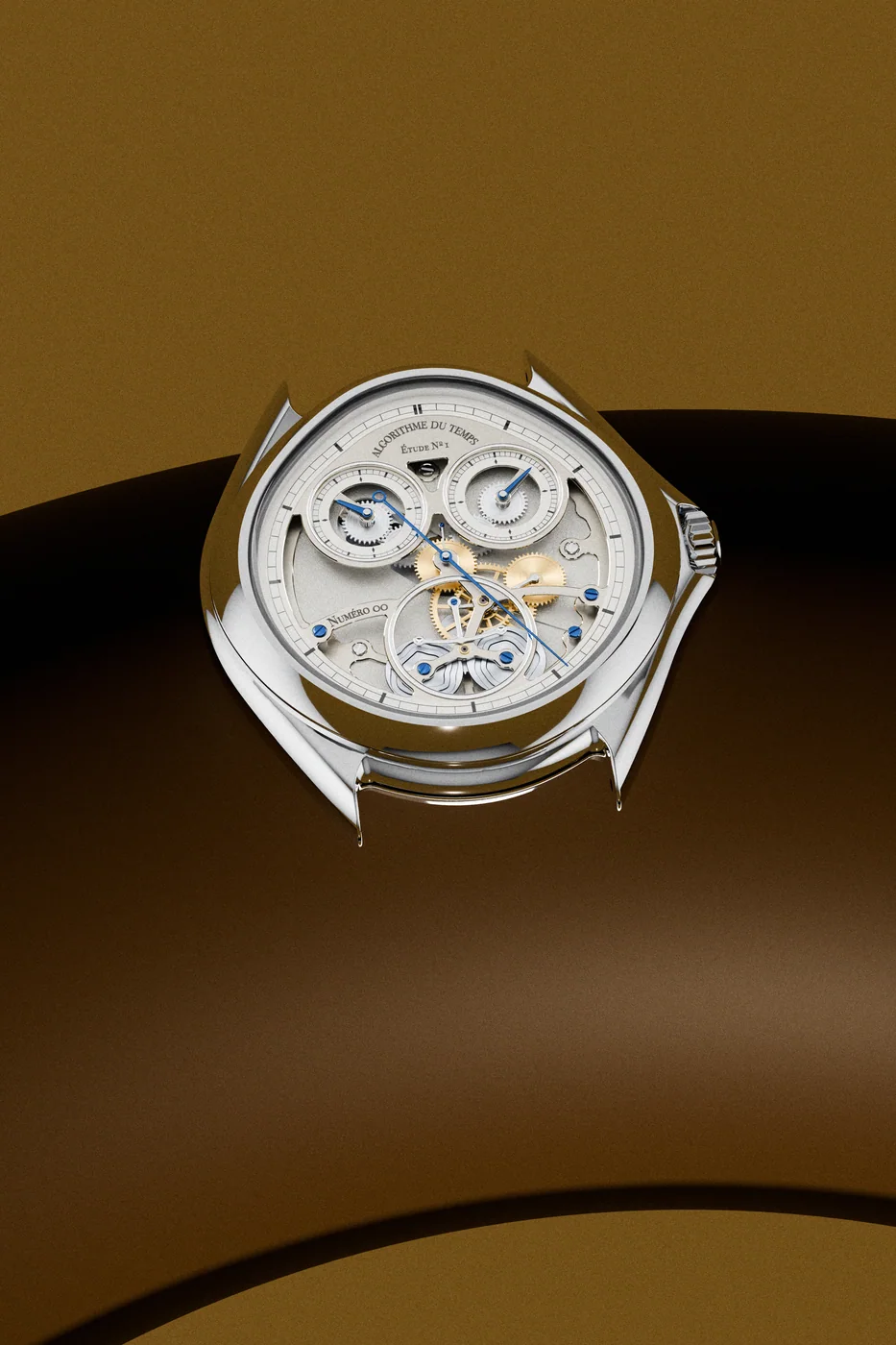
The watch head close, lying on a sand-coloured ground

A seconds hand that slows, stops, runs backwards and races. At every full minute it crosses twelve, exactly.

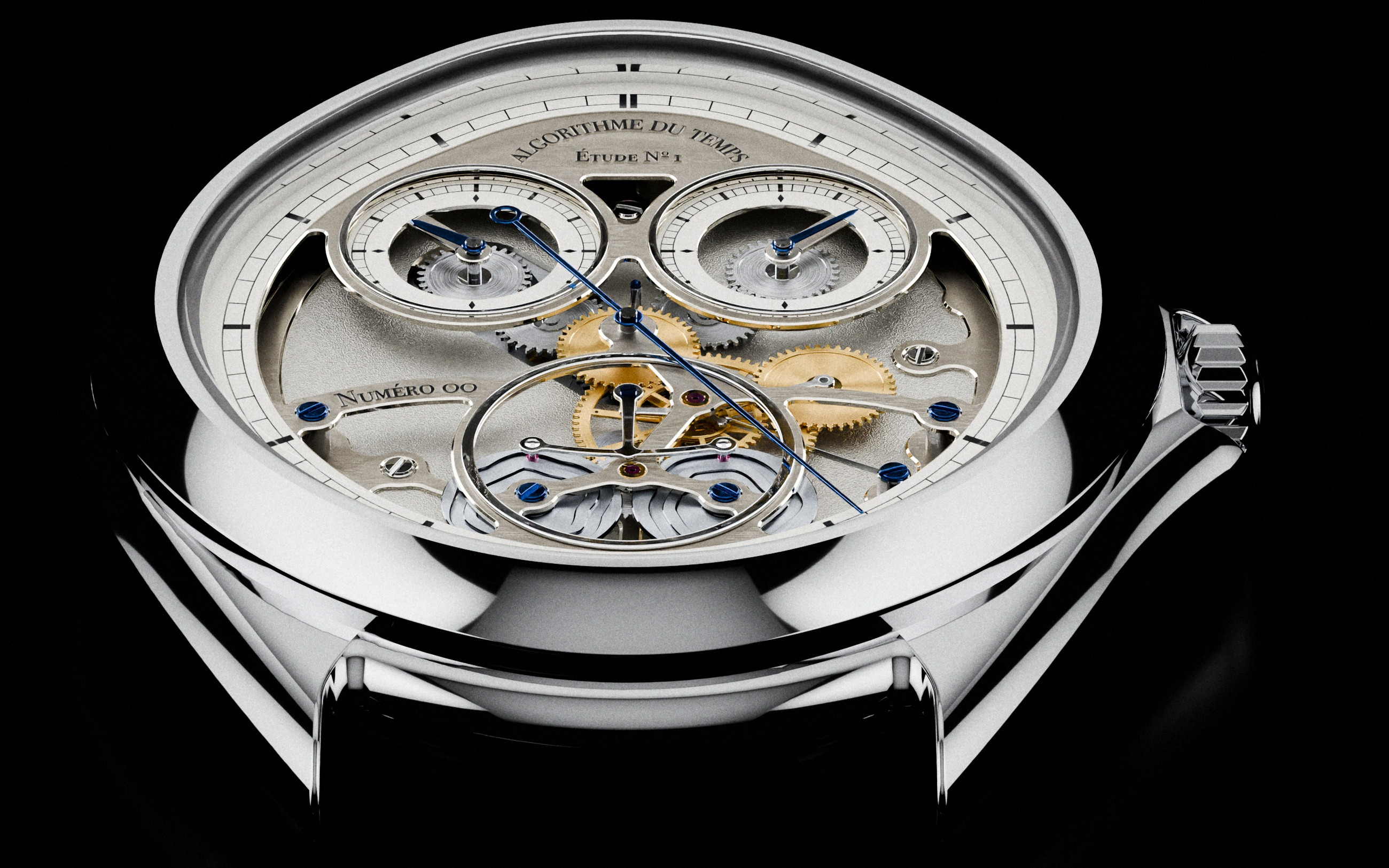
Rêveries des Secondes, Étude Nº1, three-quarter view

01The complication

It slows. It stops. It turns back. It races. And at every minute it is exact.

Your clock
—
The hand shows
—
Speed
—
Now it
—

This is the real hand on the real dial, driven by the watch’s own cam law and stepping at its own beat, 28,800 vibrations an hour. Its hours and minutes follow your clock. It crosses twelve at every full minute of your clock.

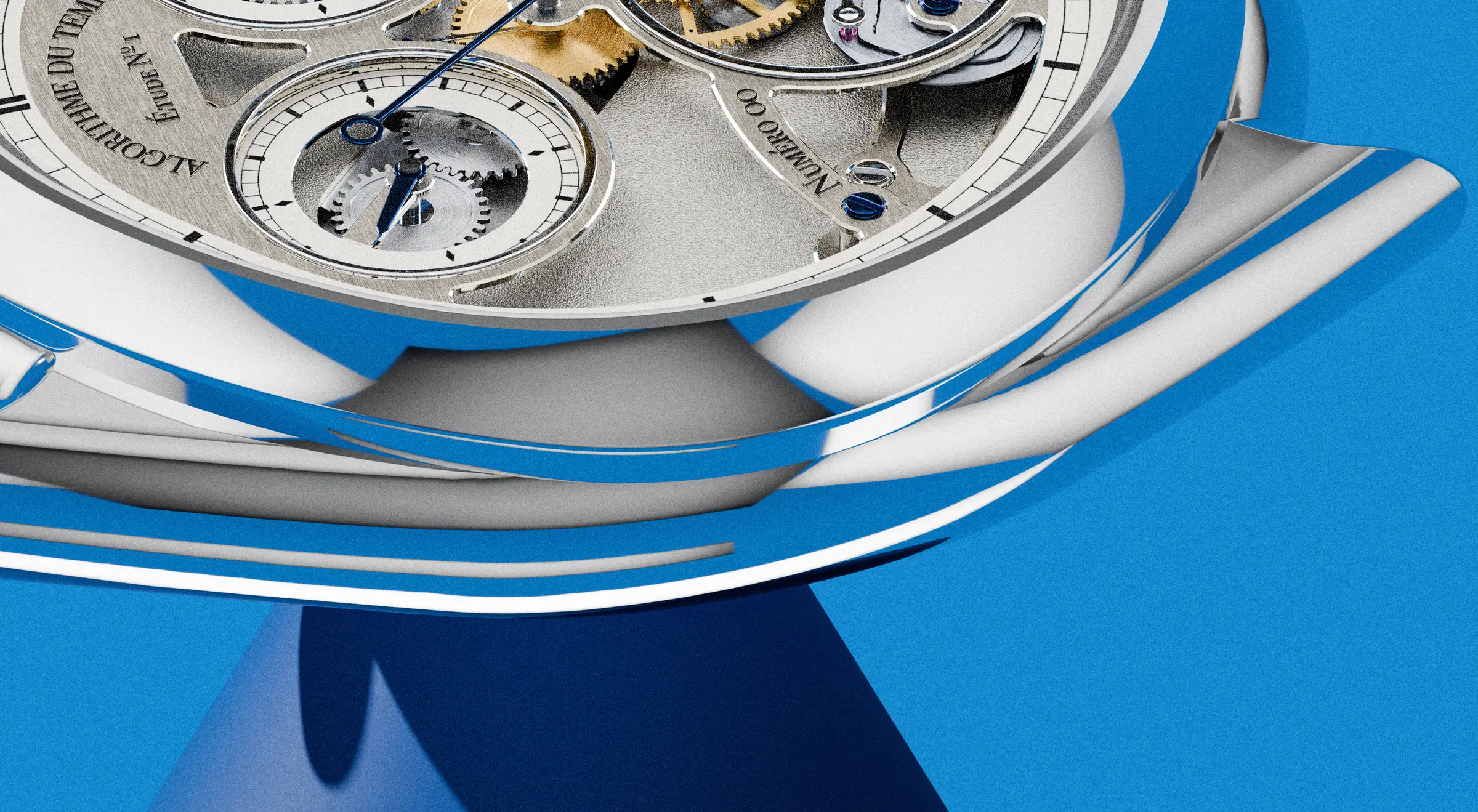
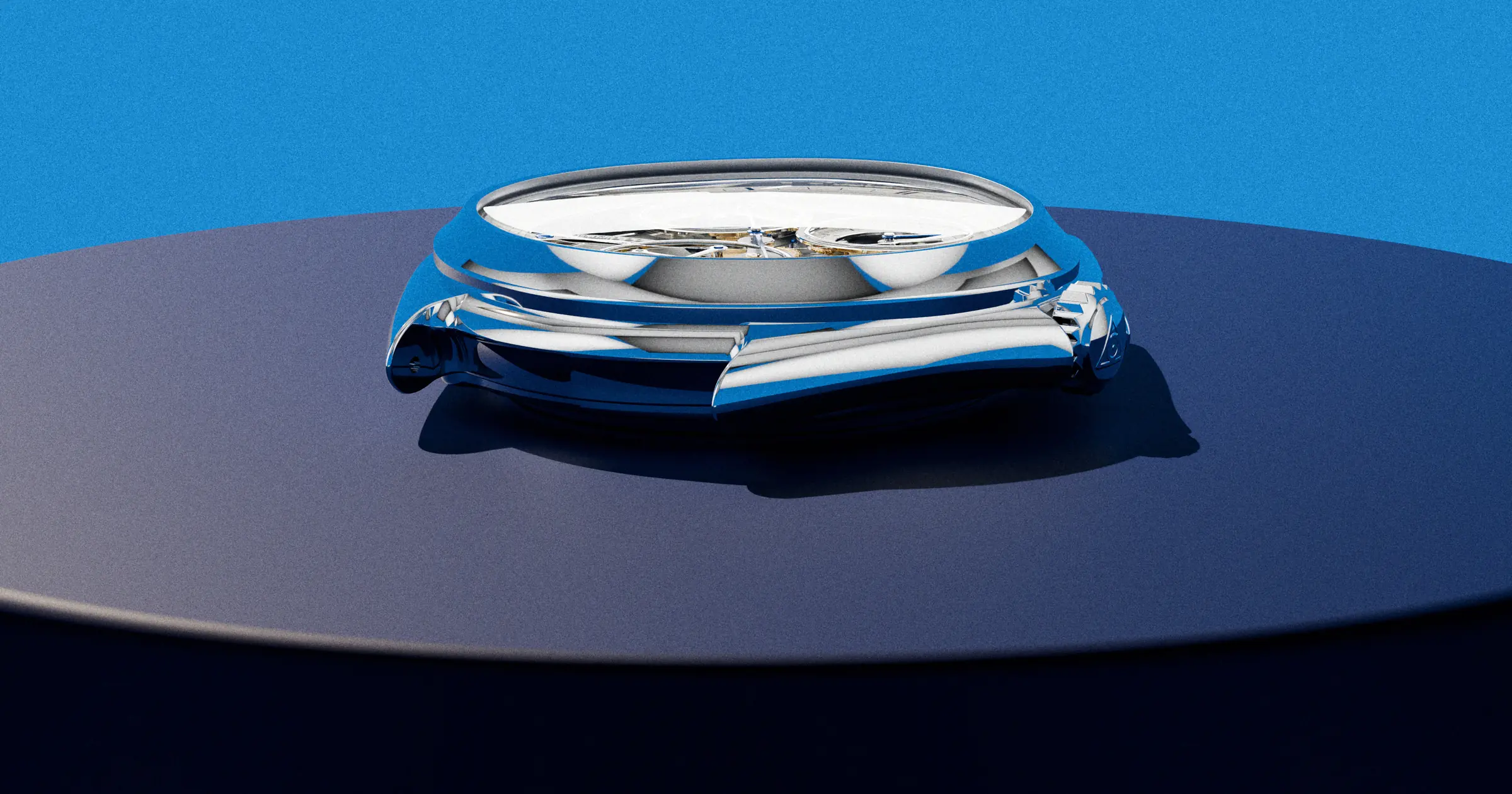
The case seen steeply from below its edge, over a blue cone on a blue ground

02One minute

The last 27 seconds of a minute, in real time. Watch the hand.

0:33It keeps pace.

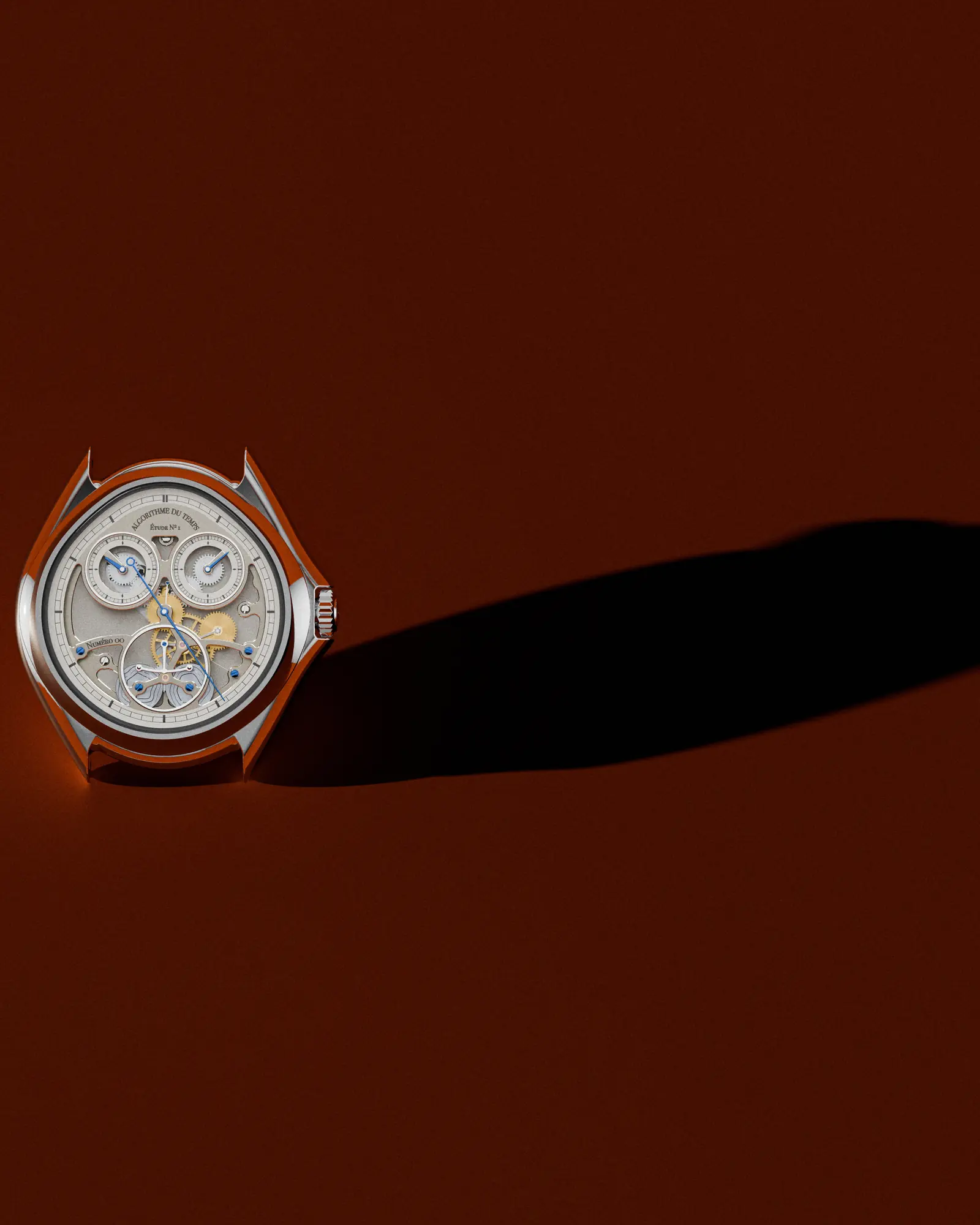
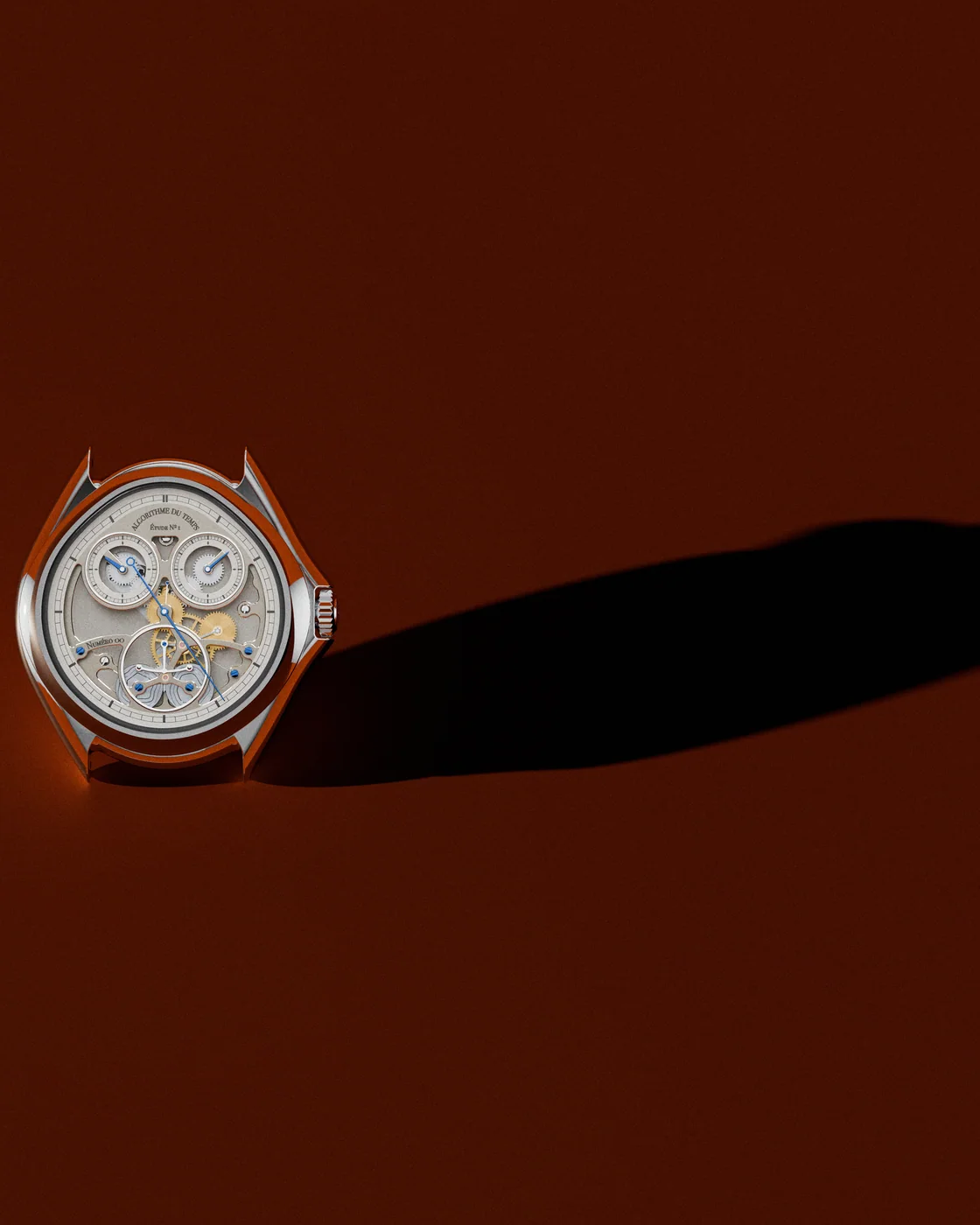
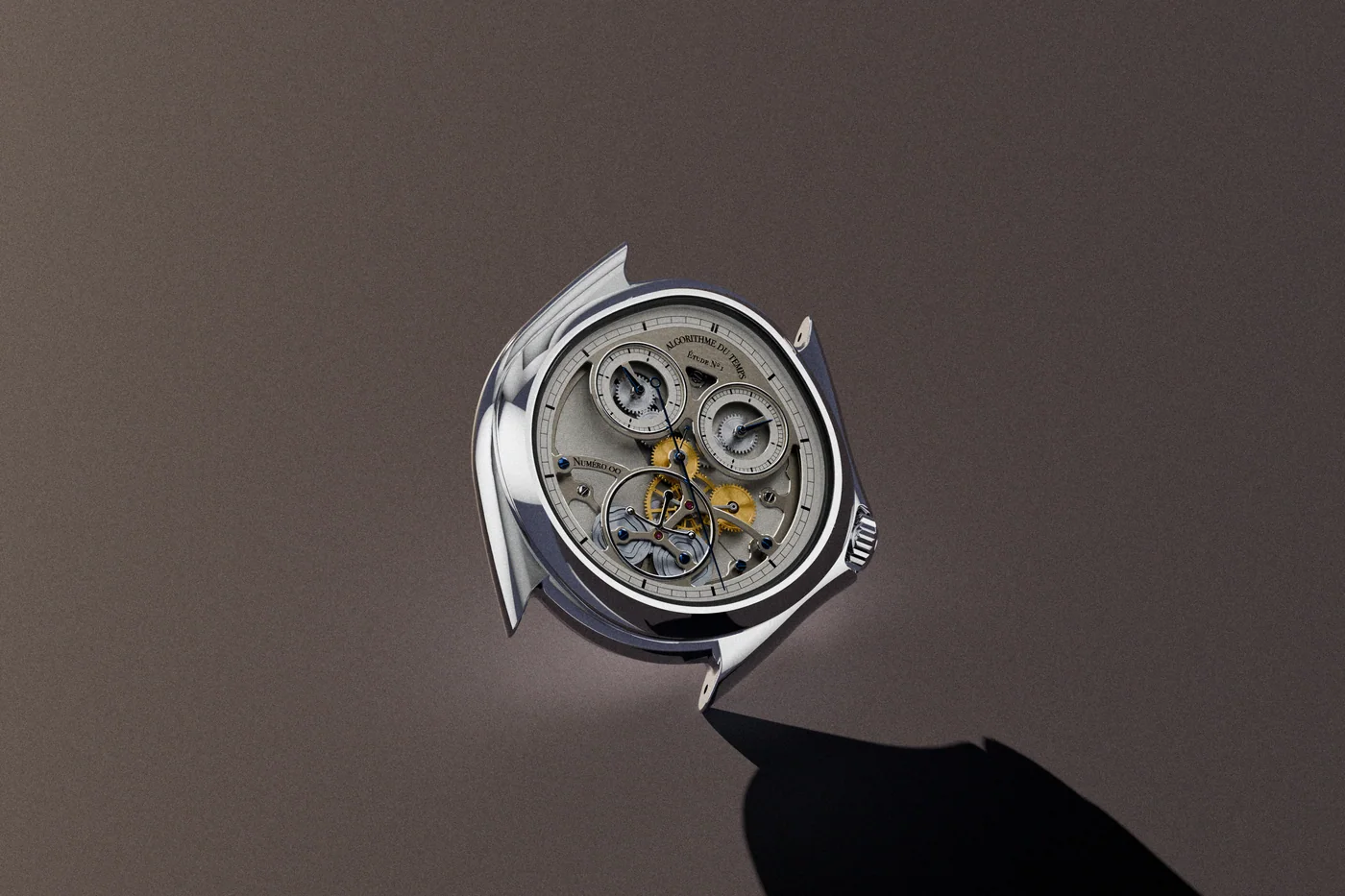
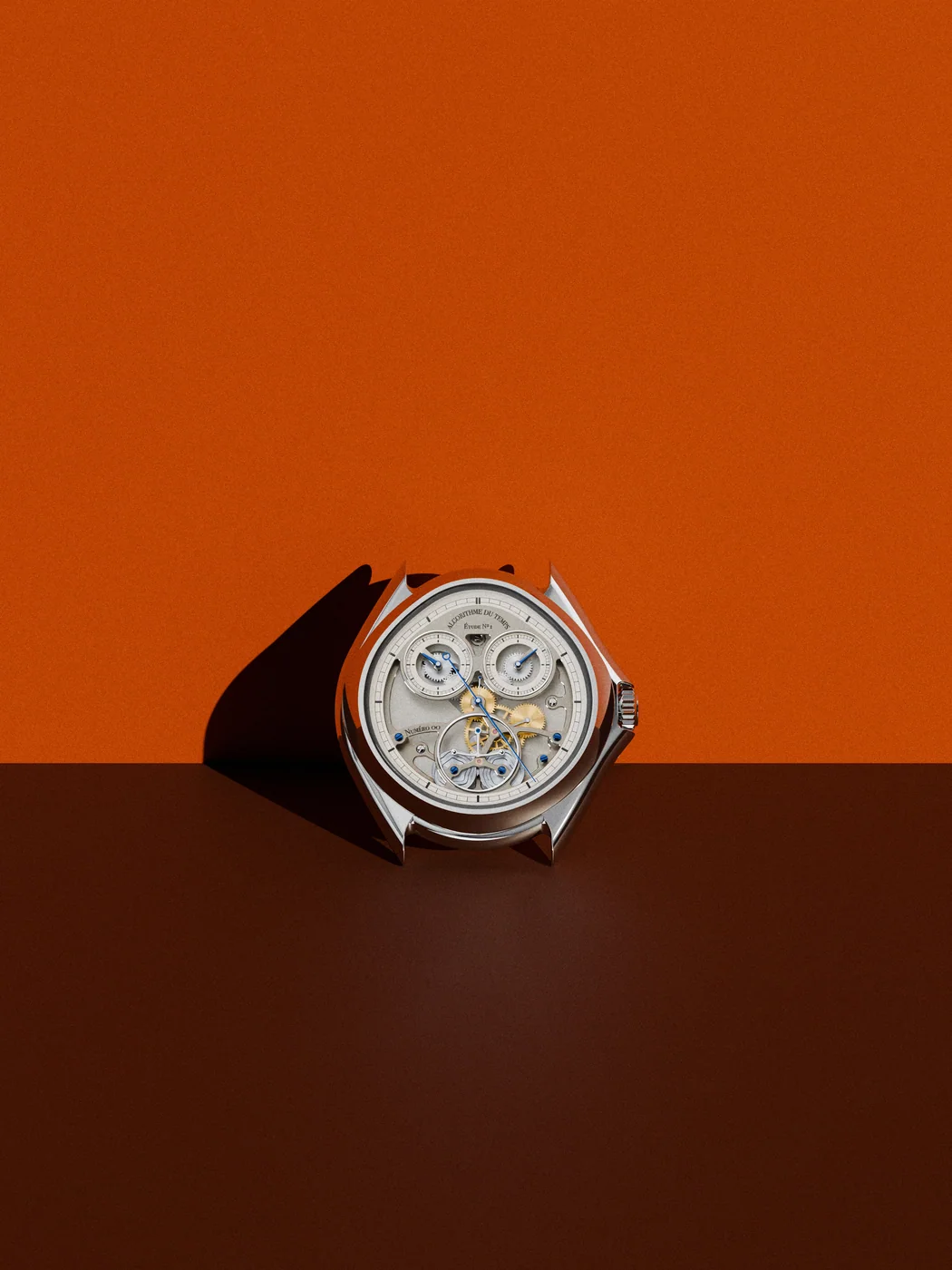
The watch head tilted on an ember ground, its shadow long0:38Slower.

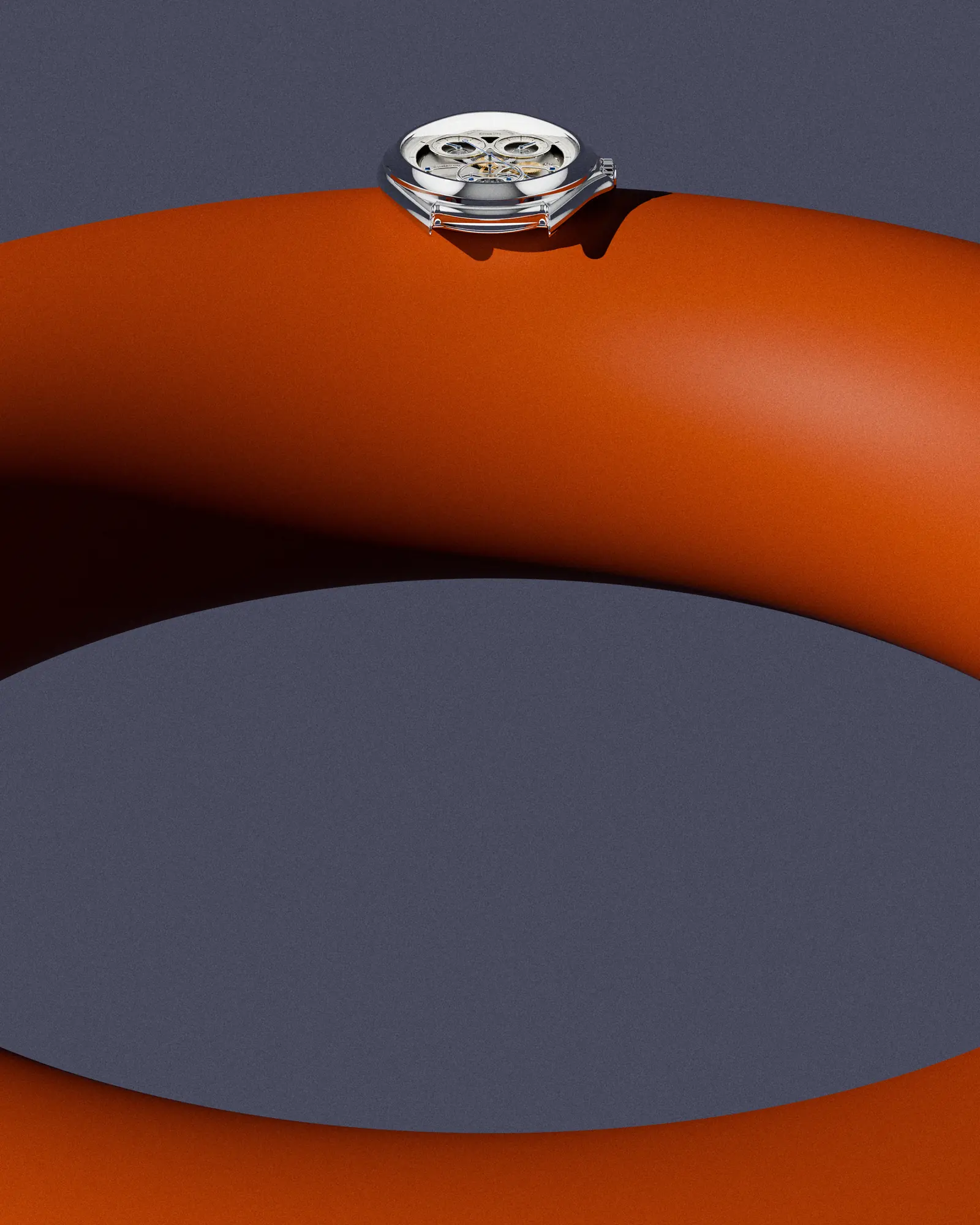
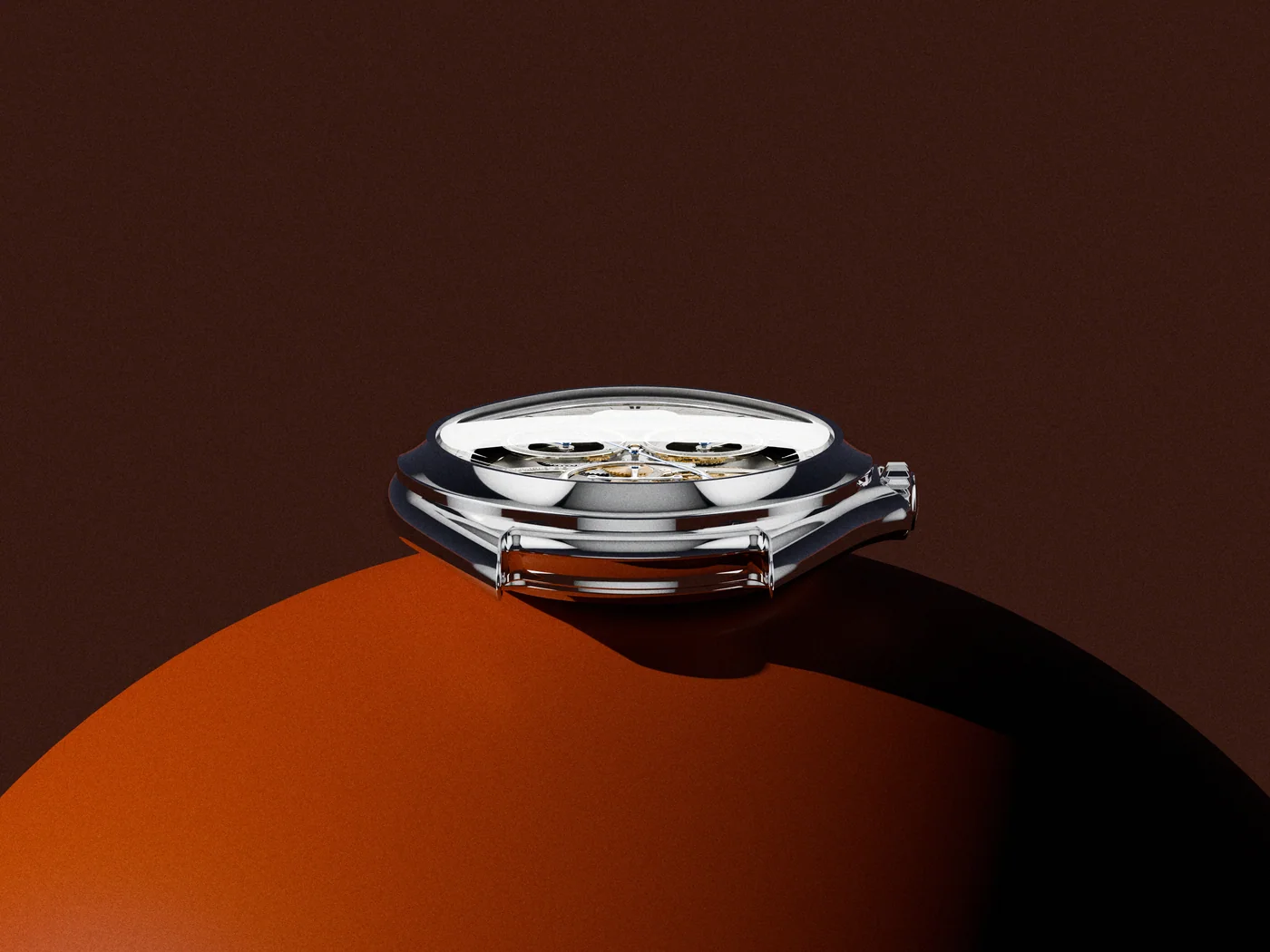
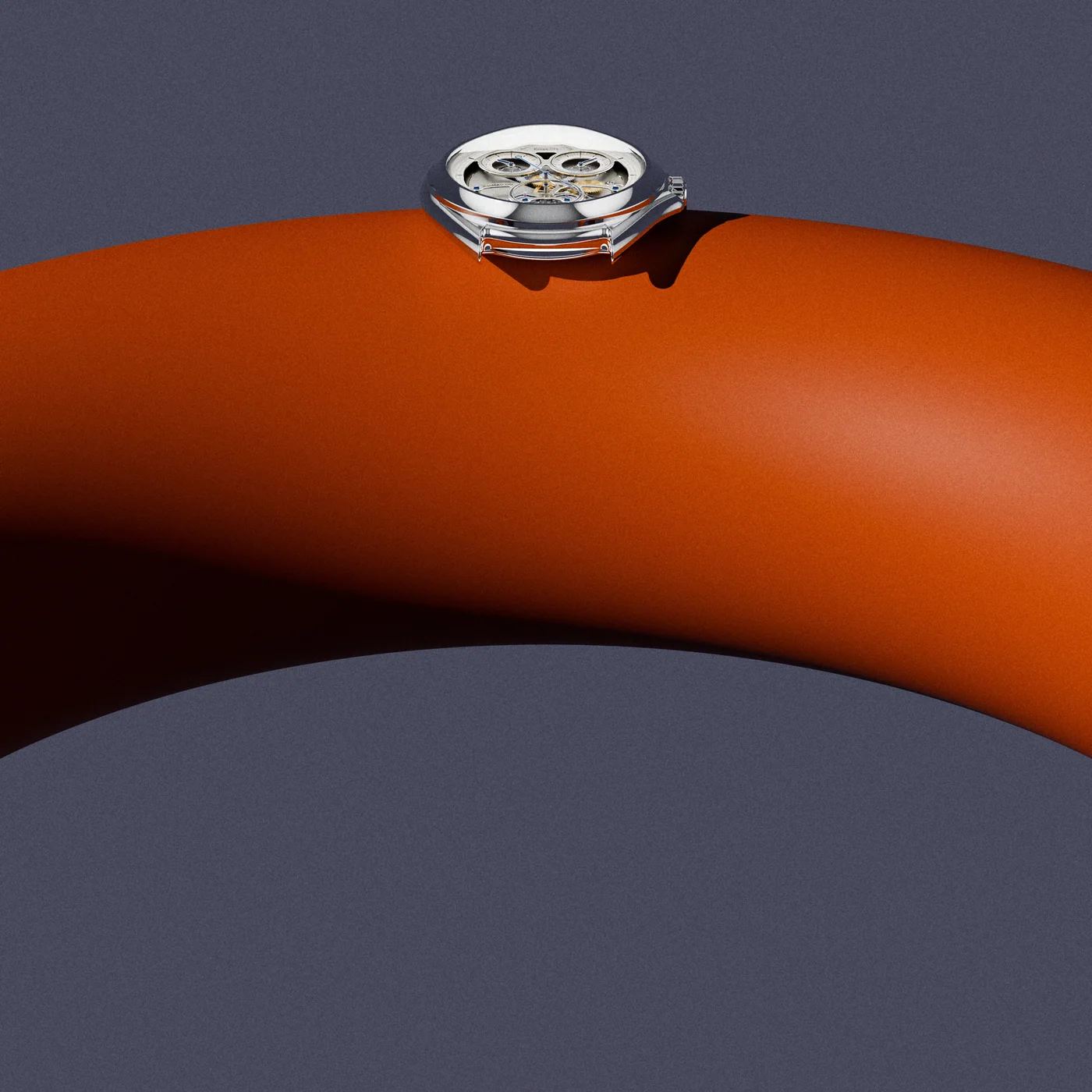
The watch head lying across an ember ring0:42Stopped.

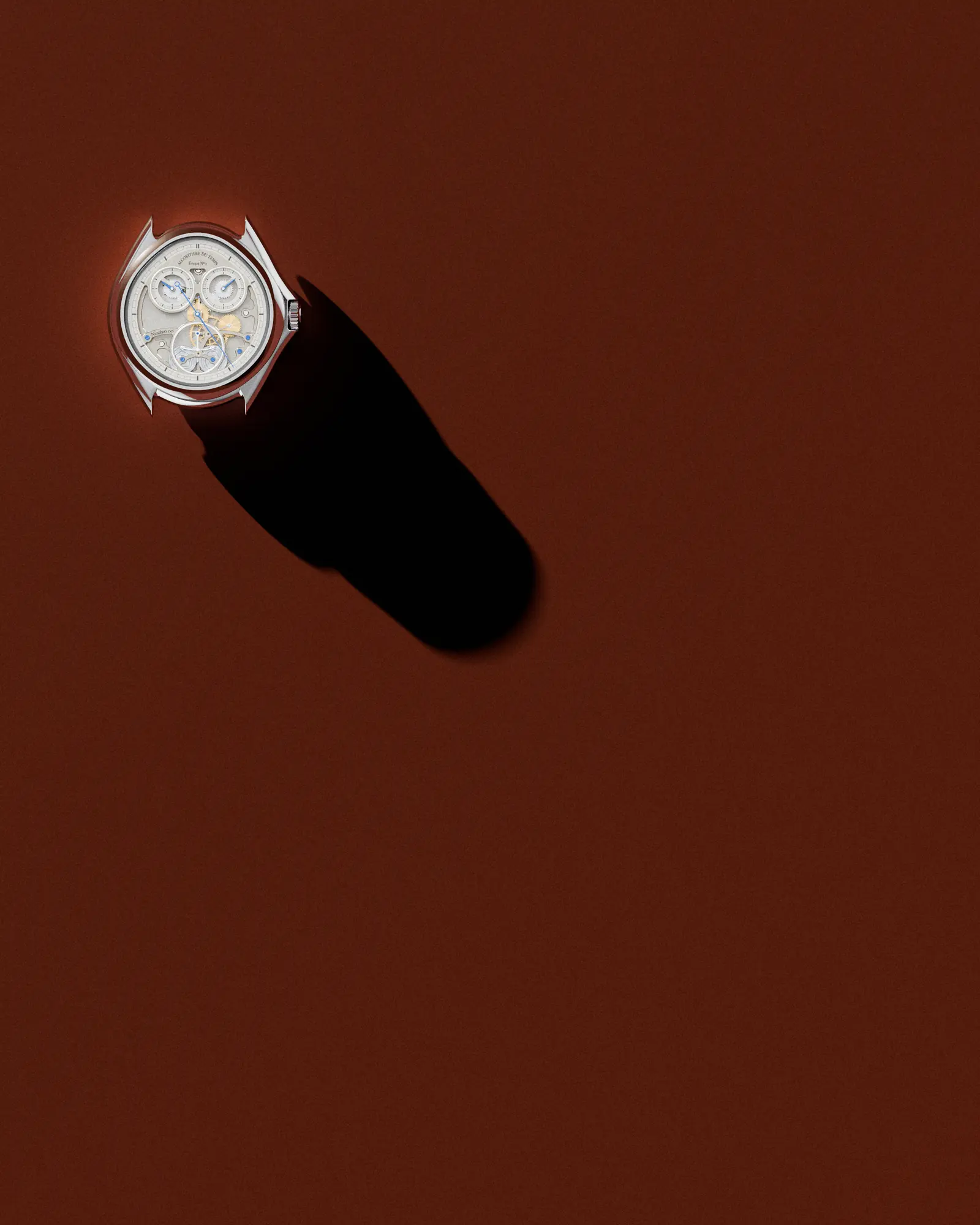
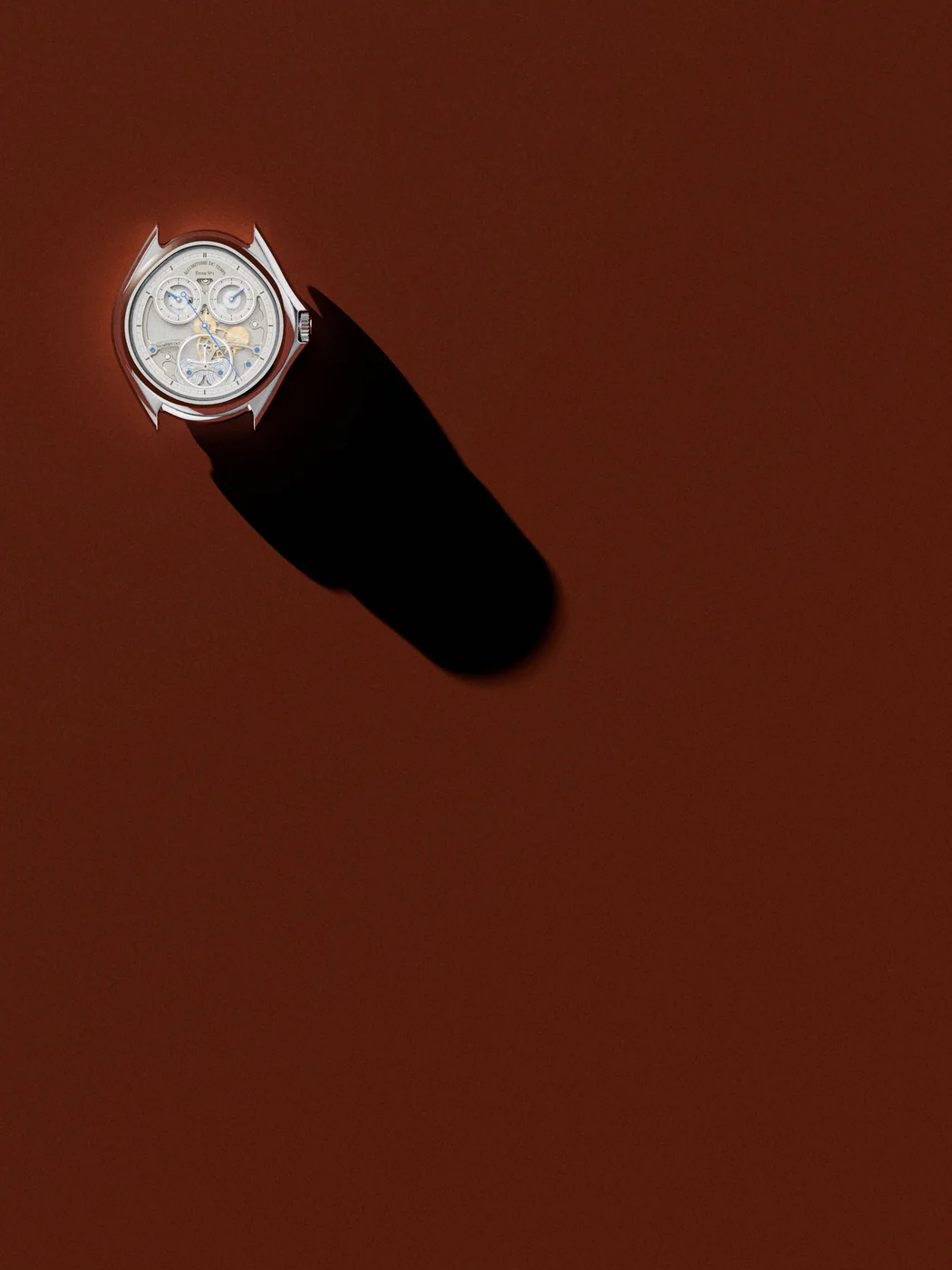
The watch head from above, its shadow stretched long across a sunset ground0:47Backwards, at the pace of an ordinary seconds hand.

The watch head on a dusk dome, a sunset ground0:53Then it races, up to three times as fast.

1:00Twelve. Exactly on the minute.

Your clock
:33
The hand shows
:33
Speed
1.0×
Now it
Keeps pace
3×1×0−1×

0:33Speed of the hand · shaded: backwards1:00

03Every minute

However it wanders, it arrives on time.

12:00

At every full minute the hand crosses twelve exactly, after running forward for at least two seconds.

19 %

Almost a fifth of the time, it runs backwards.

46

Changes of direction in five minutes.

5 min

Before its rhythm repeats: two cams, turning in 50 and 42.86 seconds, meet again only then.

04The mechanism

A differential, two cams, one anchor.

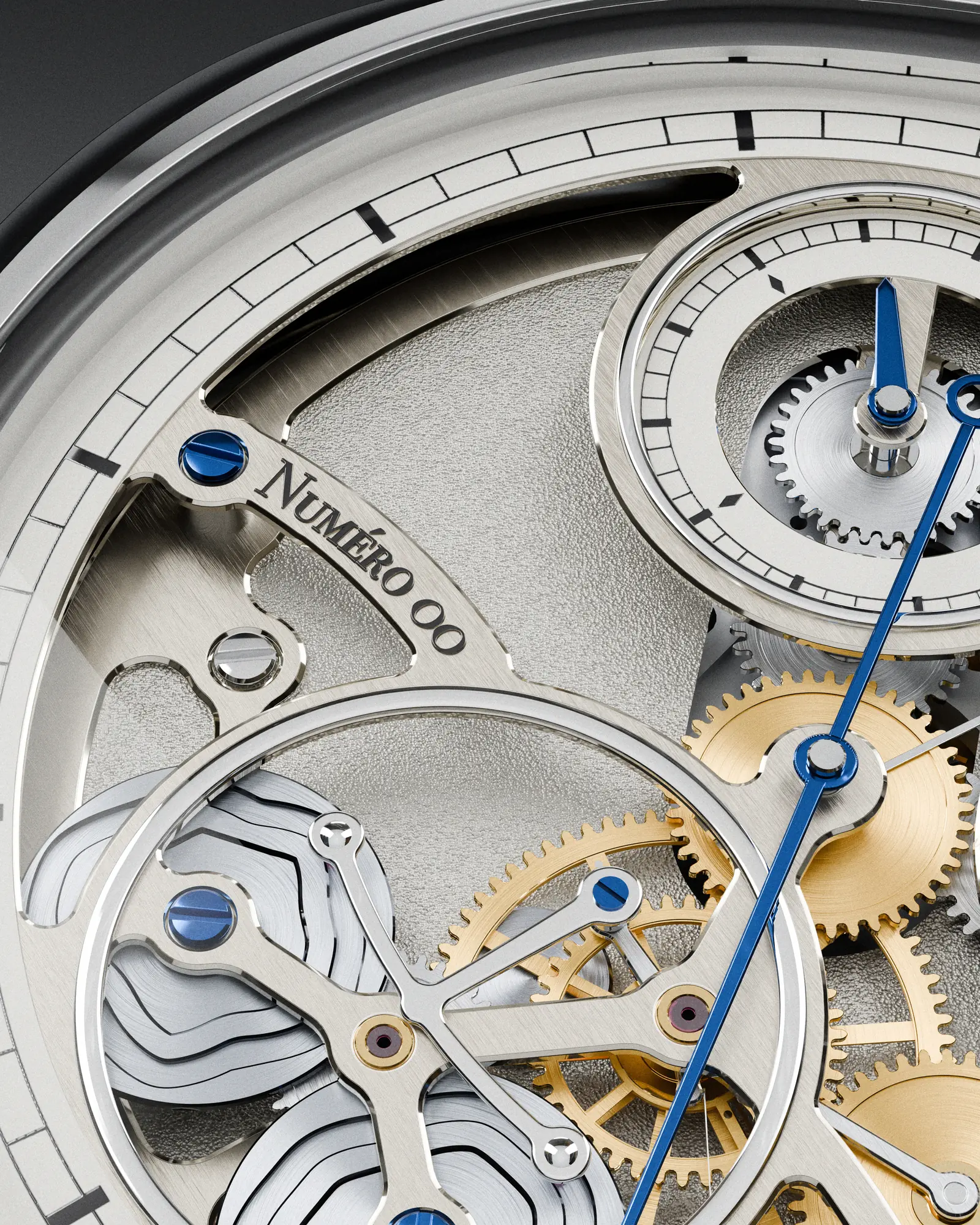
The aperture. A round window at six o’clock, 10 mm across.

The cams turn; the anchor rocks between them. Every move the hand makes begins here.

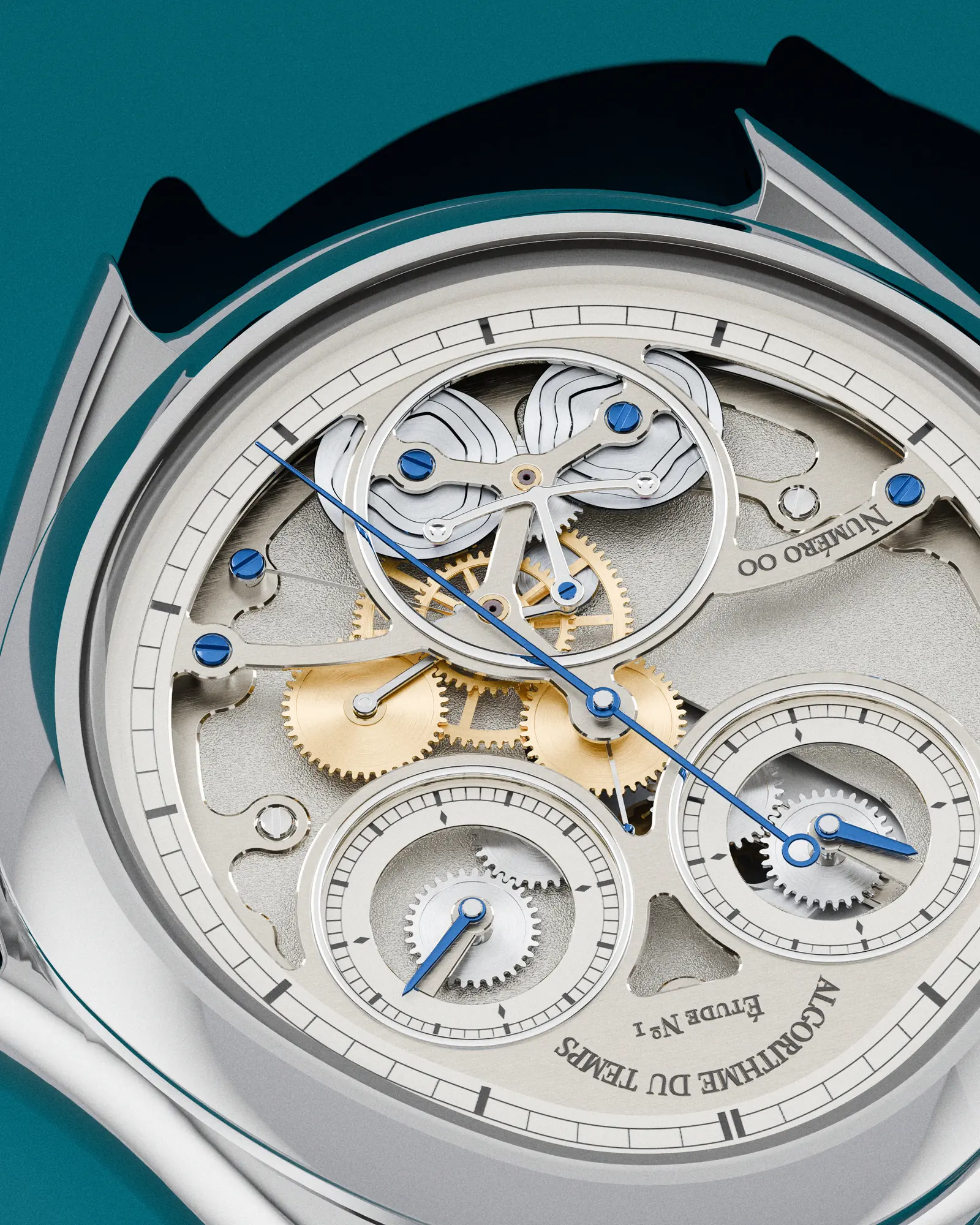
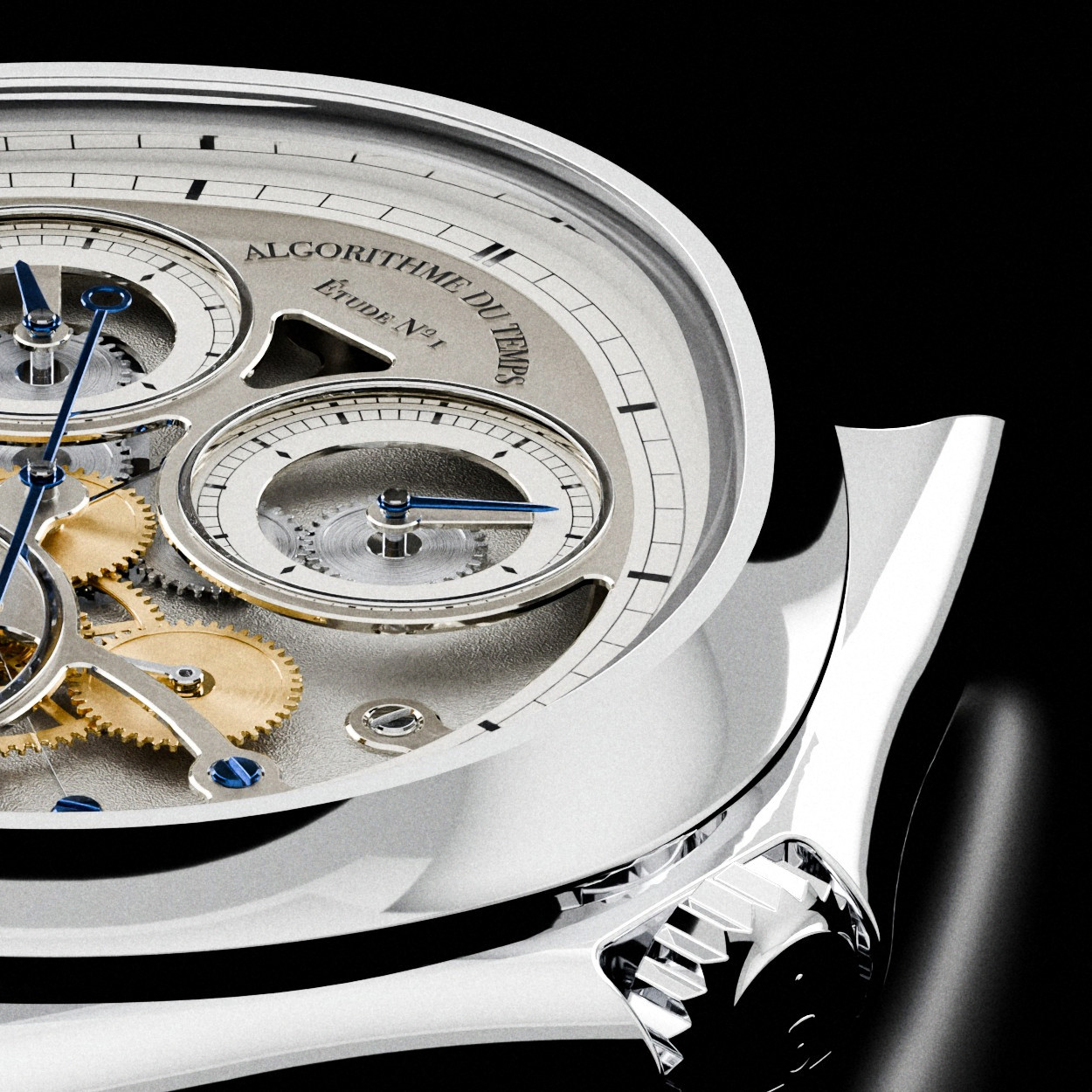
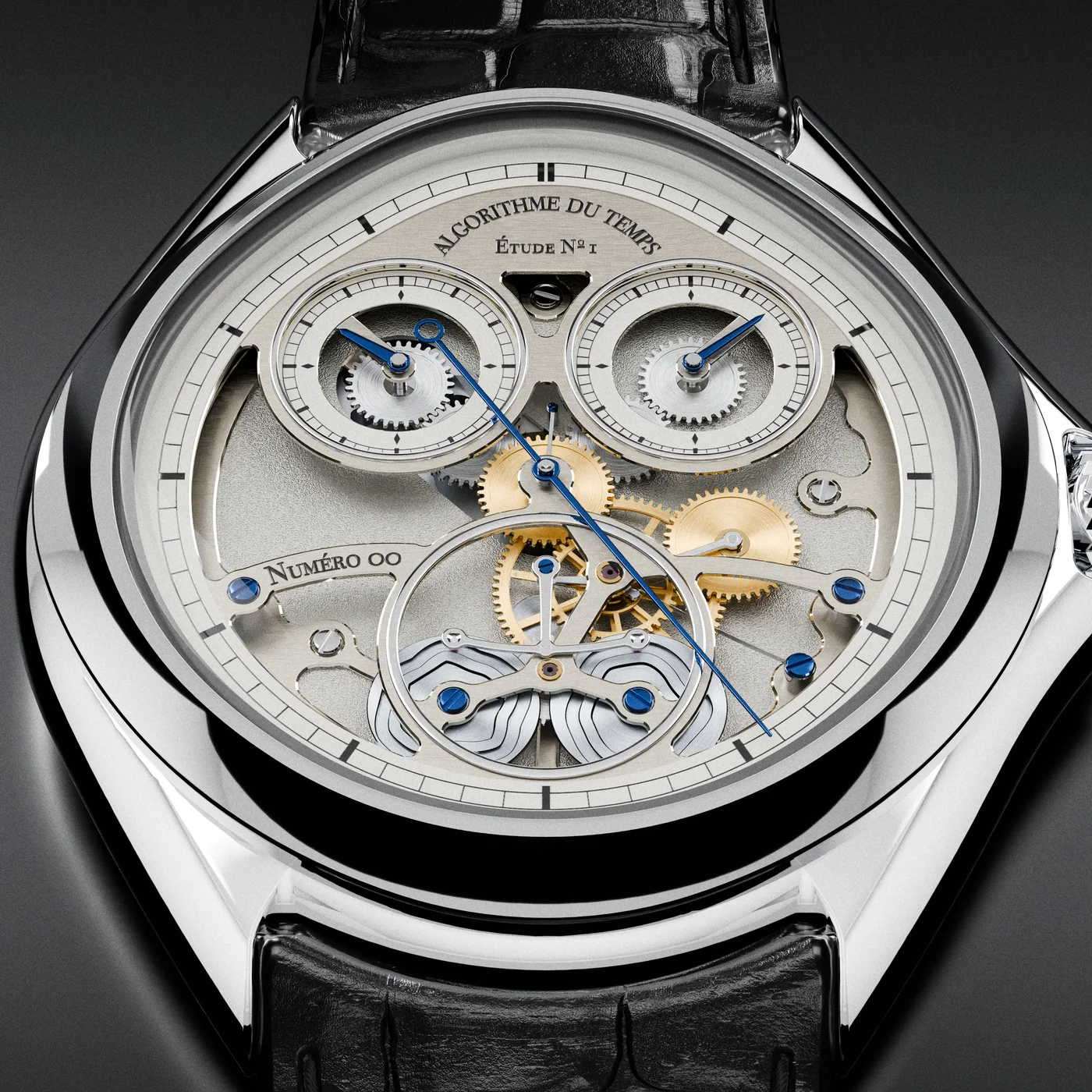
The dial of Étude Nº1 seen close, on a turquoise ground

The module sits on the dial side of the movement. A pinion on the movement’s seconds drives a small differential. The escapement is left alone.

The hand shows the movement’s own seconds, plus an offset. That offset is steered by an anchor resting on two cams.

One cam turns in 50 seconds, the other in 42.86. Their profiles are computed so that every offset cancels at the minute.

hand = seconds + offset

05The dial

The centre belongs to the seconds.

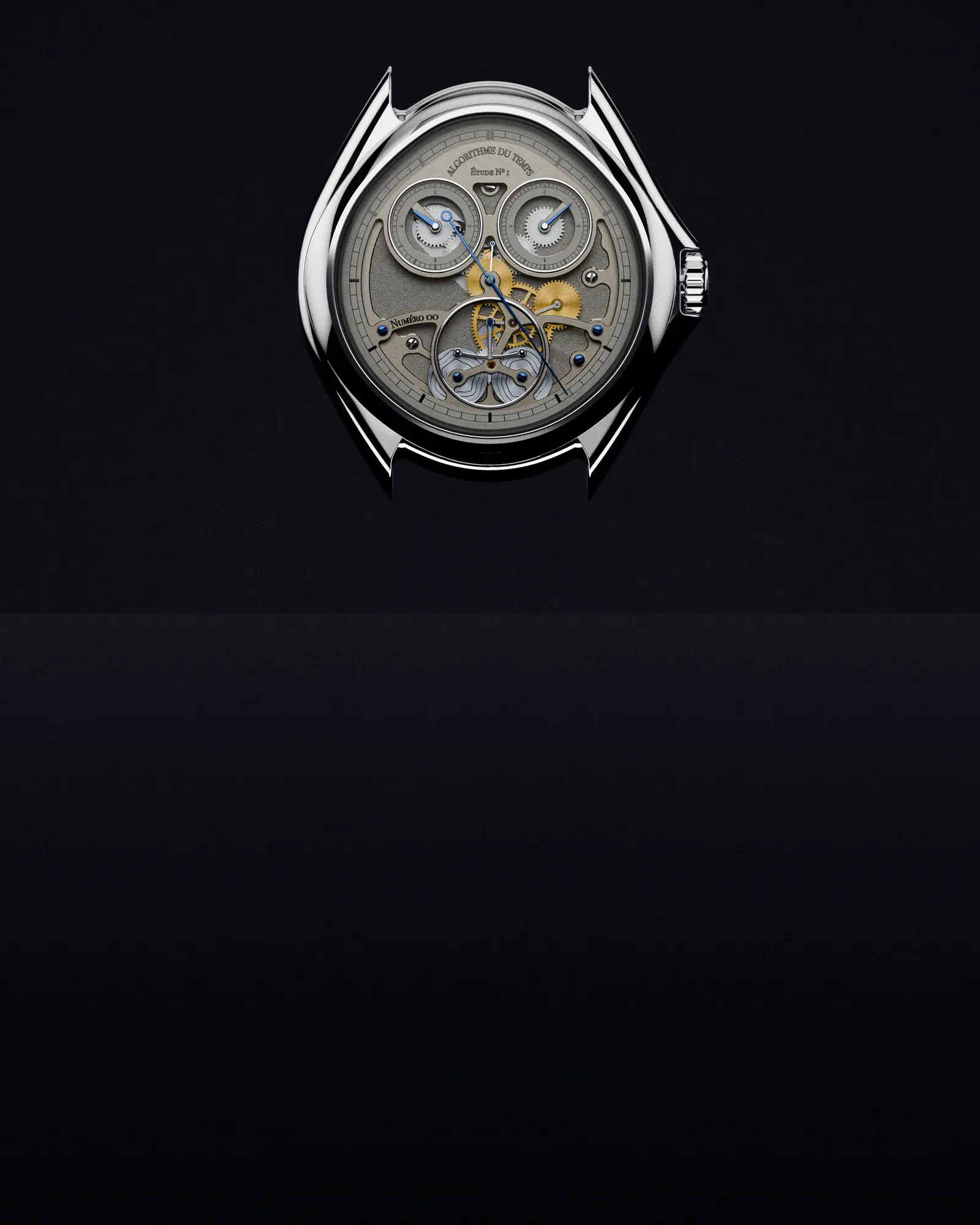
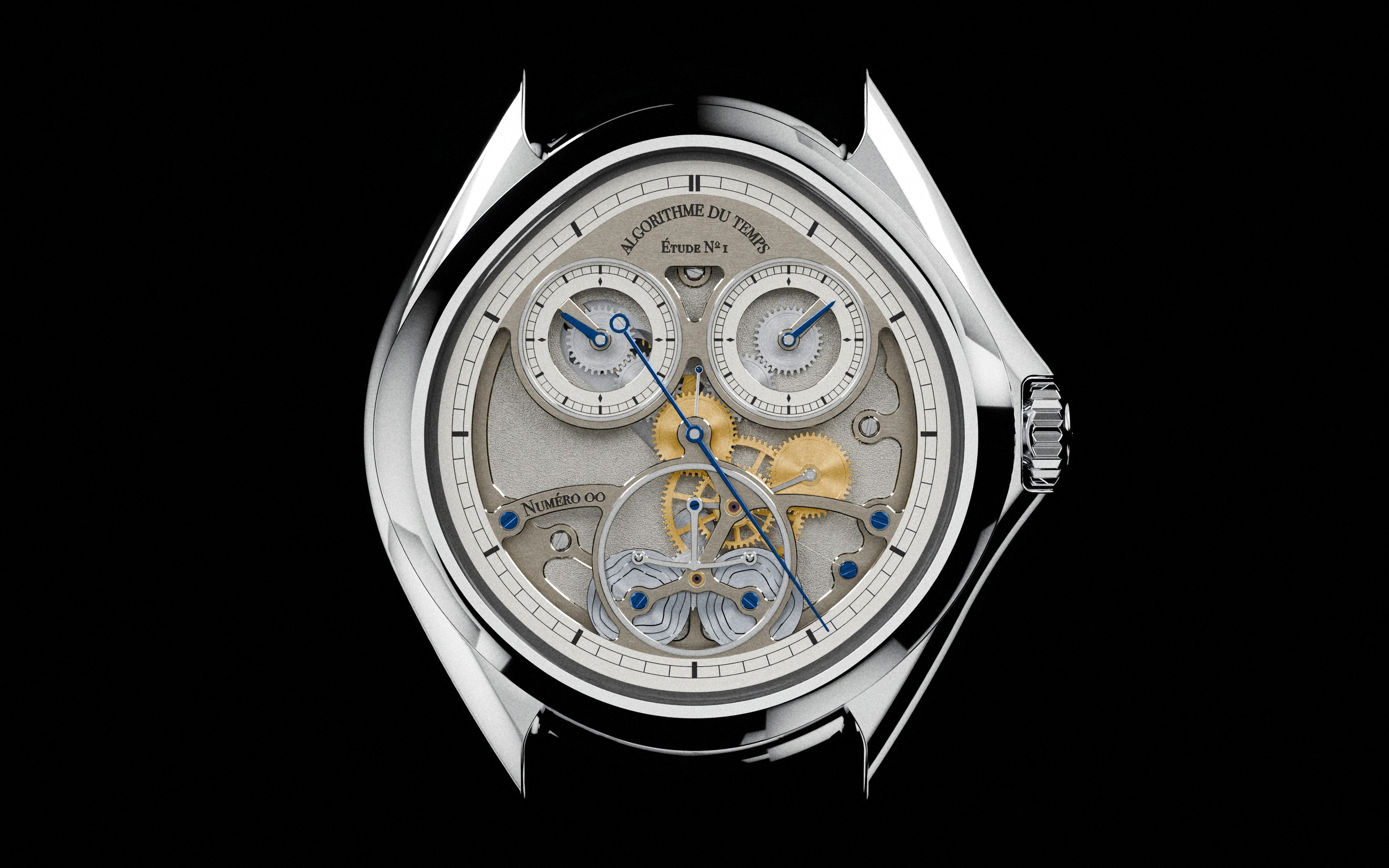
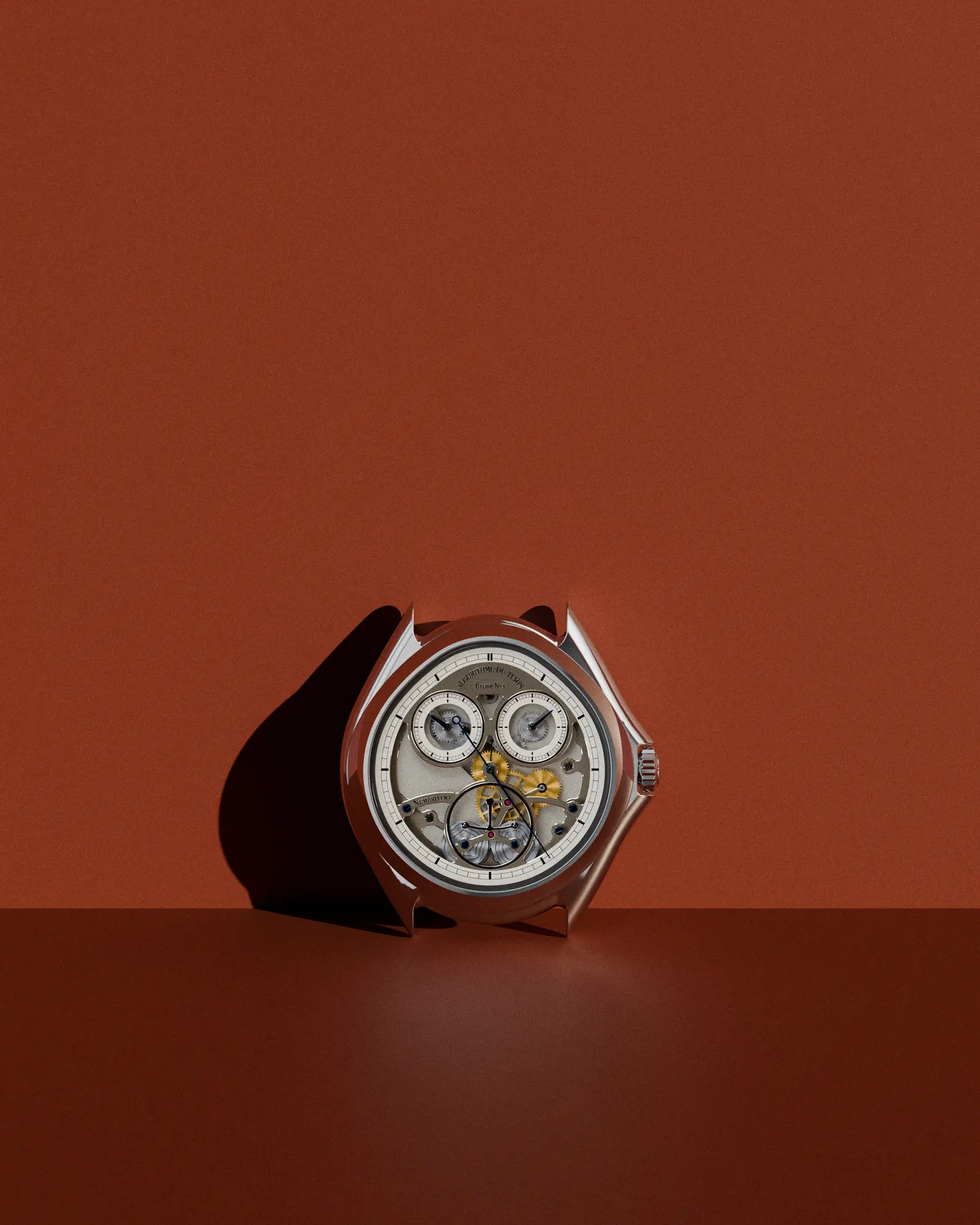
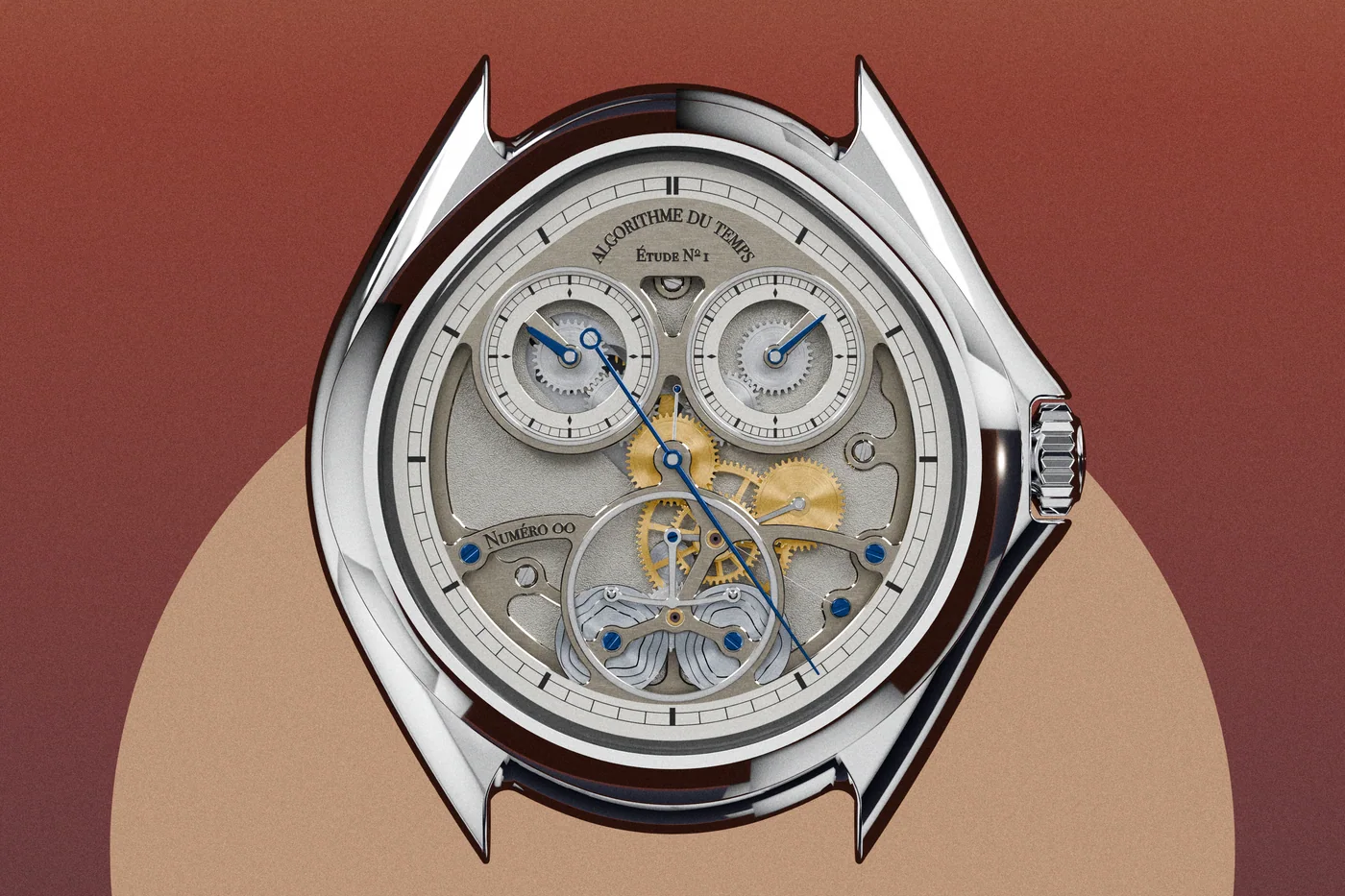
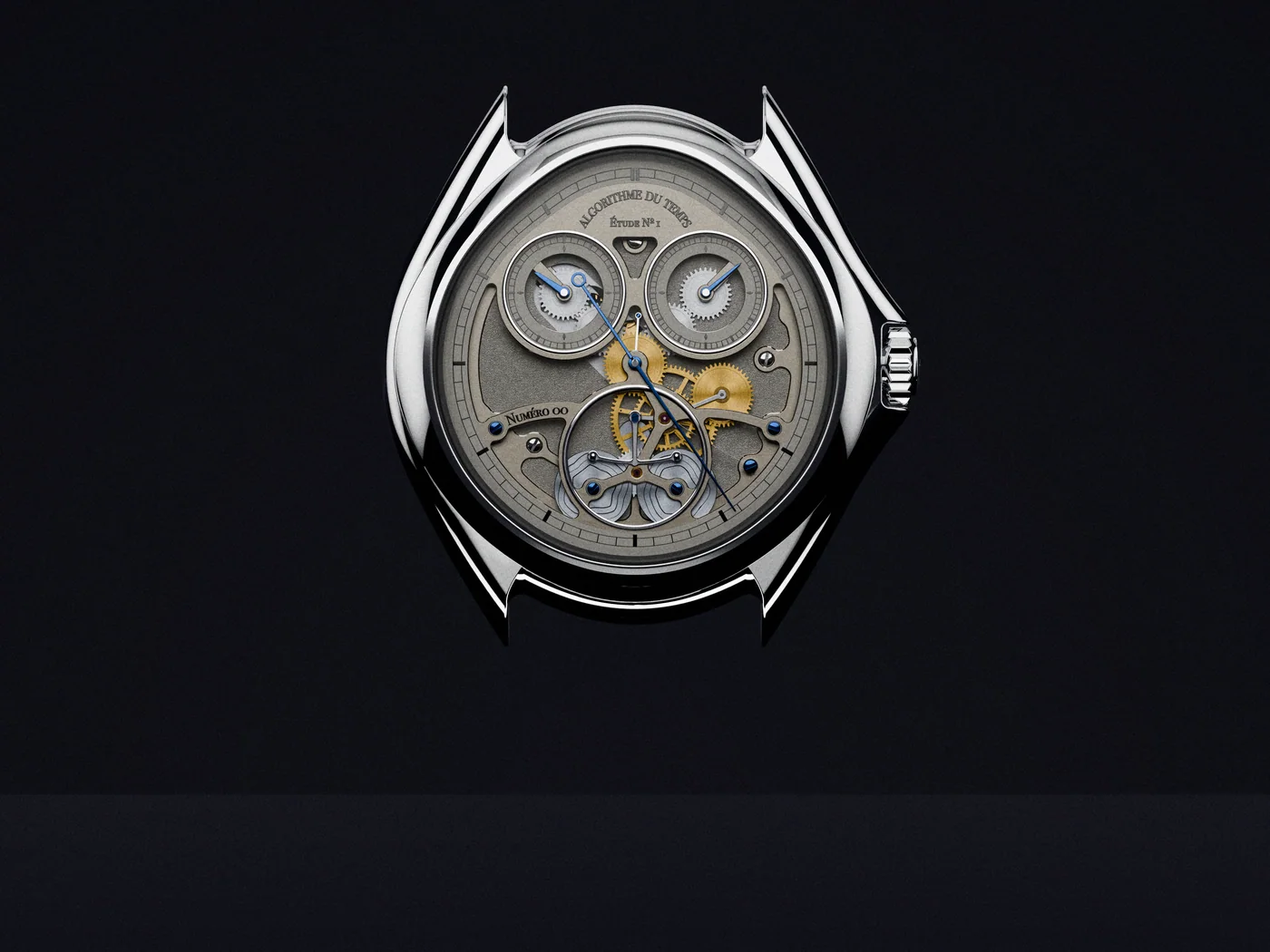
The dial of Étude Nº1, face on 1 2 3 4 5
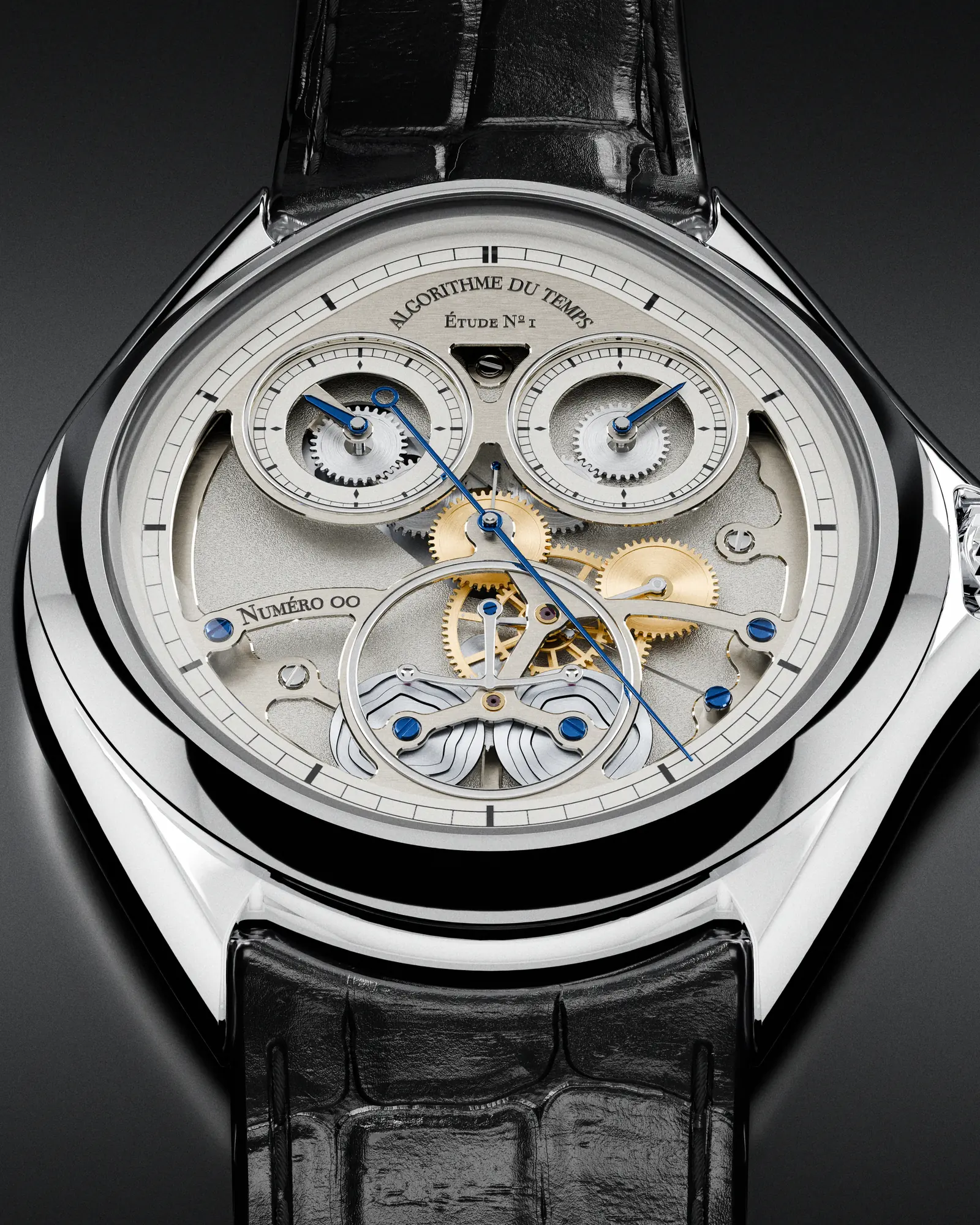
  1. Hours. A recessed sub-dial at half past ten.
  2. Minutes. A recessed sub-dial at half past one. The time is always plain to read.
  3. Seconds. Blued steel, alone at the centre. Its tail ends in a hollow ring that frames each sub-dial’s centre as it passes.
  4. Aperture. At six, a round window onto the anchor and its cams.
  5. Number. The piece’s number in the series of 25.
The watch head on a dark drum before a blue ground

06The case

904L steel. A closed, mirror-polished back.

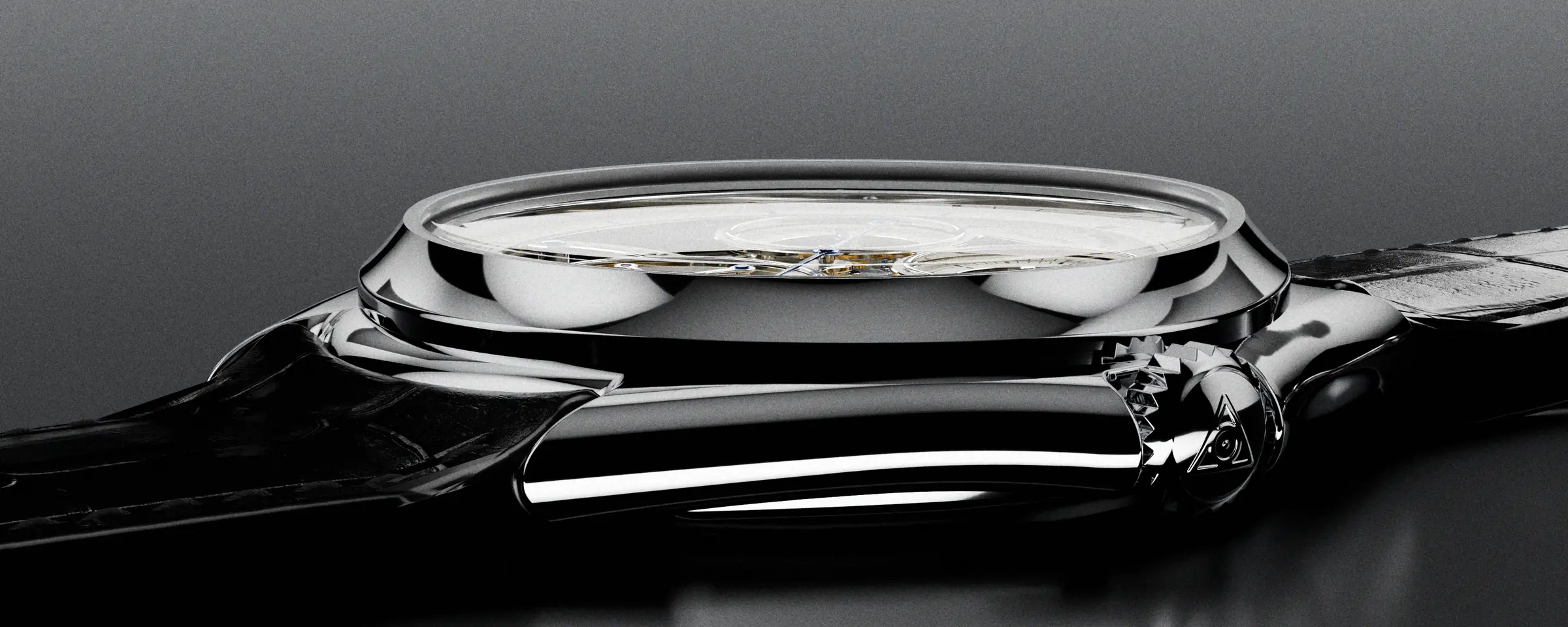
Under a domed crystal the dial sits deep, so the watch has depth. 39.7 × 42.1 mm, 10.53 mm thick.

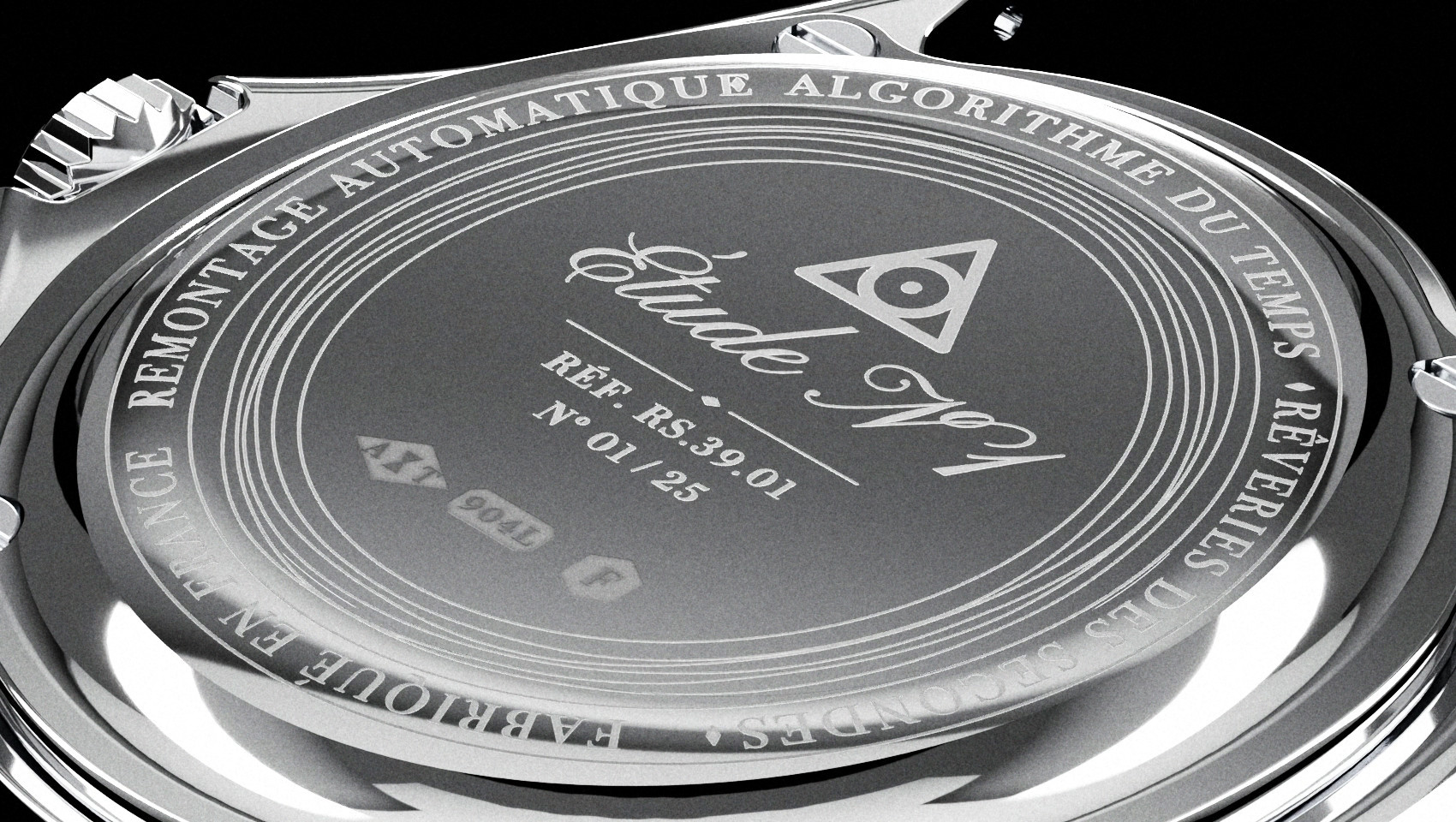
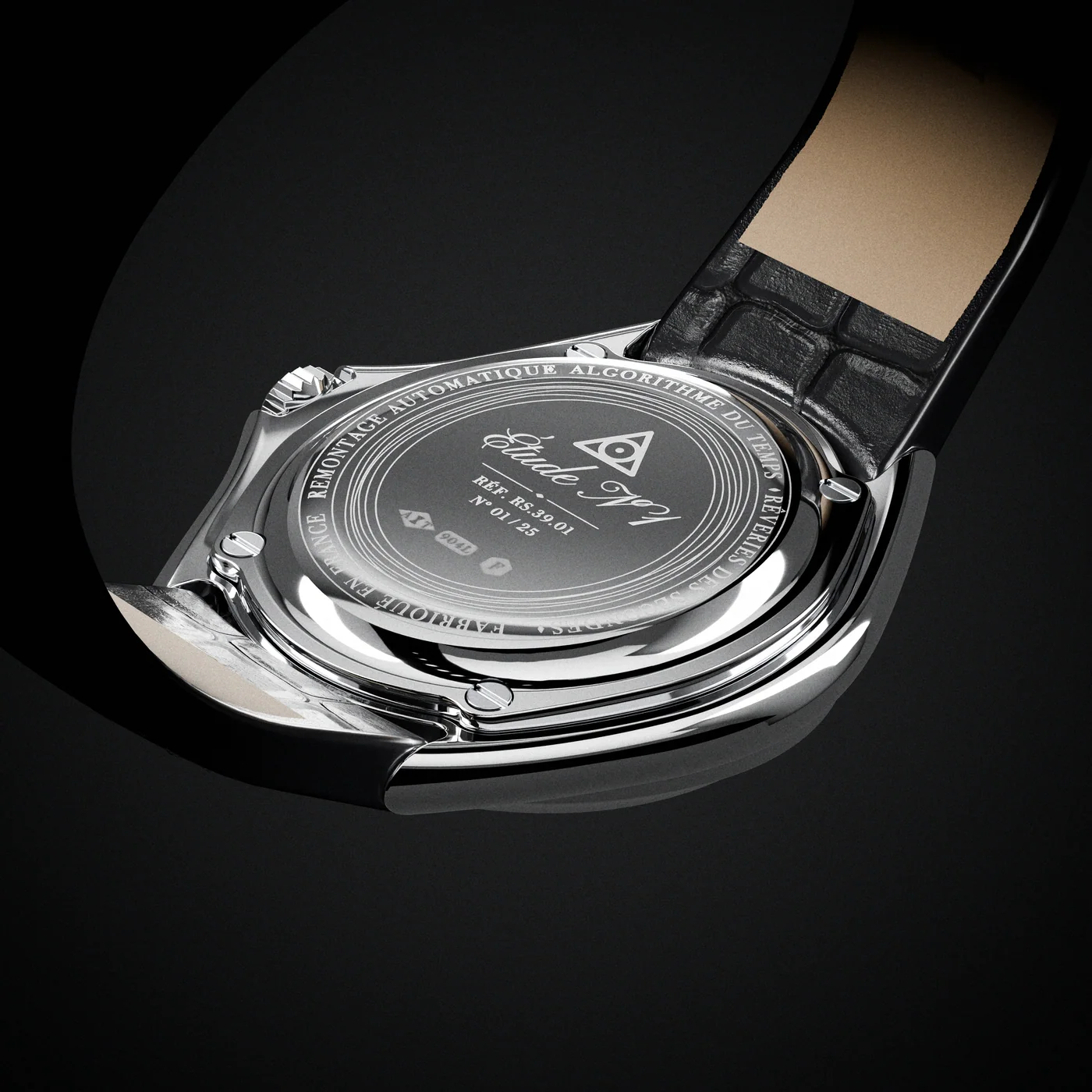
The back is closed: the mechanism worth watching is on the dial side. The back keeps the name, the reference and the number of the piece, acid-etched into a mirror polish.

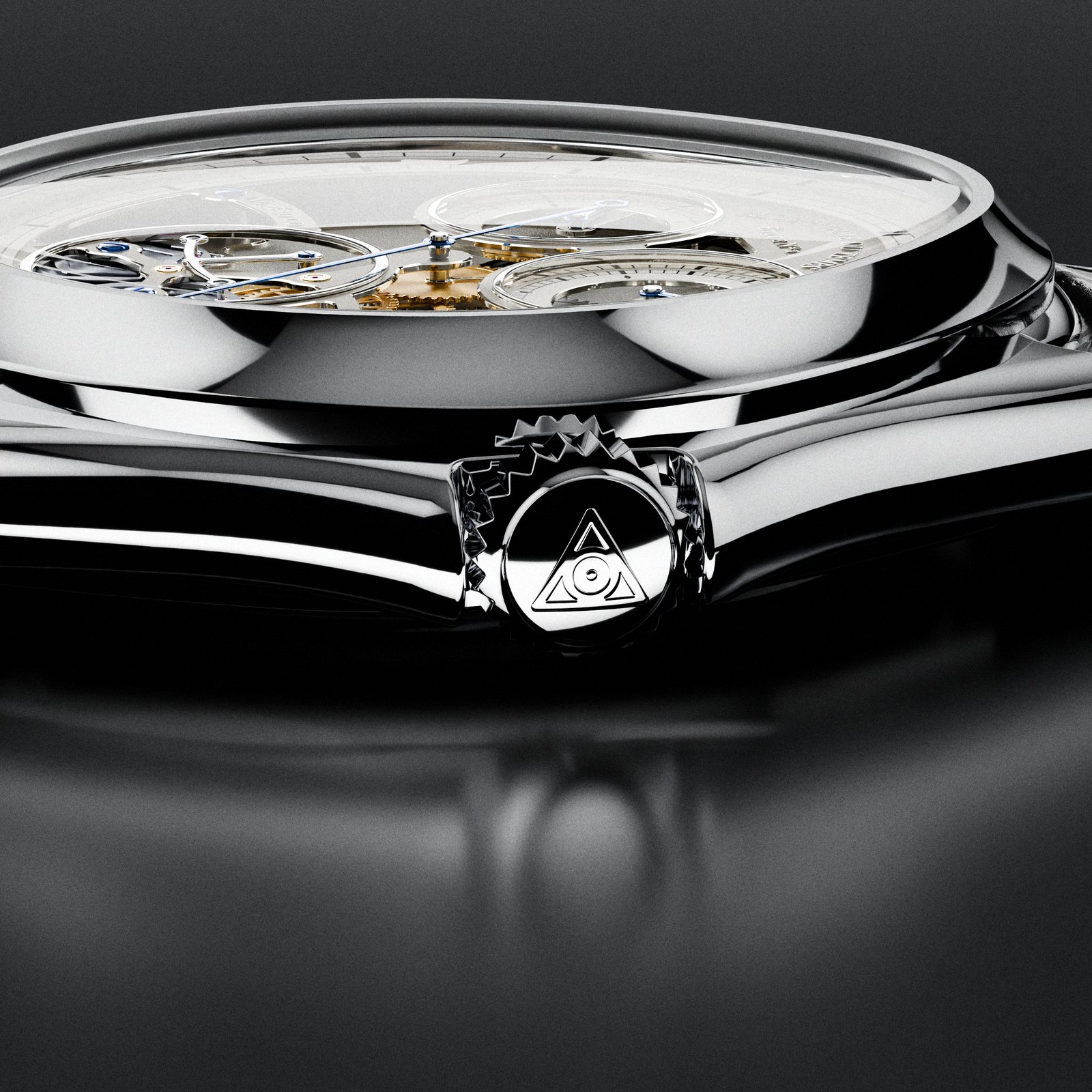
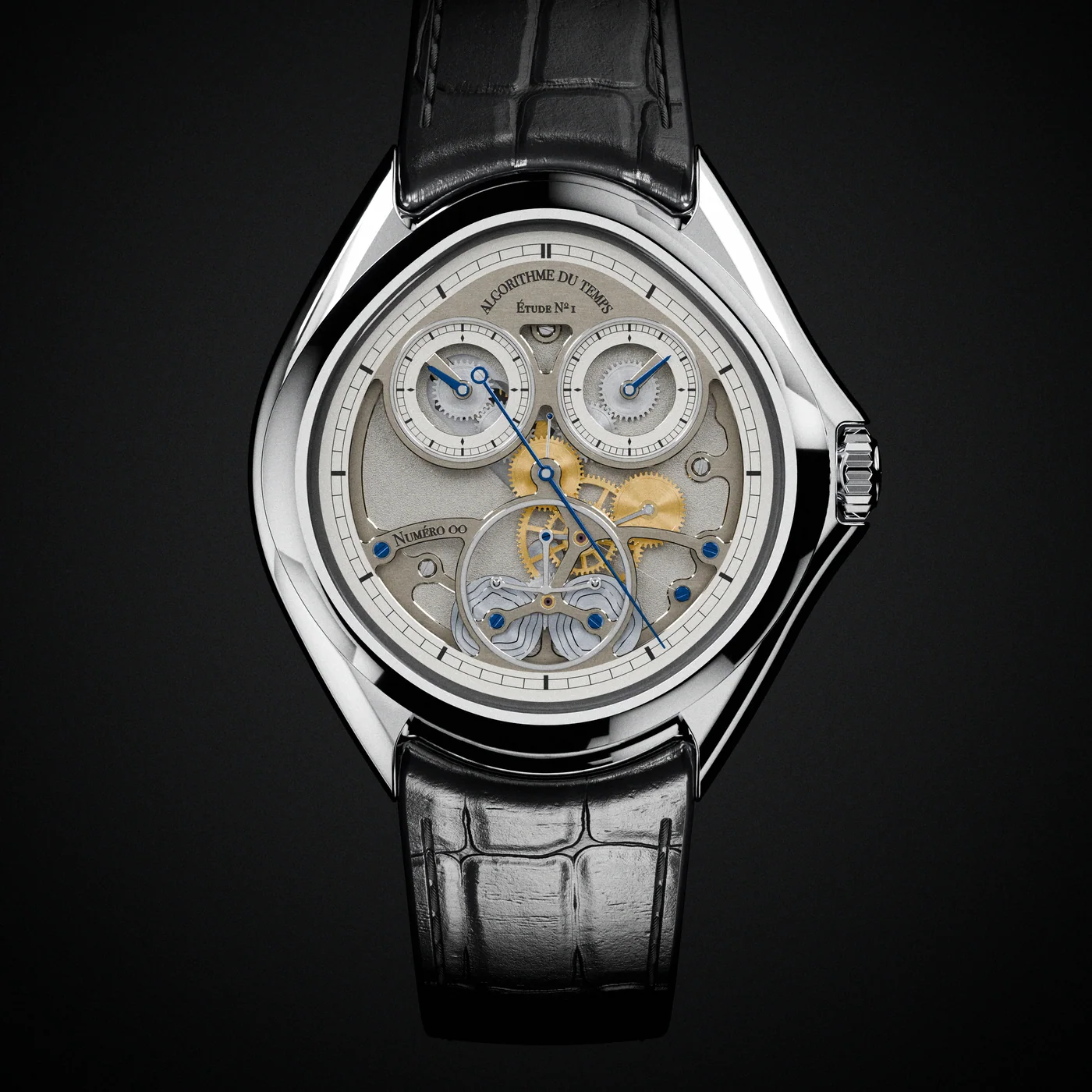
The case. Cushion-shaped, the crown centred on the flank.

The bezel and domed crystal
Bezel and domed crystal
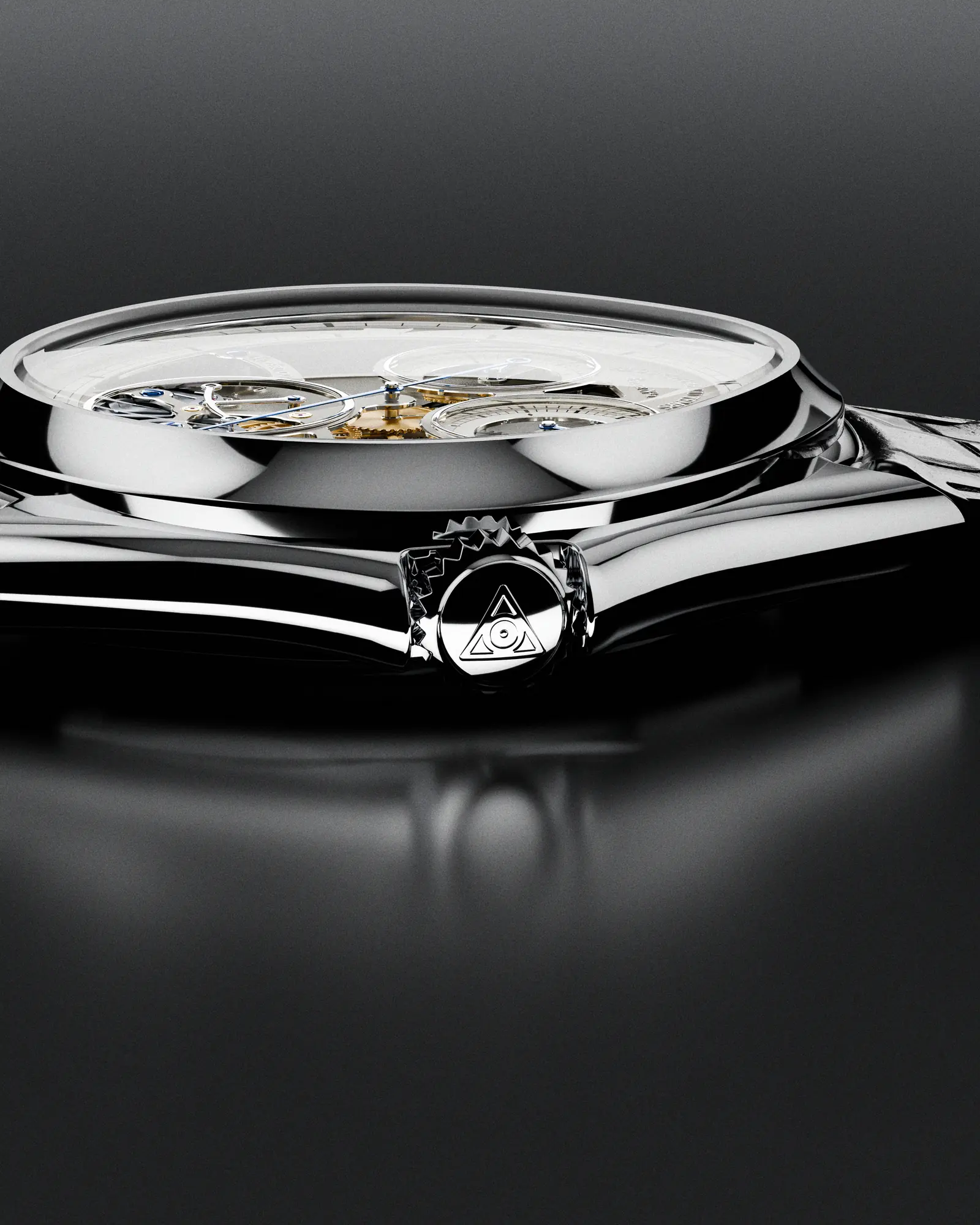
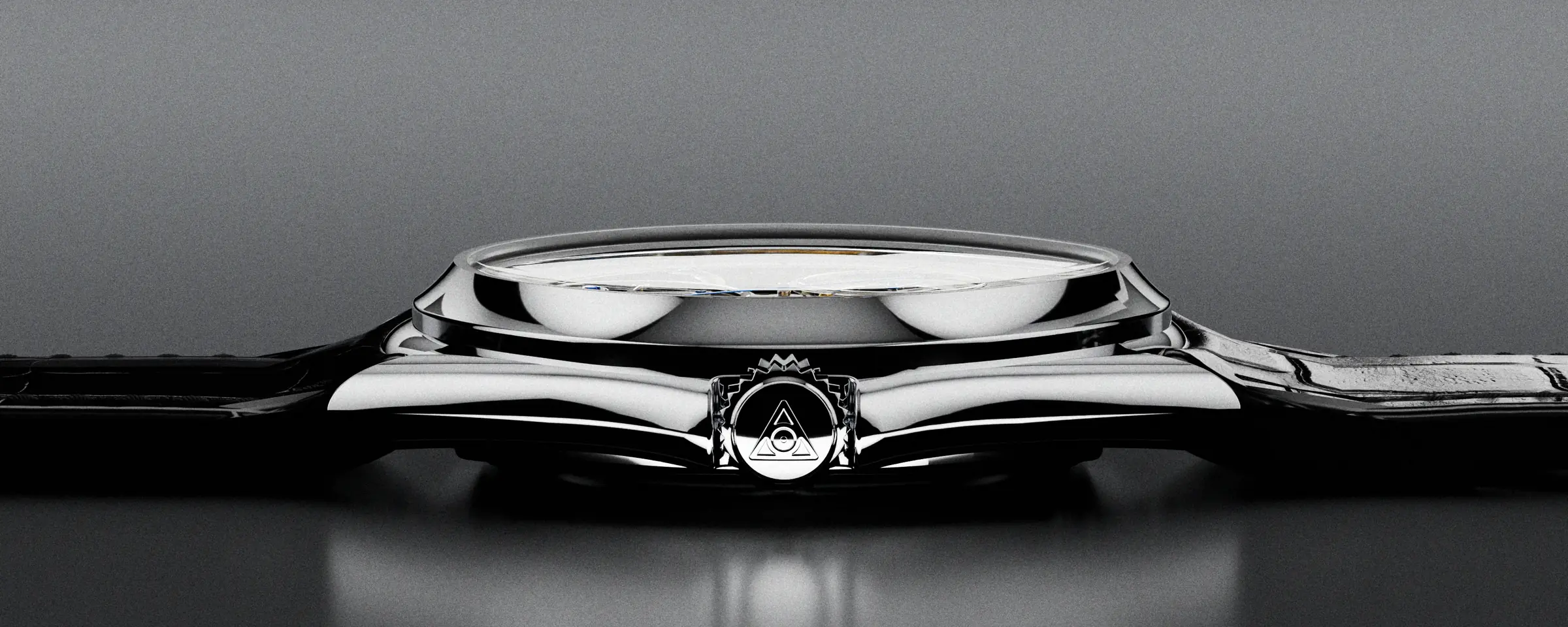
The flank of the case, the crown with its engraved symbol, low on black acrylic
Lug and flank
The case back, acid-etched
Case back, acid-etched into a mirror polish

—Photographs

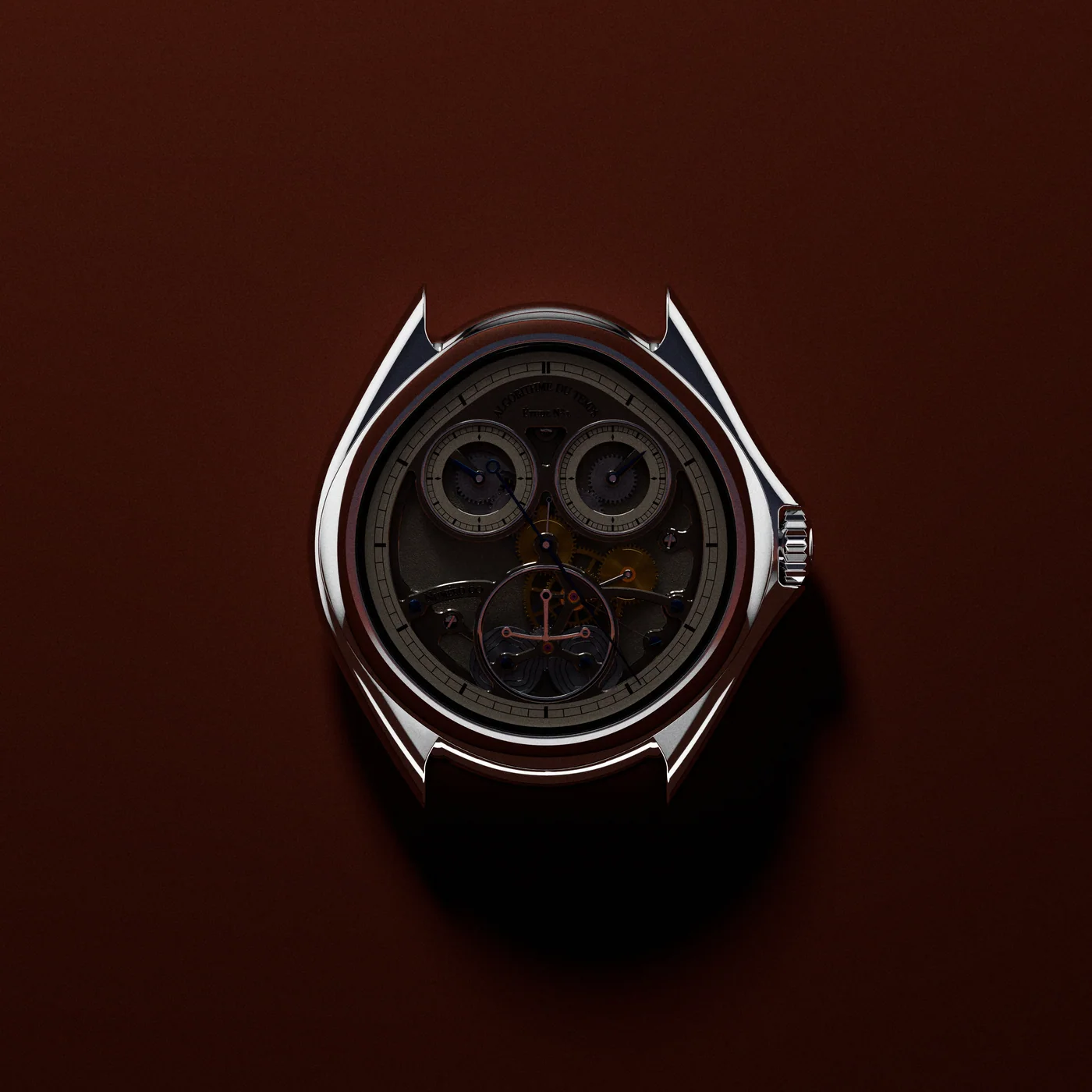
Étude Nº1, in the dark, where steel shows its light.

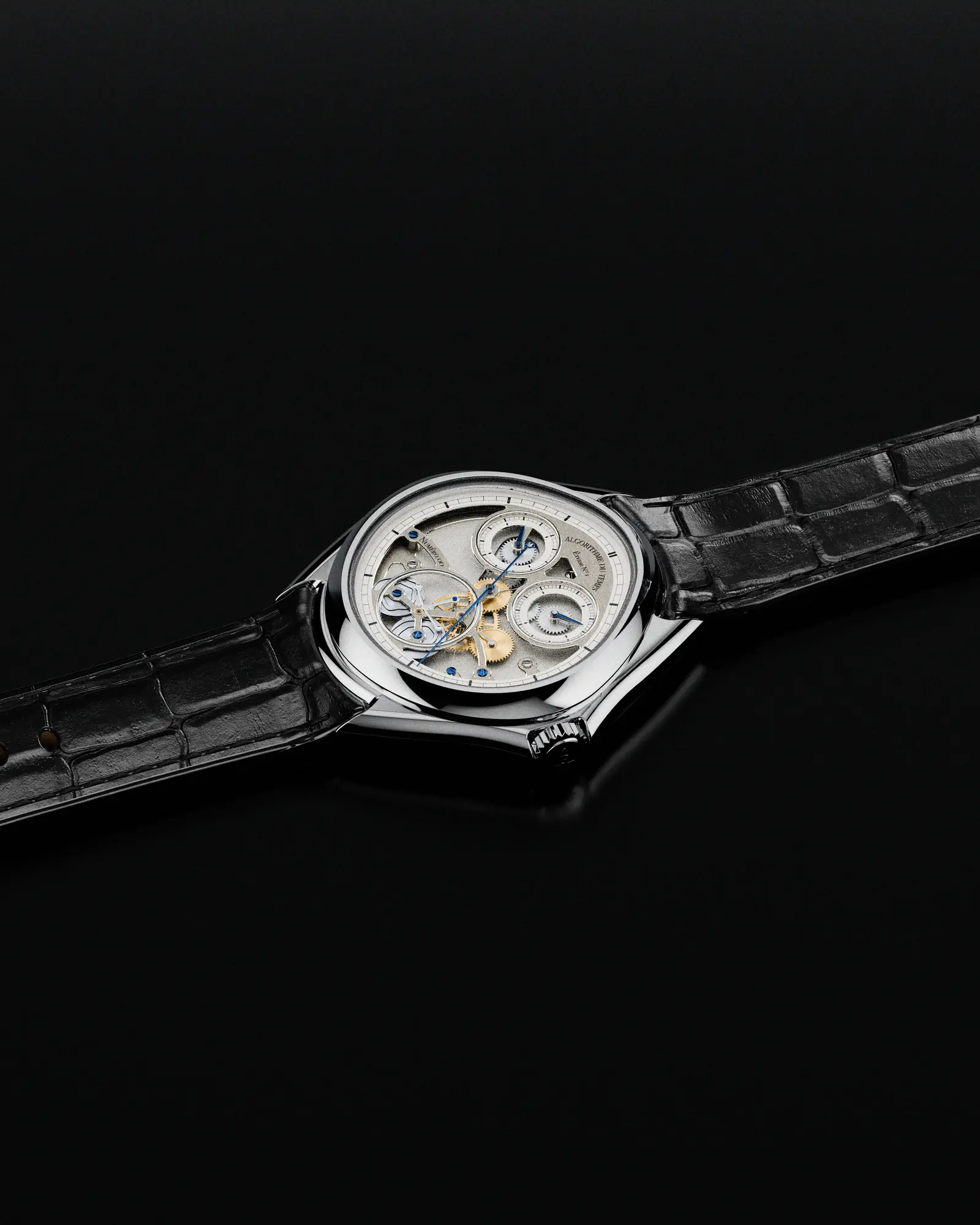
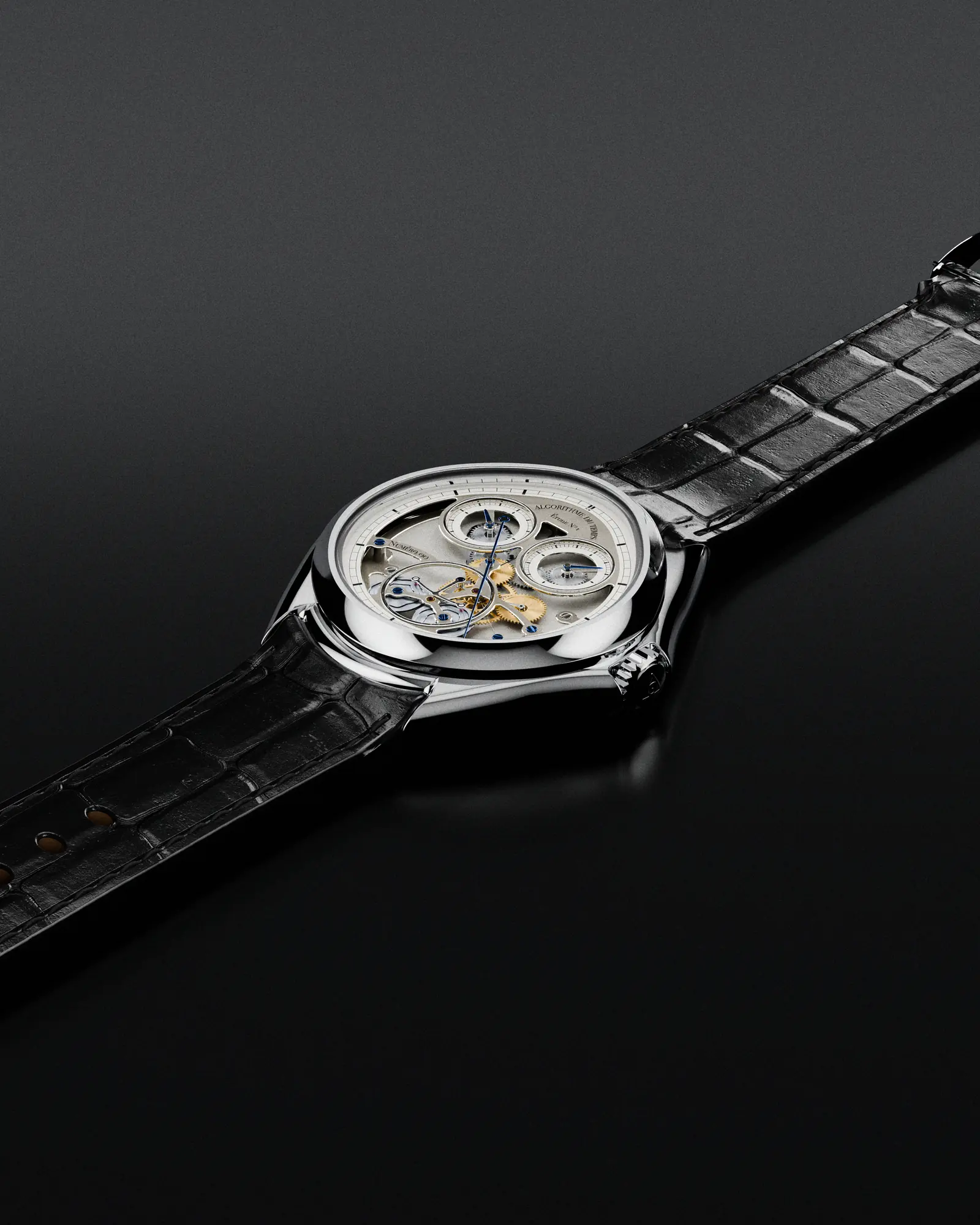
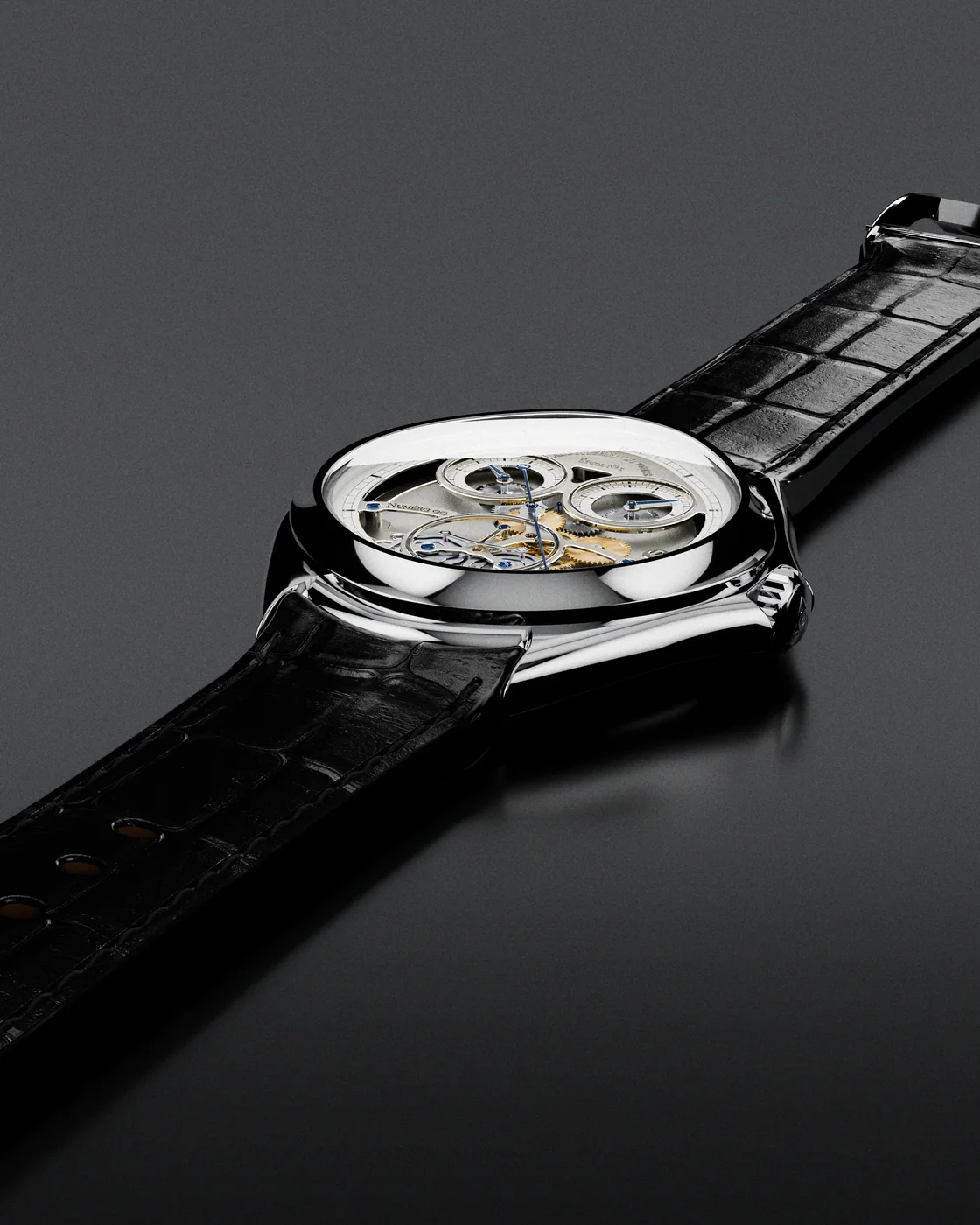
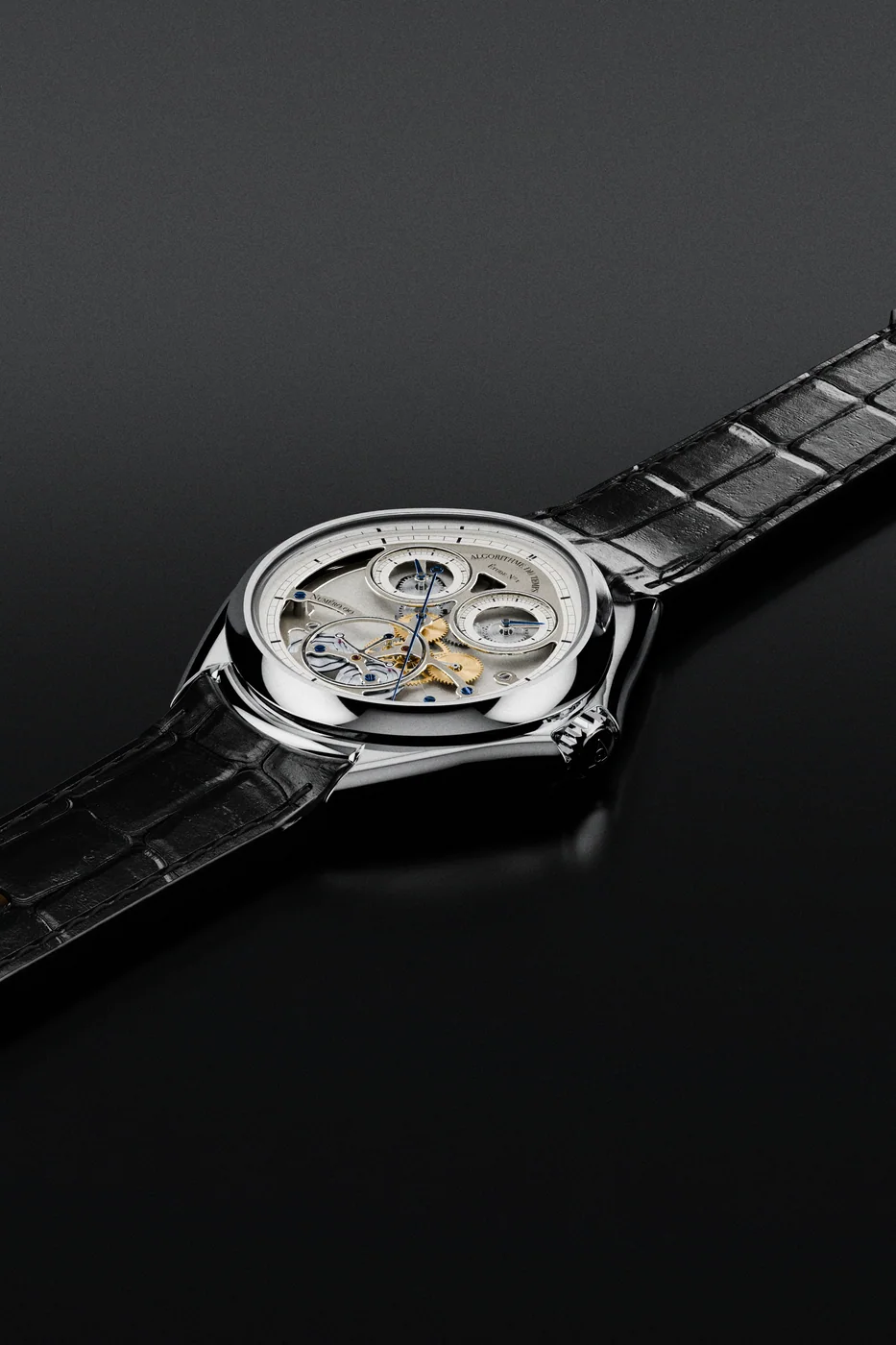
Étude Nº1 lying on black acrylic, three-quarter view, its croc strap laid flat
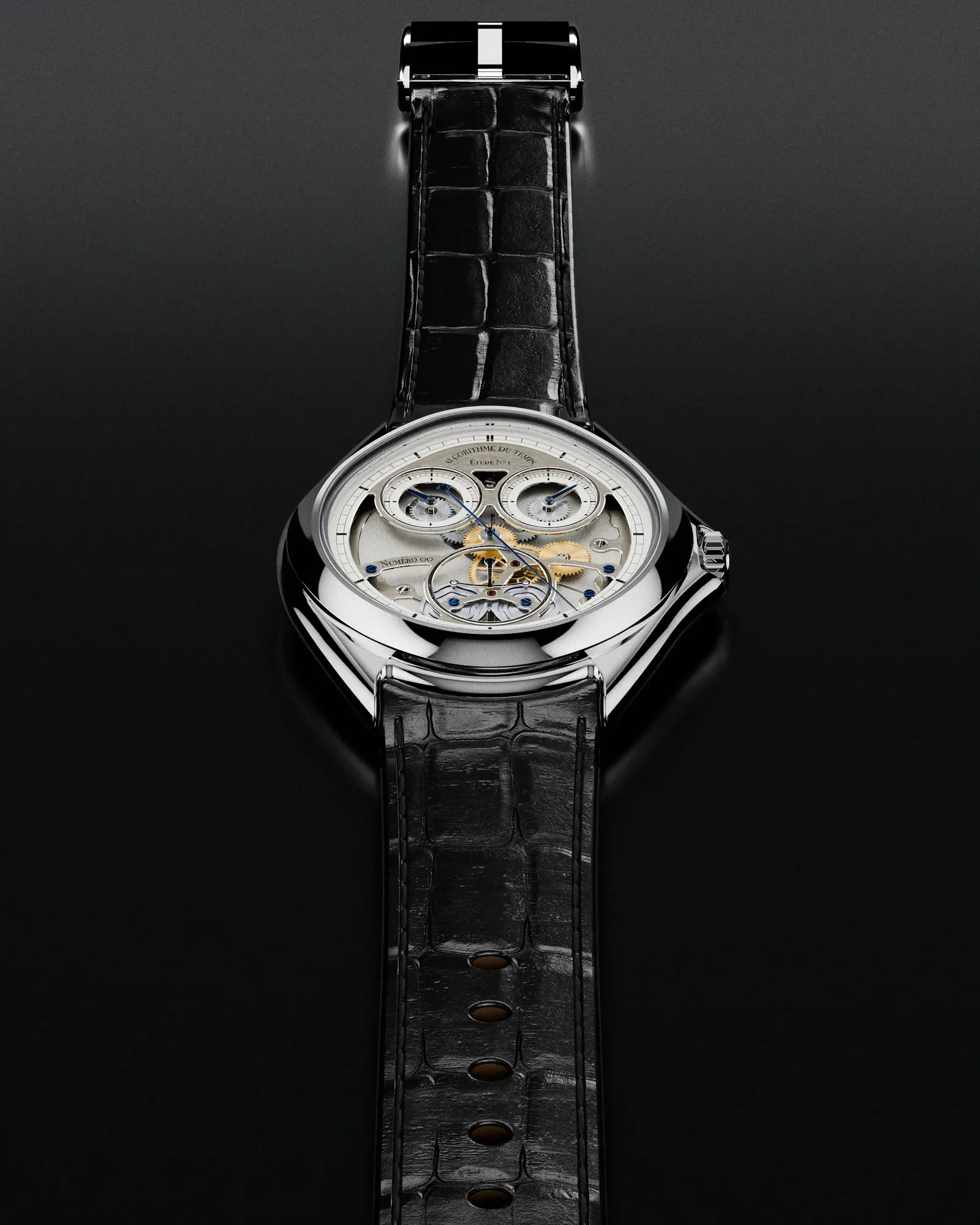
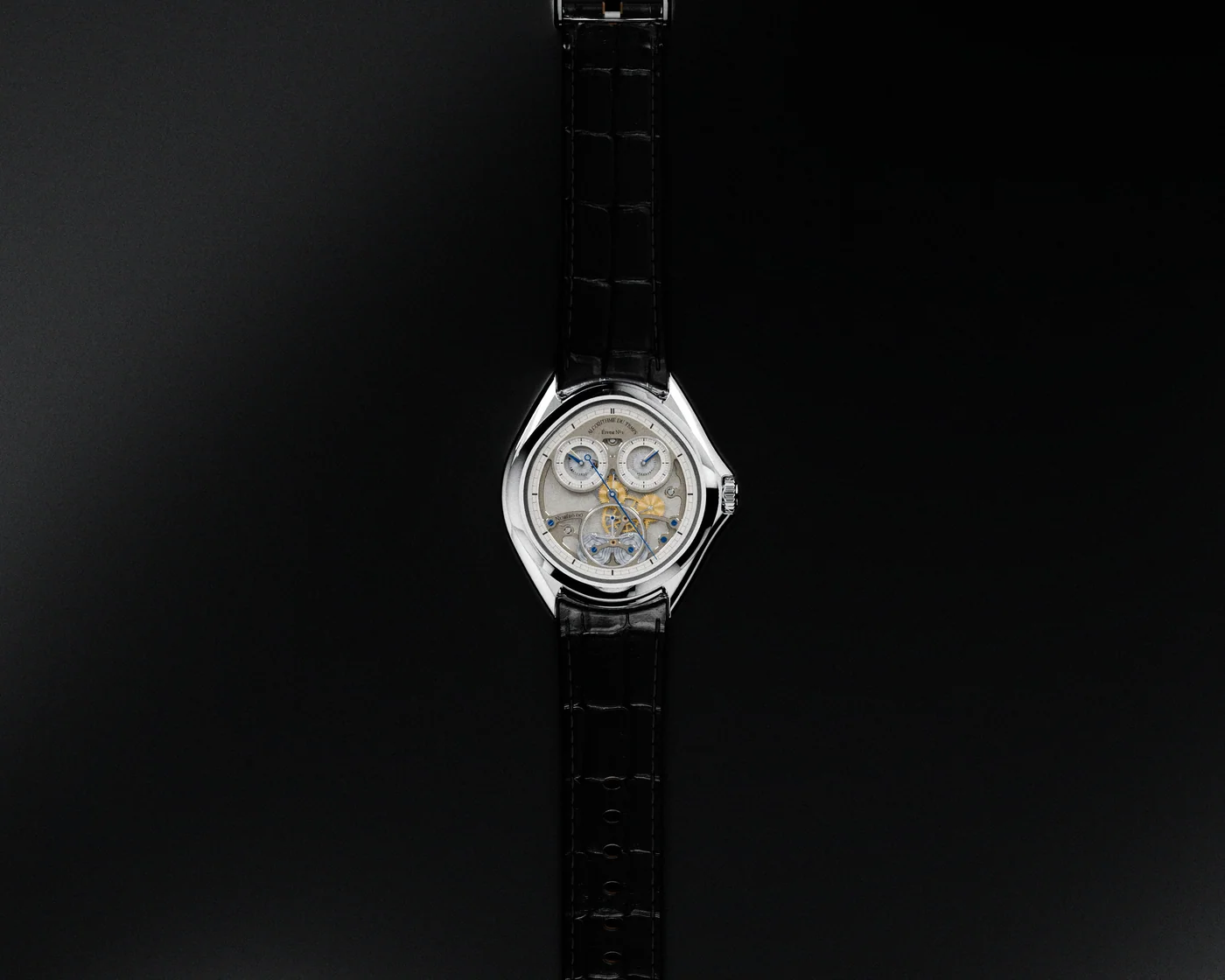
Étude Nº1 lying face up on black acrylic, the croc strap running top to bottom
The crown and the flank of the case, close, on black acrylic
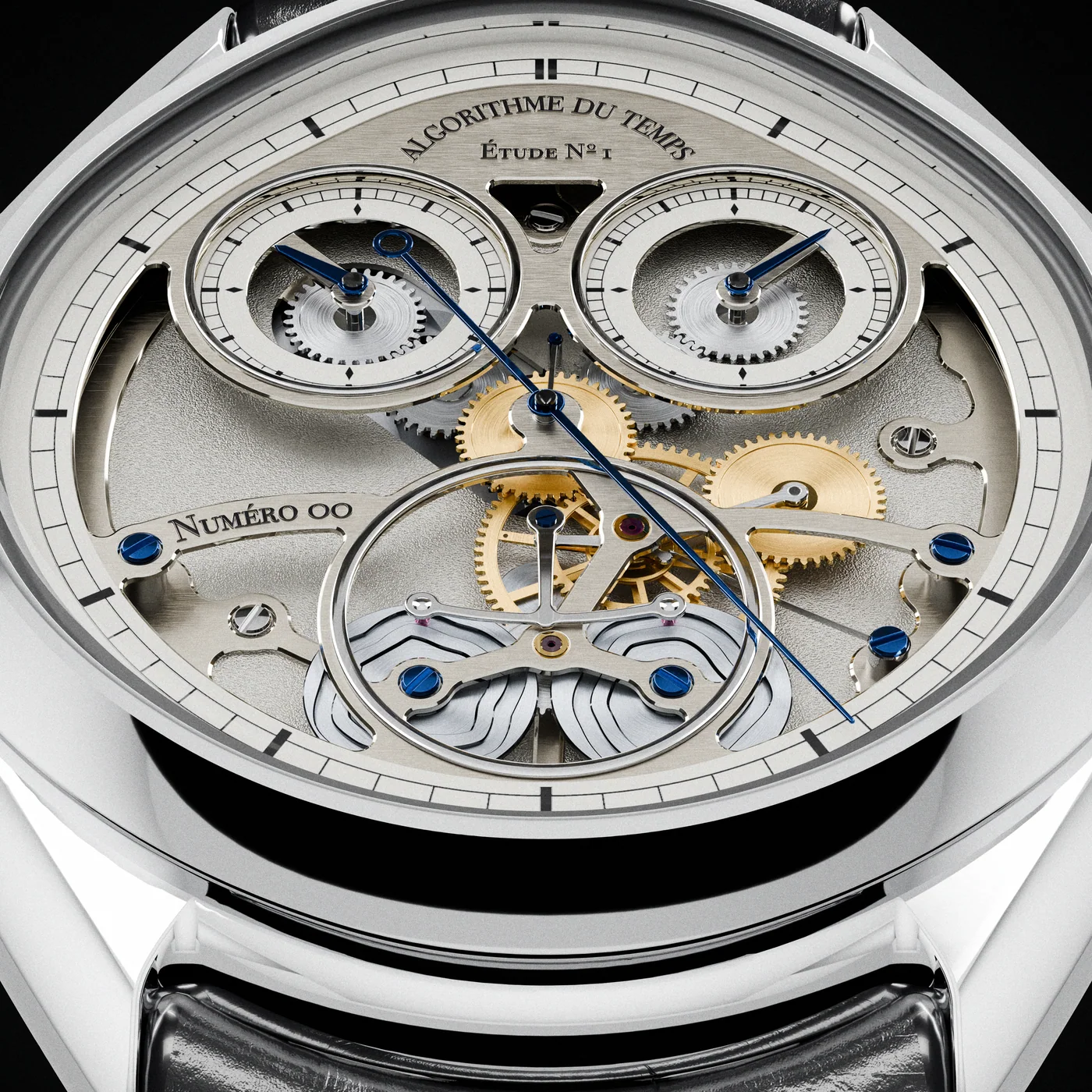
The dial seen close, the seconds hand at the centre
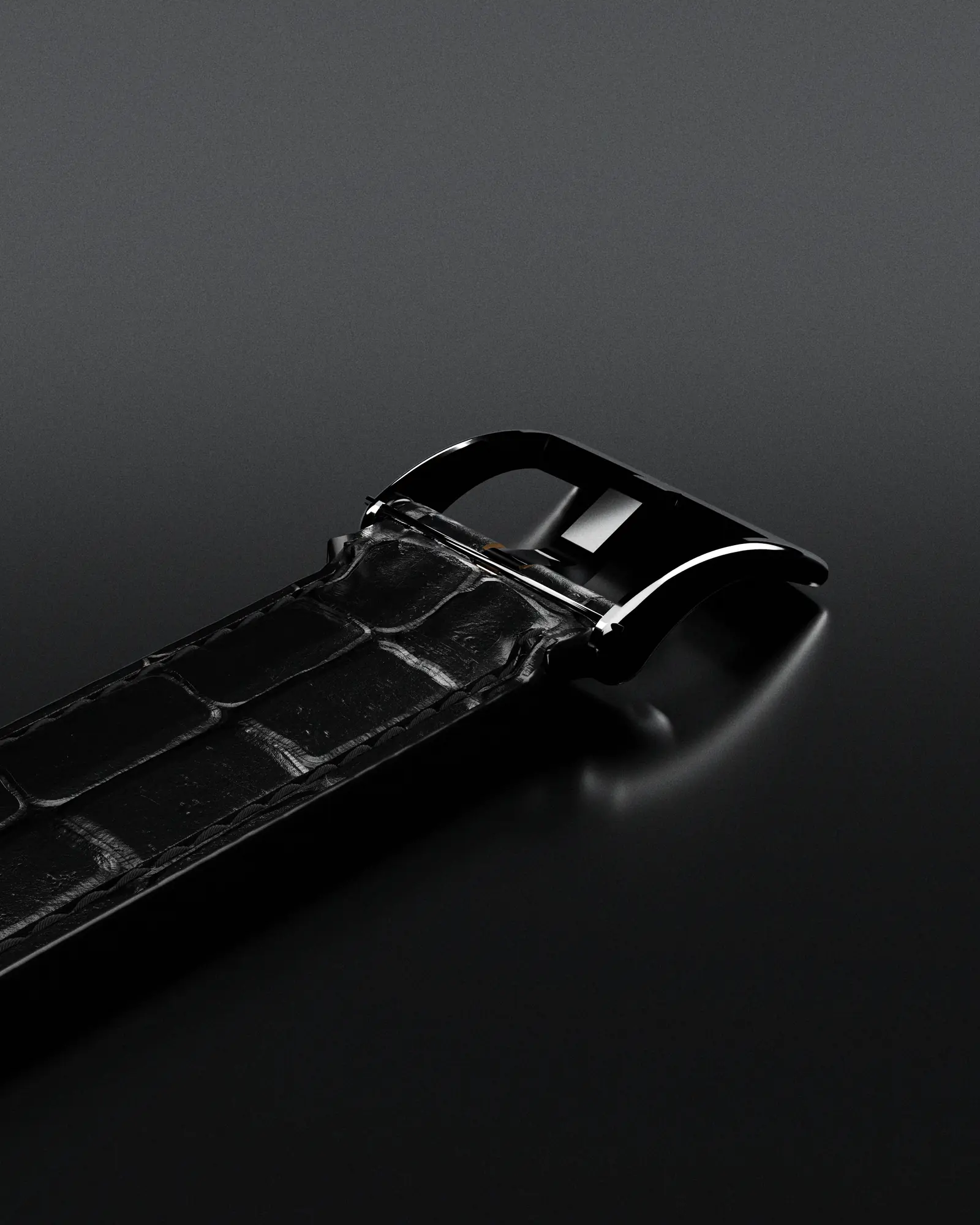
The polished pin buckle engraved ADT, at the end of the strap
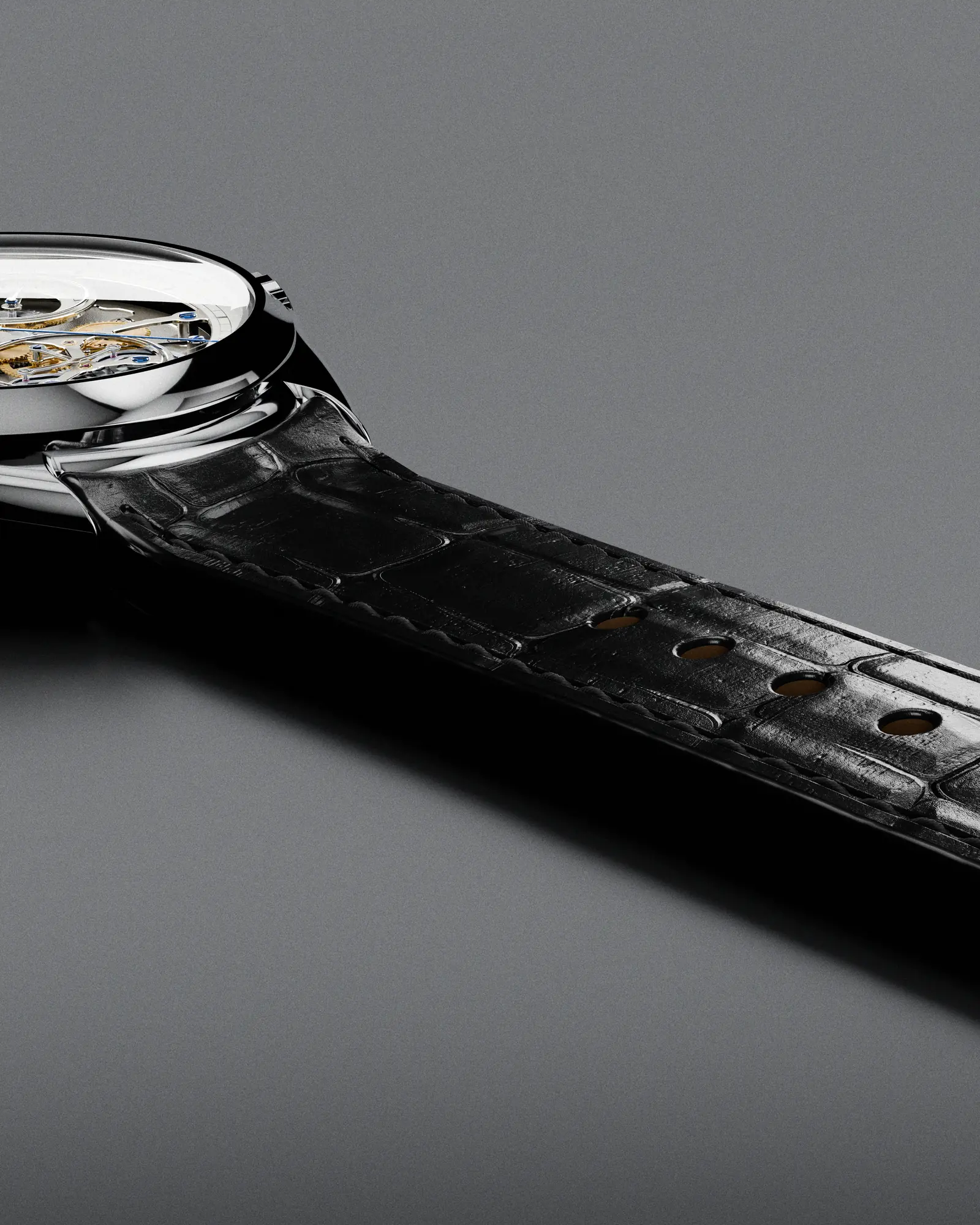
The croc strap and its holes, close, on black acrylic
Étude Nº1 seen level with its crown, on black acrylic

07Specifications

Étude Nº1. Specification sheet.

Display

Seconds
Centre seconds of varying speed
Seconds hand
Blued steel, its tail ending in a hollow ring that frames the sub-dial centres
Hours
Recessed sub-dial at 10:30
Minutes
Recessed sub-dial at 1:30
Aperture
Round, 10 mm, at 6 o’clock: the anchor and its two cams
Date
None

Function

Speed of the hand
From −1× (backwards at normal speed) to +3×
Running backwards
19 % of the time
Changes of direction
46 in 5 minutes
At twelve
Exactly at every full minute, after running forward for at least 2 s
Pattern
Repeats every 5 minutes
Cams
A pair of its own for each of the 25 pieces
Hours and minutes
Driven 1:1 from the base movement

Mechanism

Principle
Differential on the seconds: the hand shows the movement’s seconds plus an offset set by the cams
Carrier
Steered by an anchor resting on two cams
Cams
Periods of 50 s and 42.86 s; 6 and 7 turns in each 5-minute cycle
Cam profiles
Computed so that the offset is zero at every full minute
Position
Dial side of the base movement

Movement

Base calibre
Sellita SW200-1, no date
Winding
Automatic
Frequency
28,800 vph (4 Hz)
Power reserve
38 h (base calibre)
Escapement and going train
Untouched

Case

Material
904L steel
Dimensions
39.7 × 42.1 mm, 10.53 mm thick
Crystal
Domed sapphire
Crown
Centred on the flank
Case back
Closed, mirror-polished, acid-etched

Edition

Series
25 pieces, numbered

08Its own heartbeat

No two alike. Each piece has its own heartbeat.

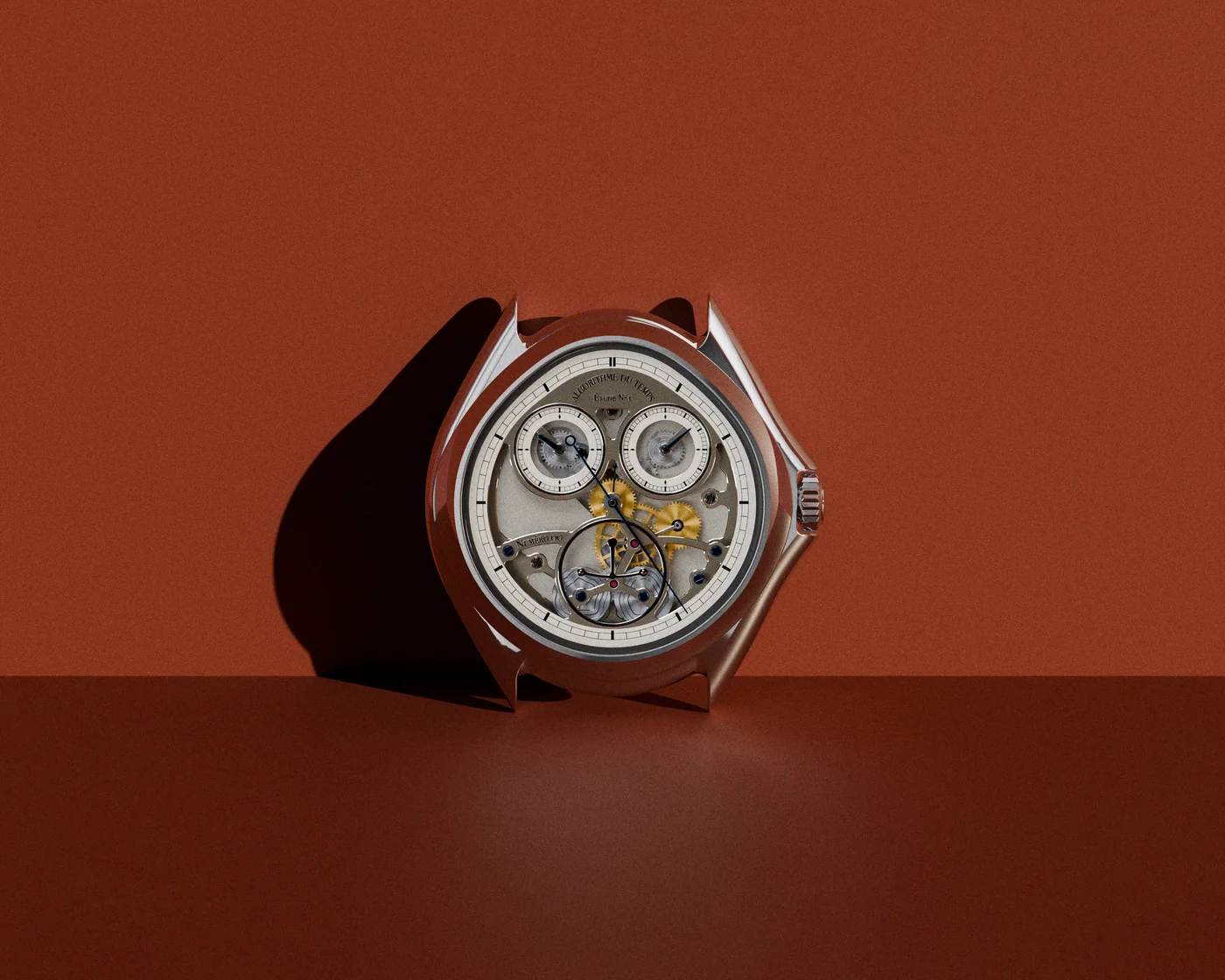
The watch head leaning back against a sunset wall
3×1×0−1×

01 min2345

Étude Nº1. Speed of the hand over the full five-minute cycle.

How the hand moves is written in its cams.

Each of the 25 pieces receives its own pair, computed for it alone. No two watches share the same pattern: each is unique in its randomness.

Every pair is held to the same rules. However its hand wanders, it still crosses twelve exactly at every minute.

The aperture at six o’clock seen close: the two cams under their steel bridge, beside the Numéro plate

The aperture at six o’clock. The two cams that write this piece’s pattern turn inside it.

09The bureau

A study office for lived time.

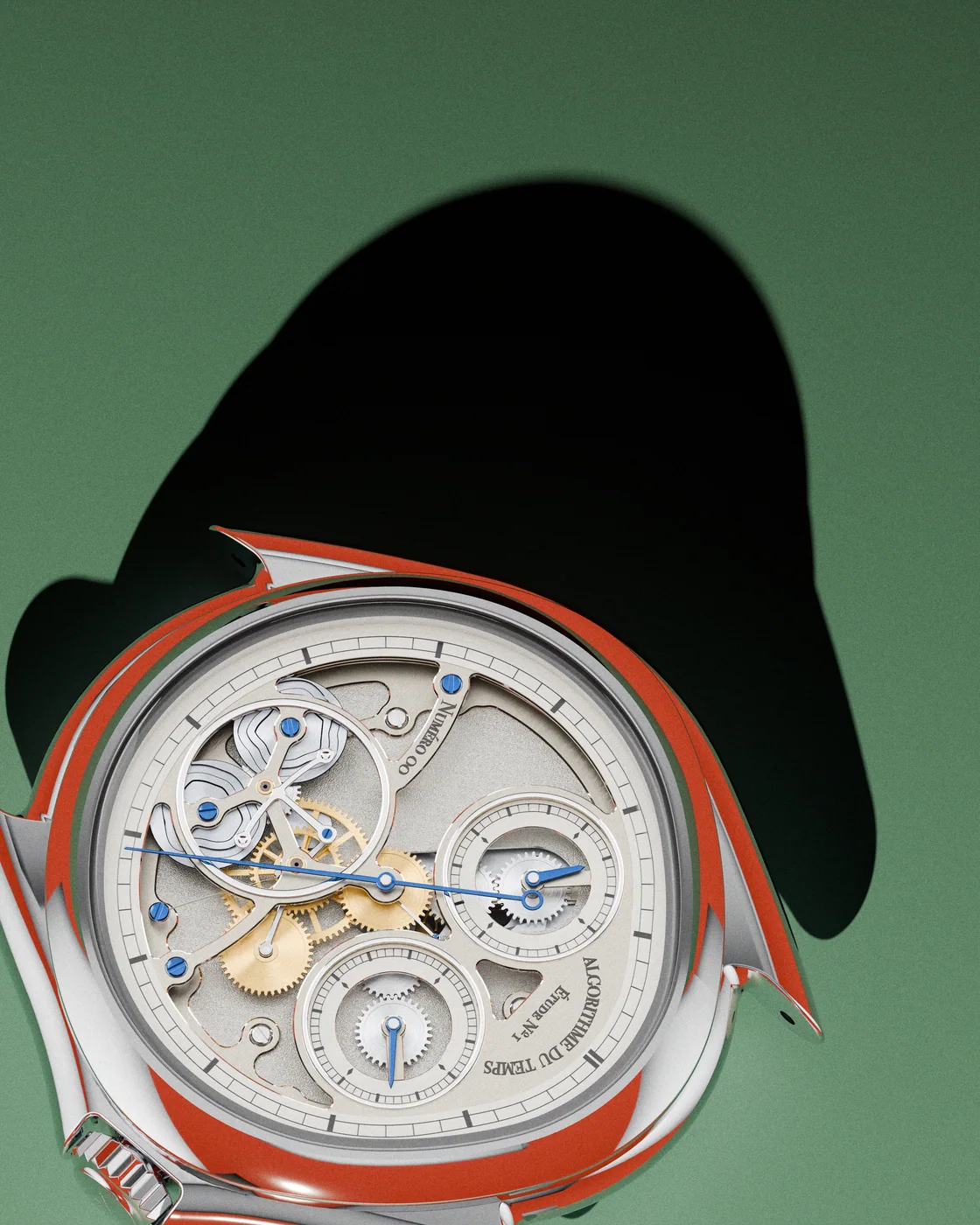
The watch head on a green ground, a long dark shadow falling over it
The watch head in front of a huge low sun
Étude Nº1 floating face on in the dark
The watch head on an ochre ground, its shadow falling to one side
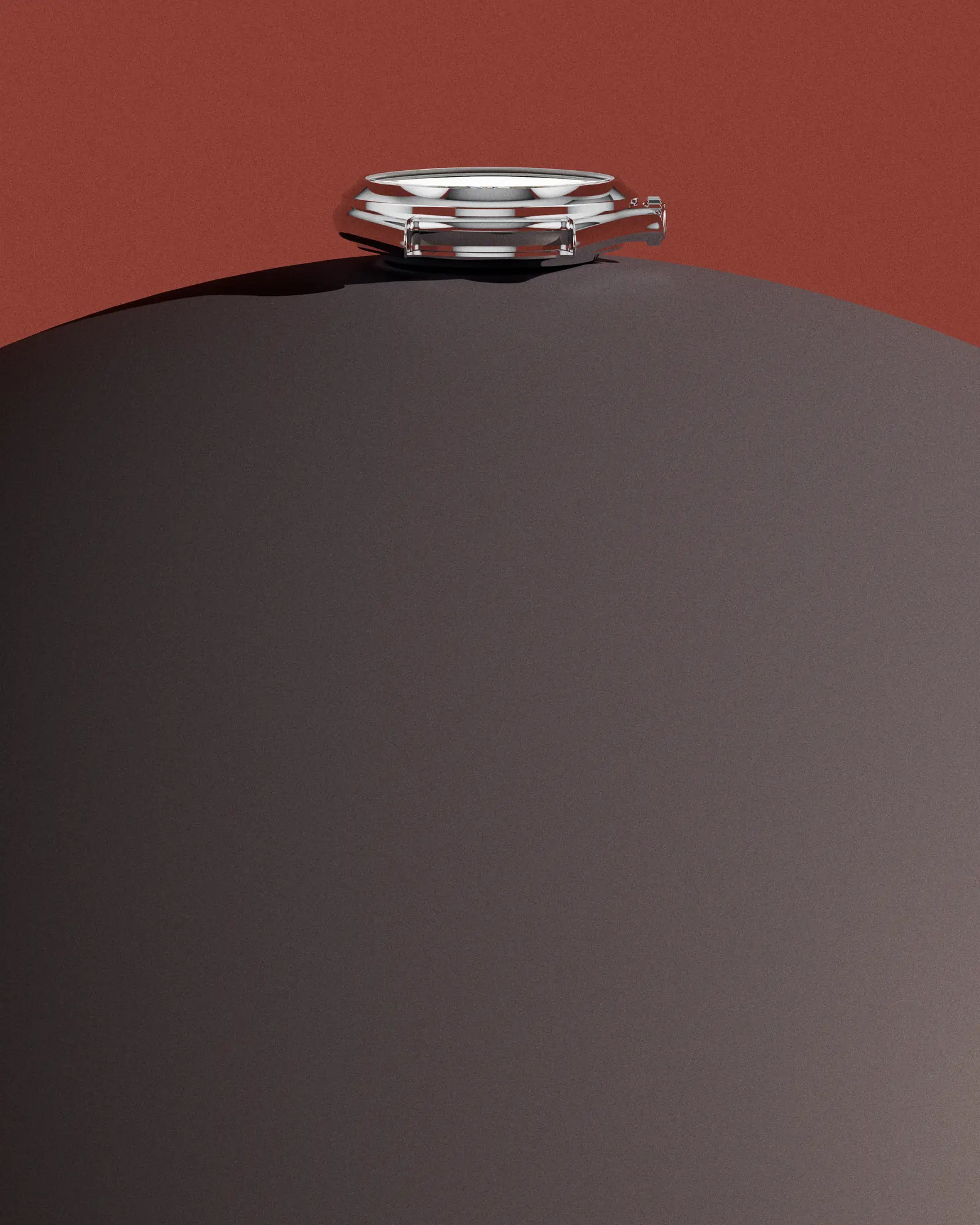
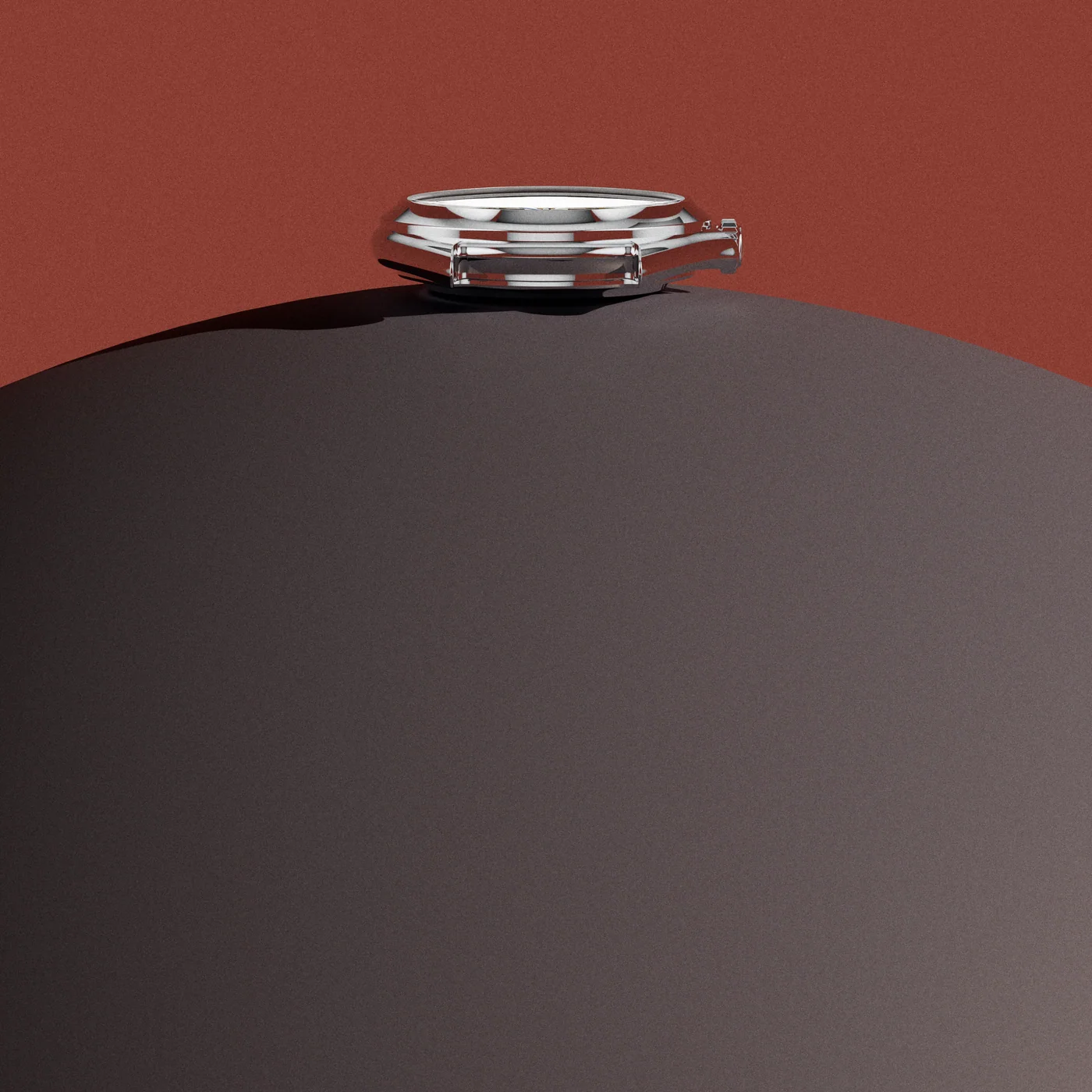
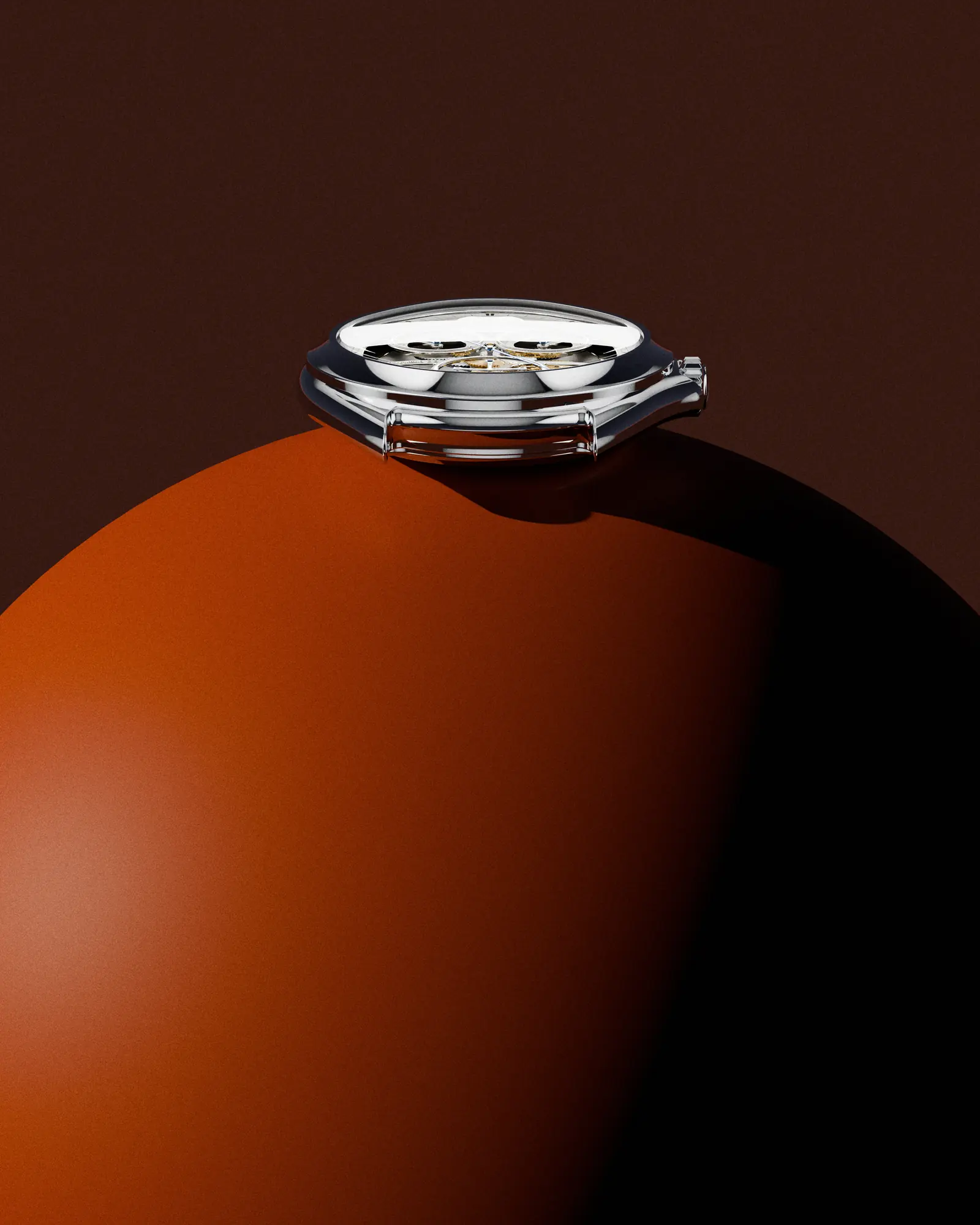
The watch head balanced on top of an ember-red sphere
The watch head lying across an ember ring
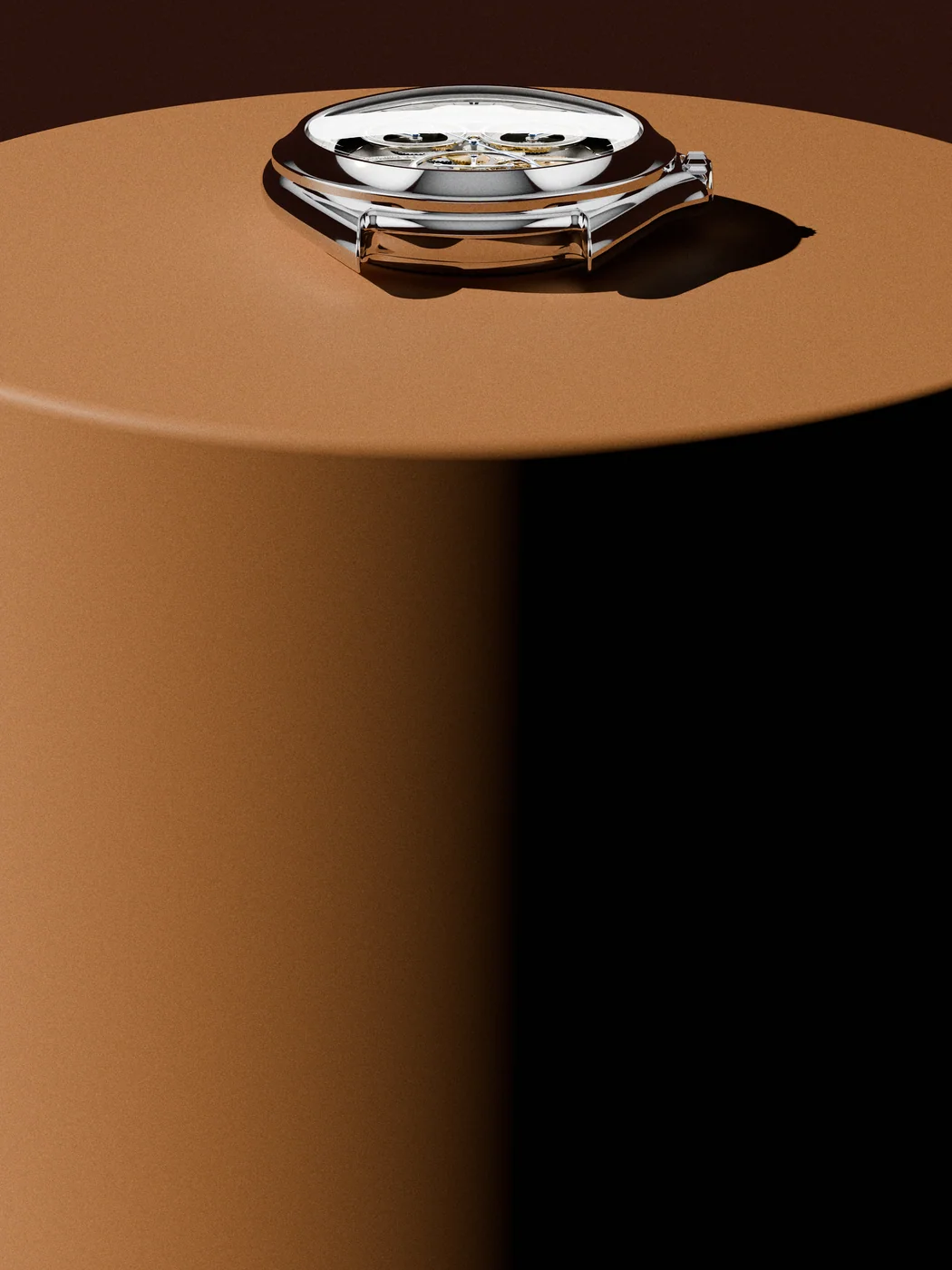
The watch head on a sun-beige drum
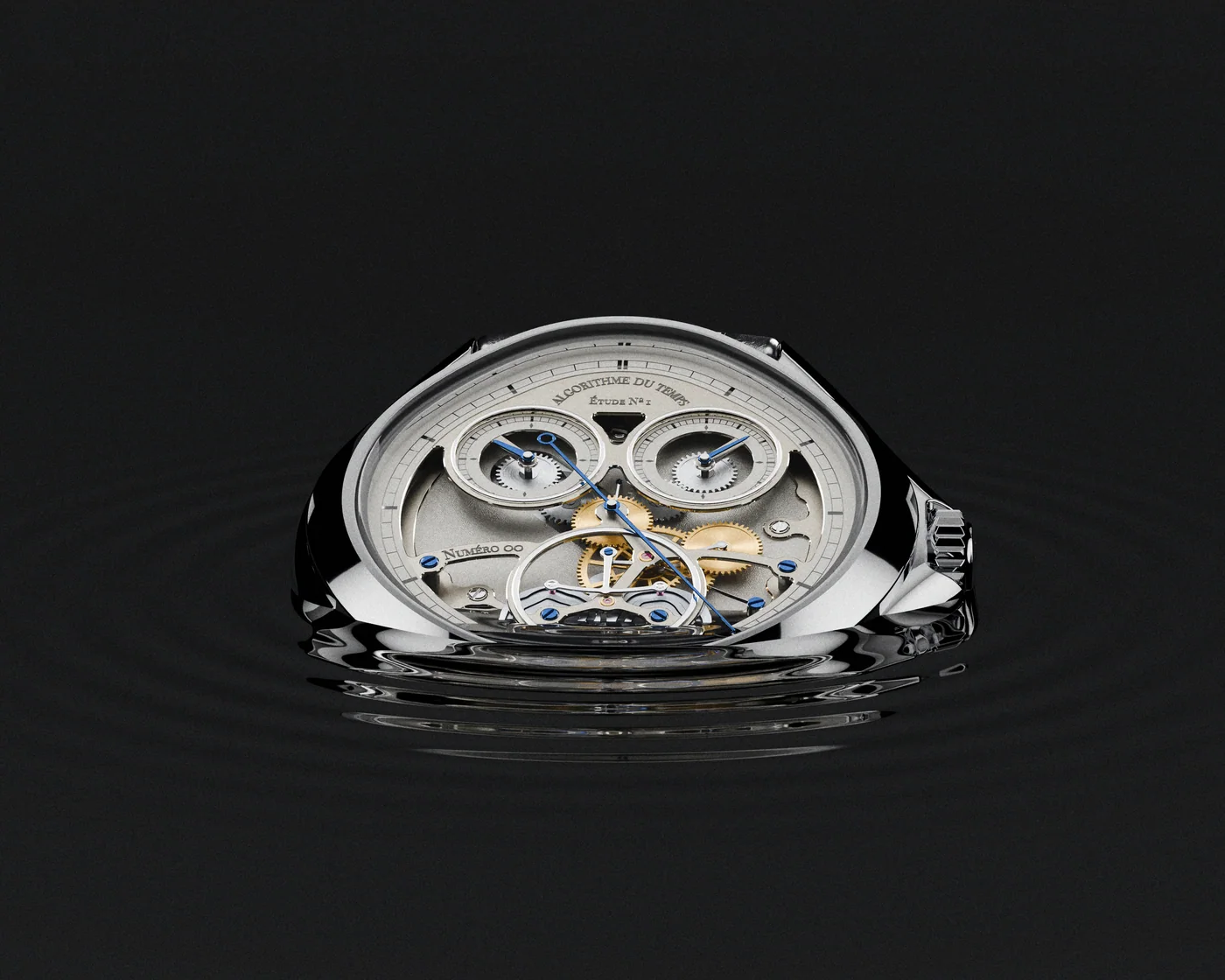
Étude Nº1 half sunk in still black liquid
The dial seen close
The watch head tilted on an ember ground, its shadow long
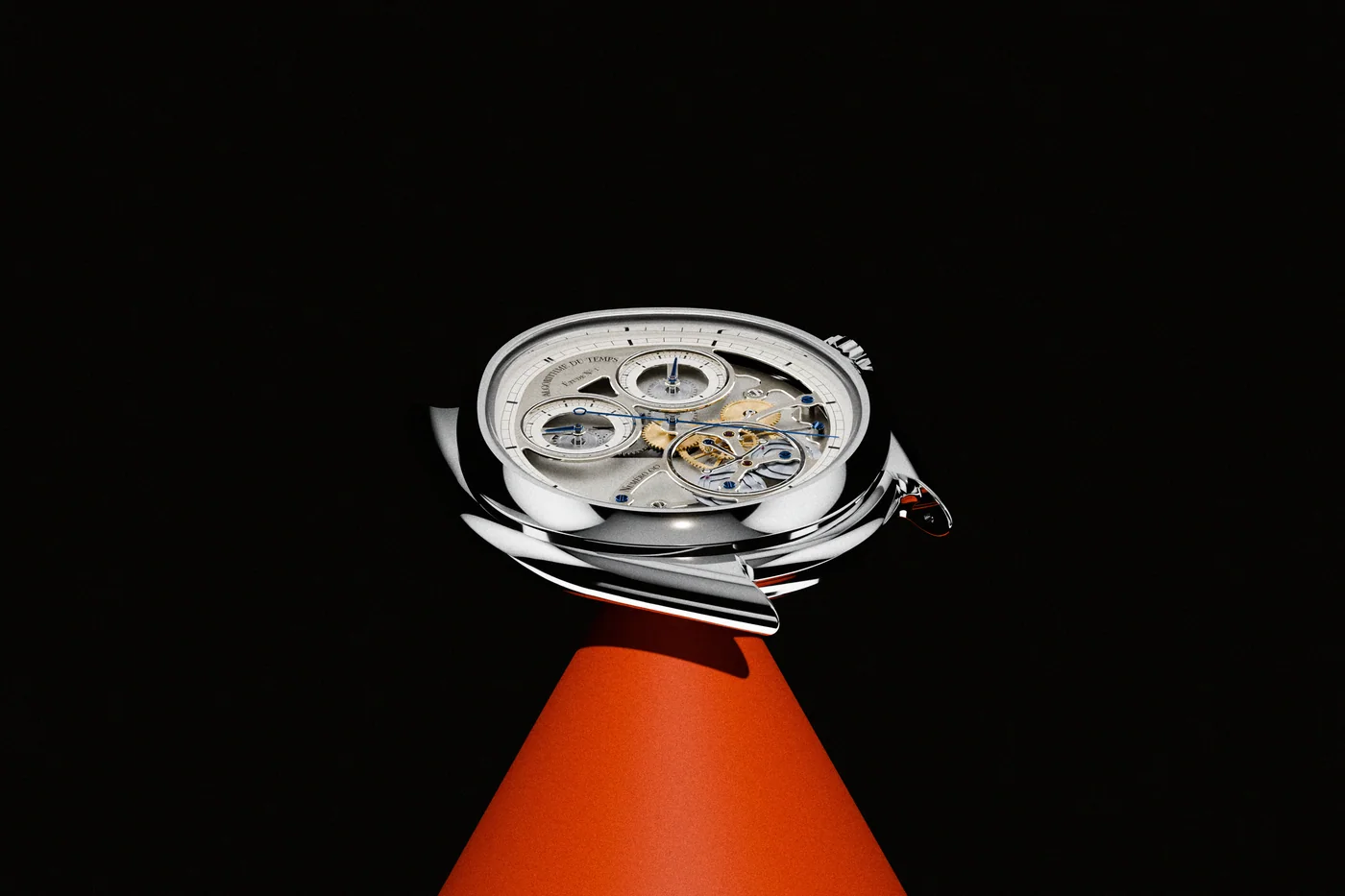
The watch head lit from above on the point of a red cone
The watch head on a huge earth-brown sphere
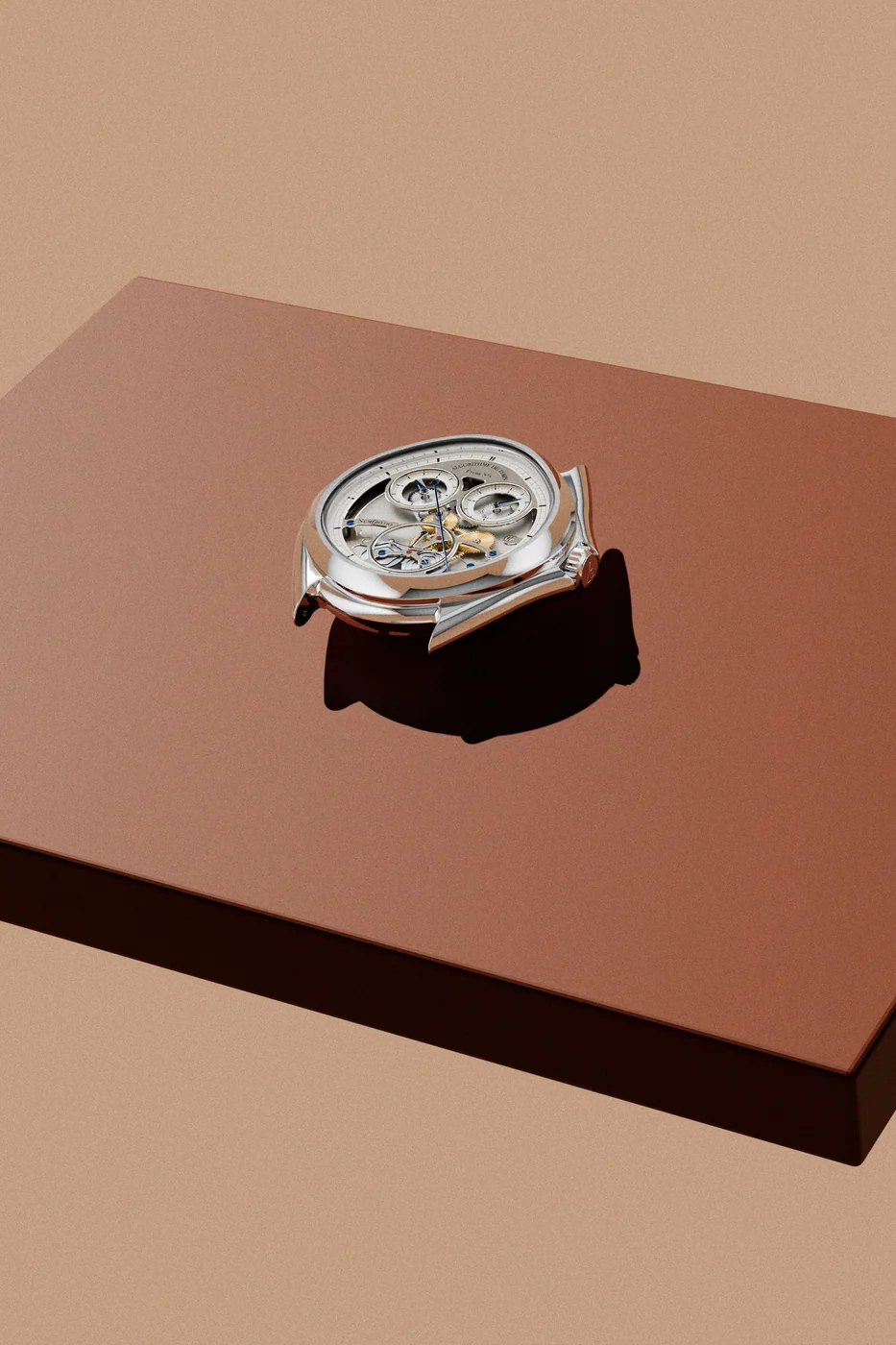
The watch head on a tilted sunset slab
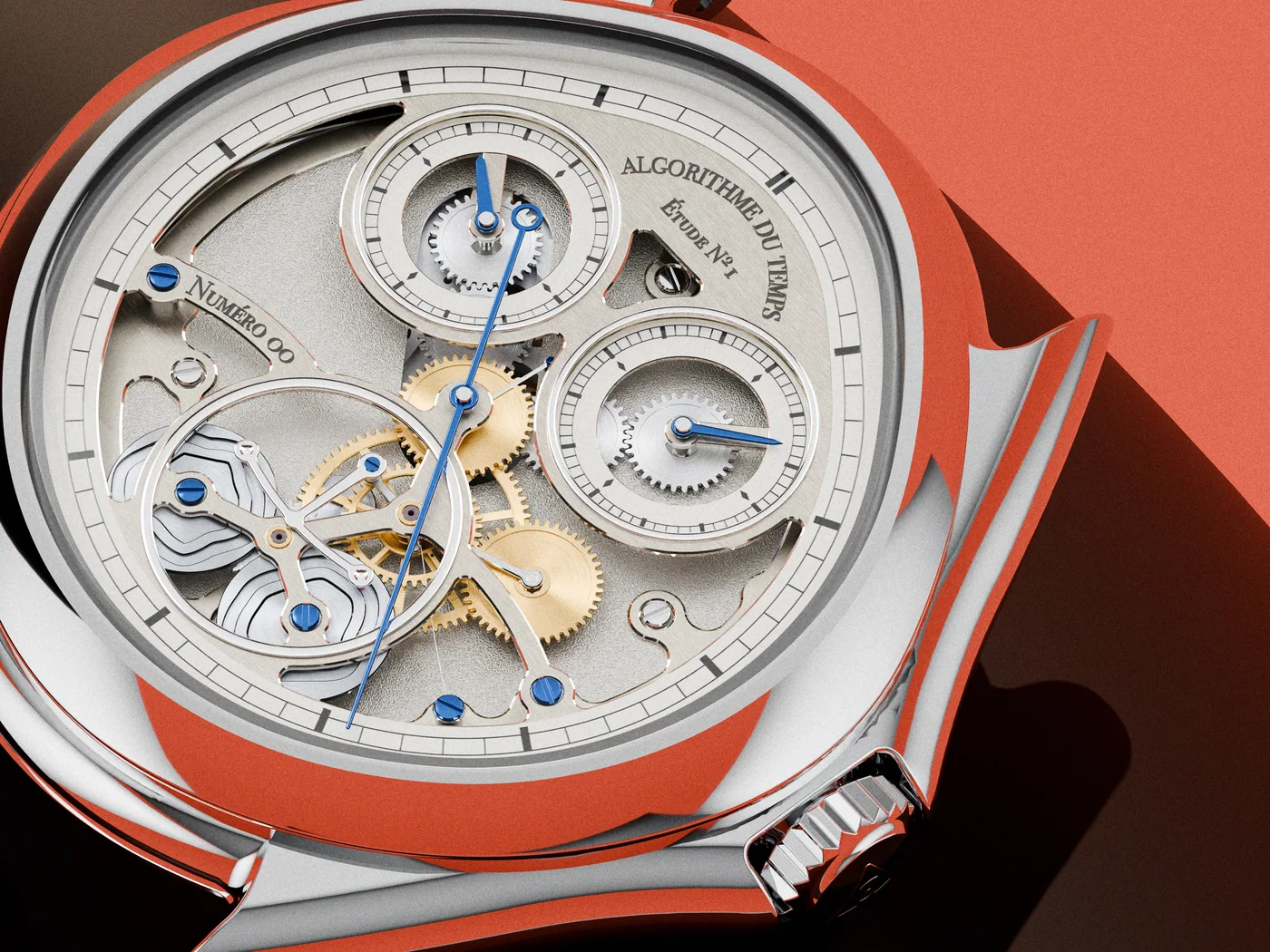
The dial seen close against a coral ground
The two cams in the aperture at six o’clock
The watch head from above, its shadow stretched long across a sunset ground
The watch head leaning back against a sunset wall
The watch head on a red wall, its shadow below it
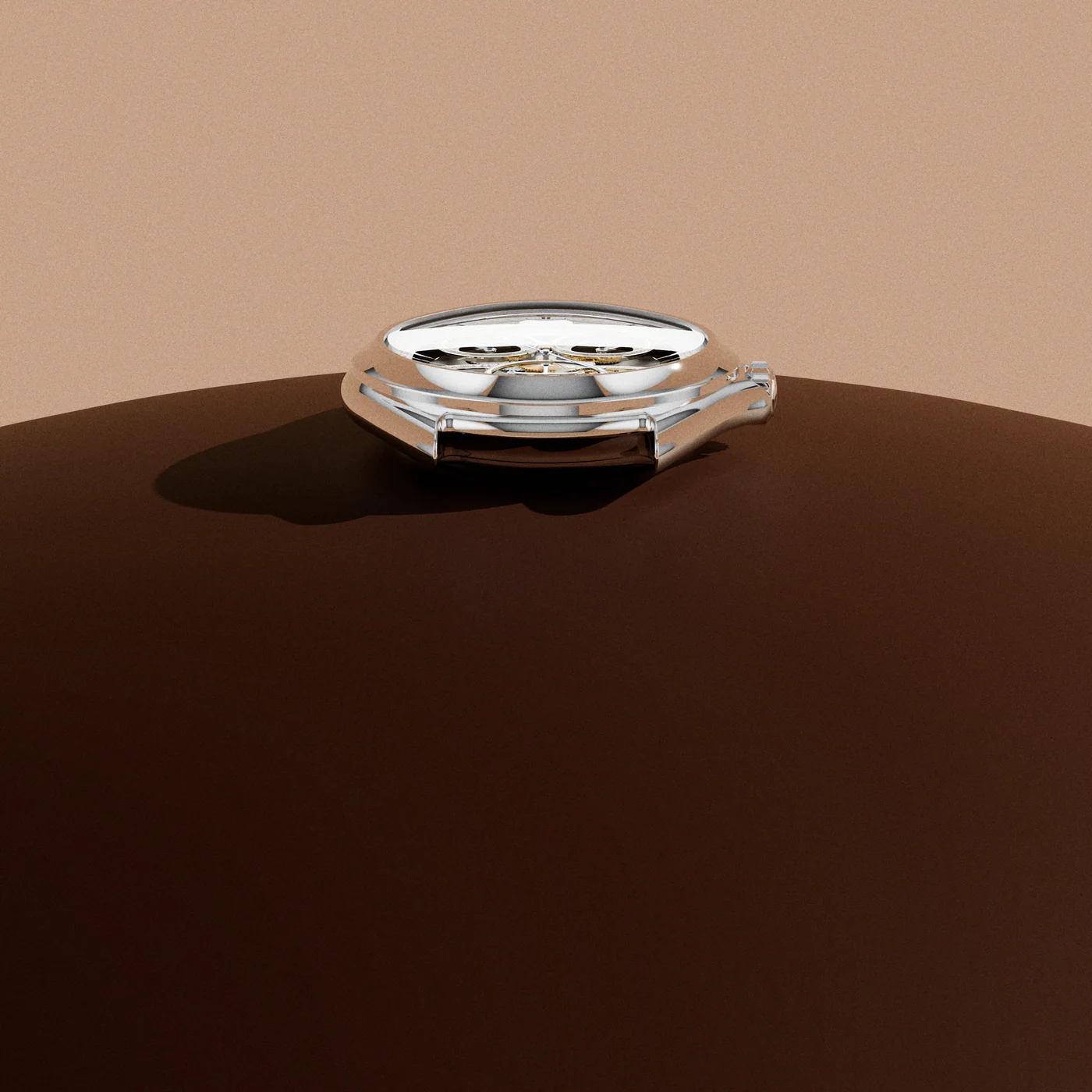
Étude Nº1 hanging from a black ceiling
The watch head resting on a single lug, its shadow long
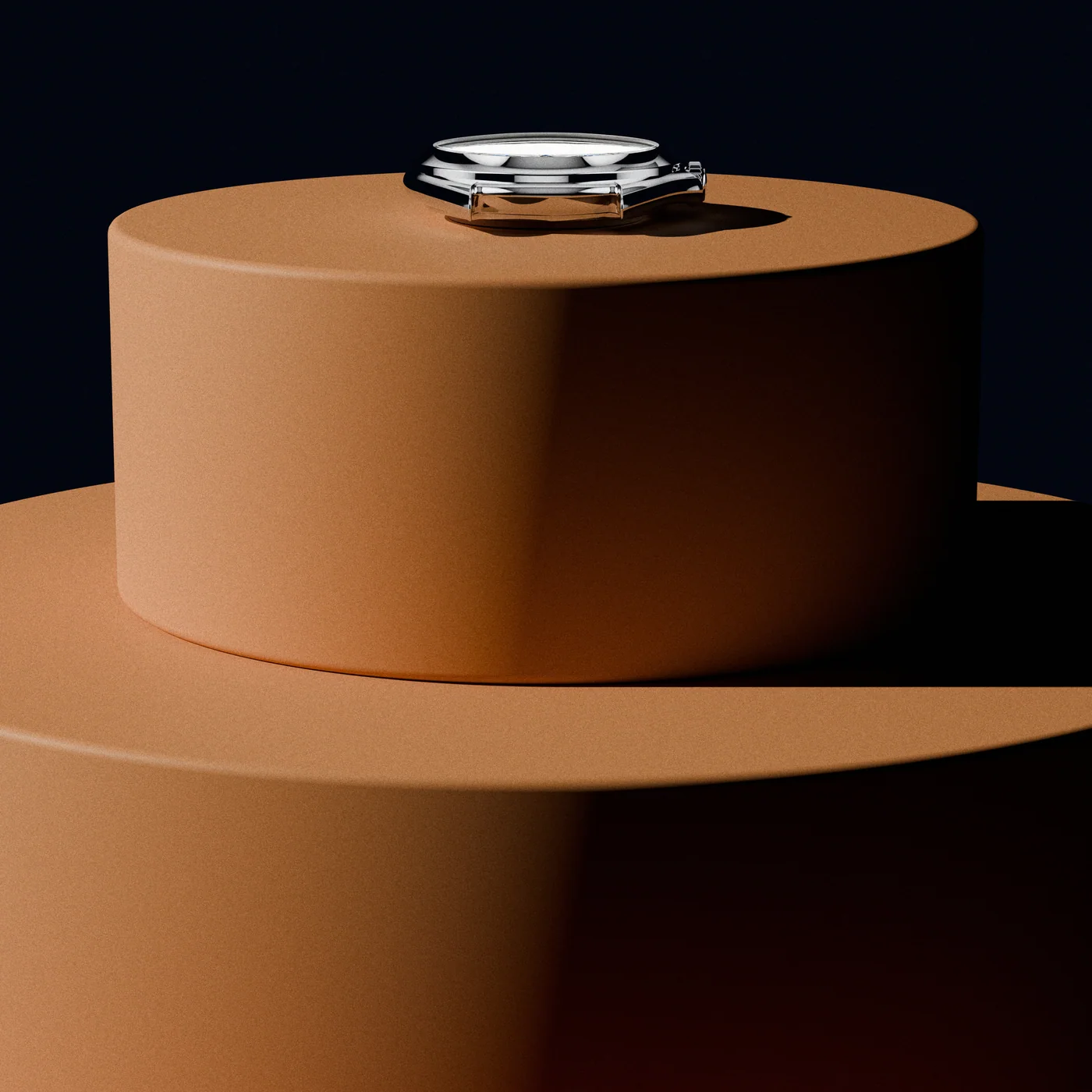
The watch head on three stacked drums
Étude Nº1 on black acrylic, three-quarter view
The watch head hanging like a moon over a dusk sea
The watch head on a dusk dome
The watch head leaning against an ember wall
Étude Nº1 laid out flat, strap and buckle at full length
The closed case back, floating in the dark

What we are

A study office into the human experience of time: the Bureau Privé des Études Expérimentales.

We start from a question, not a calibre: how faithfully can a watch reflect the time we actually live, the second that stretches while you wait and vanishes when you don’t? Each piece is an experiment in bringing mathematical clarity to something that slips through our grasp.

The great houses pursue accuracy and complexity, and they do it superbly. We pursue neither for its own sake. Our watches are mechanical and exact, but that is the means, not the point.

What we believe

Algorithme du Temps lives in the tension between its two words: the logic of the algorithm, the elusiveness of time. We try to control what cannot be controlled, as an alchemist would, turning something abstract into an object you can hold.

  • Innovation. New ideas that join art, science and function, and question the norms of fine watchmaking.
  • Craftsmanship. Precision and care in every part, a mastery that grows with every piece.
  • Mystery. Some things are better discovered than explained.
  • Wonder. Each piece should leave you amazed at what a watch can be.
  • Rarity. Small, numbered series, each piece made for one person.

10Research

The question behind the watch.

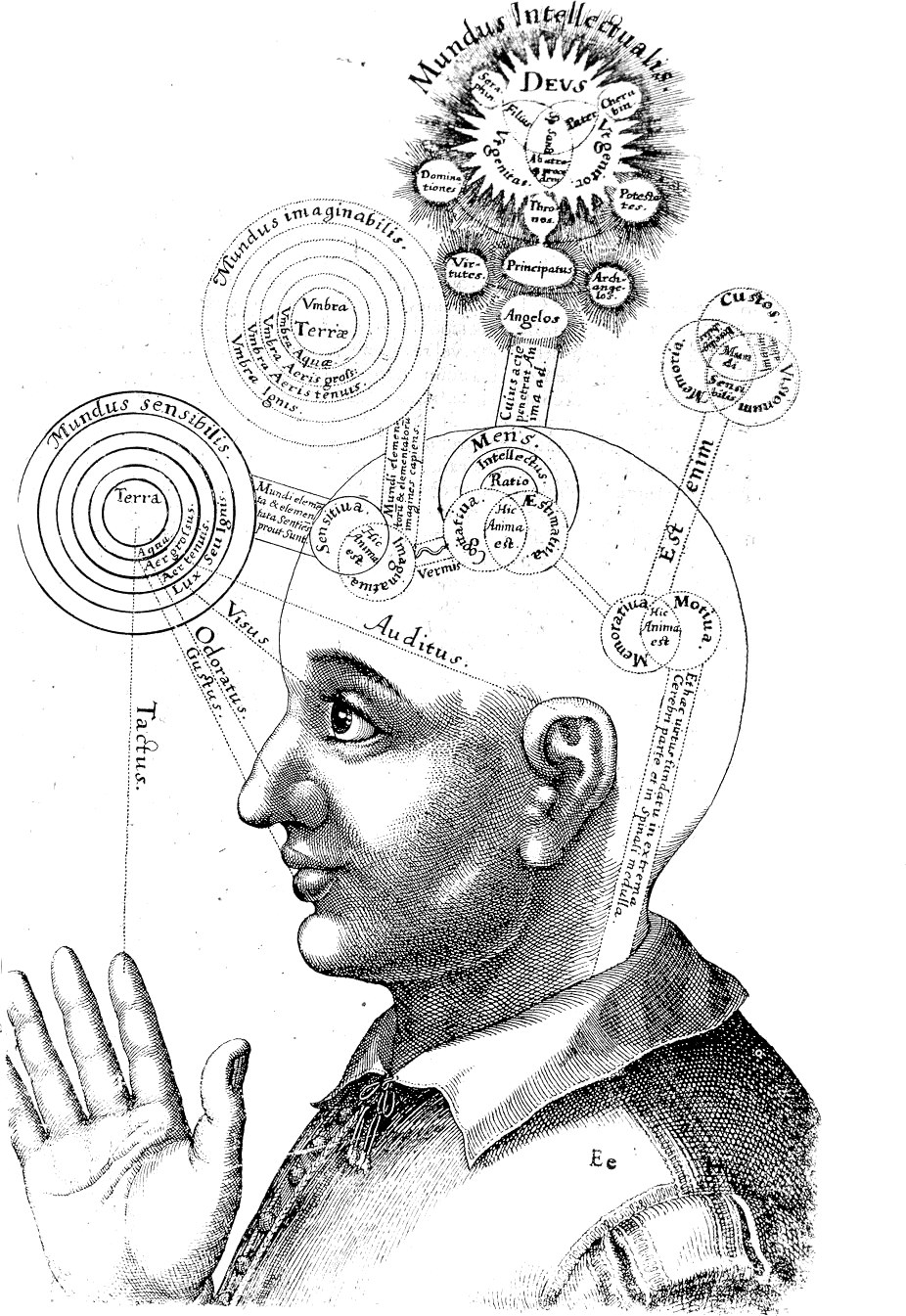
Engraving by Robert Fludd, 1619: the worlds of the senses, imagination and intellect mapped onto a head
The watch head balanced on top of an ember-red sphere at dusk
Robert Fludd, Utriusque Cosmi … Historia, vol. II, 1619. The worlds of the senses, the imagination and the intellect, mapped onto one head.

Further reading

  1. Augustine, Confessions XI.27.36: “in te, anime meus, tempora metior” (“It is in thee, my mind, that I measure times”, tr. E. B. Pusey).
  2. H. Bergson, Essai sur les données immédiates de la conscience (1889), ch. II; tr. F. L. Pogson, Time and Free Will (1910).
  3. Droit-Volet S. & Meck W. H. (2007), Trends in Cognitive Sciences 11(12):504–513; Gable P. A. & Poole B. D. (2012), Psychological Science 23(8):879–886.
  4. Witowska J., Schmidt S. & Wittmann M. (2020), Acta Psychologica 205:103061.
  5. Stetson C., Fiesta M. P. & Eagleman D. M. (2007), PLoS ONE 2(12):e1295.
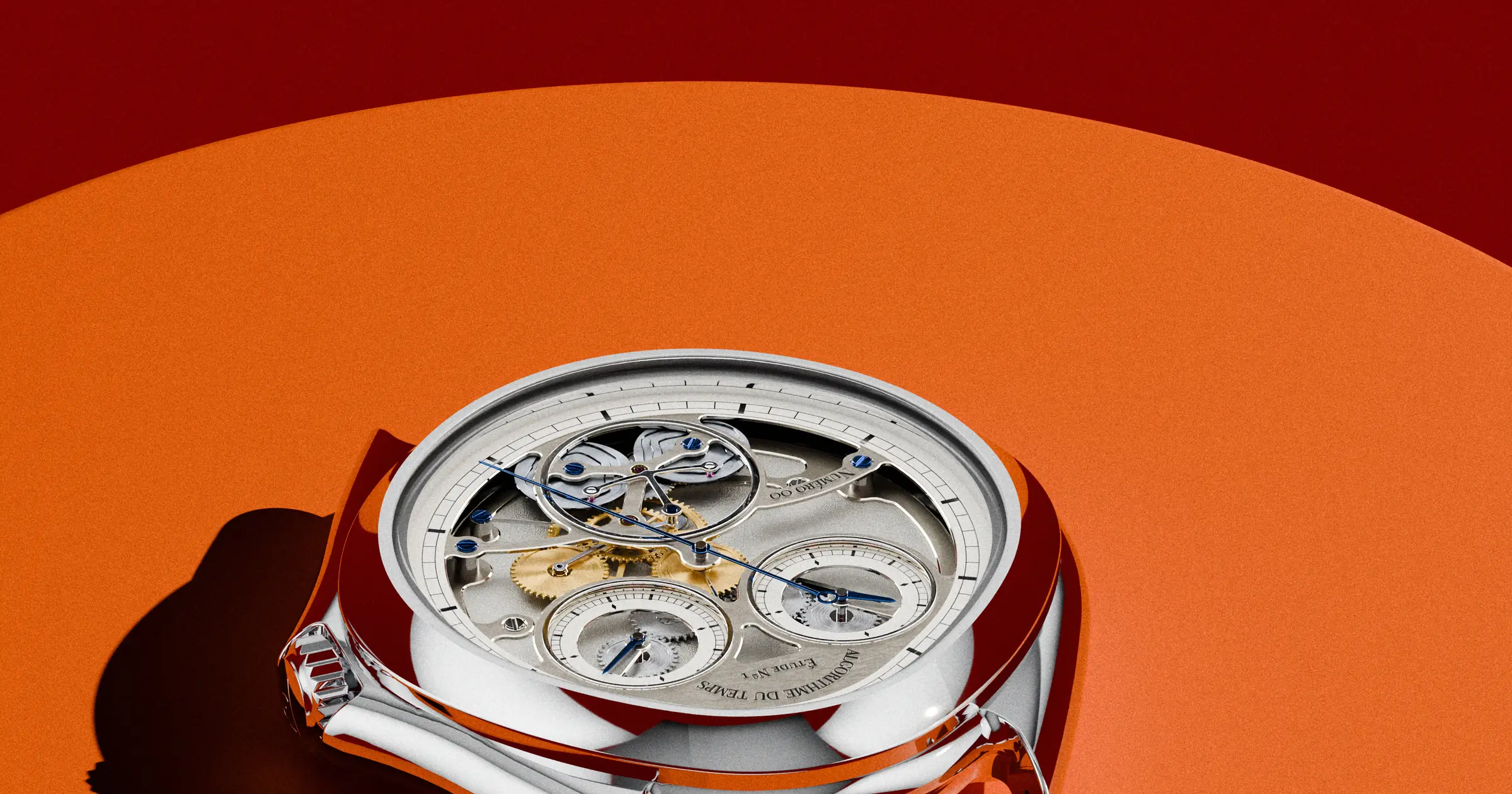
The watch head on an orange disc, a dark red ground

11The creator

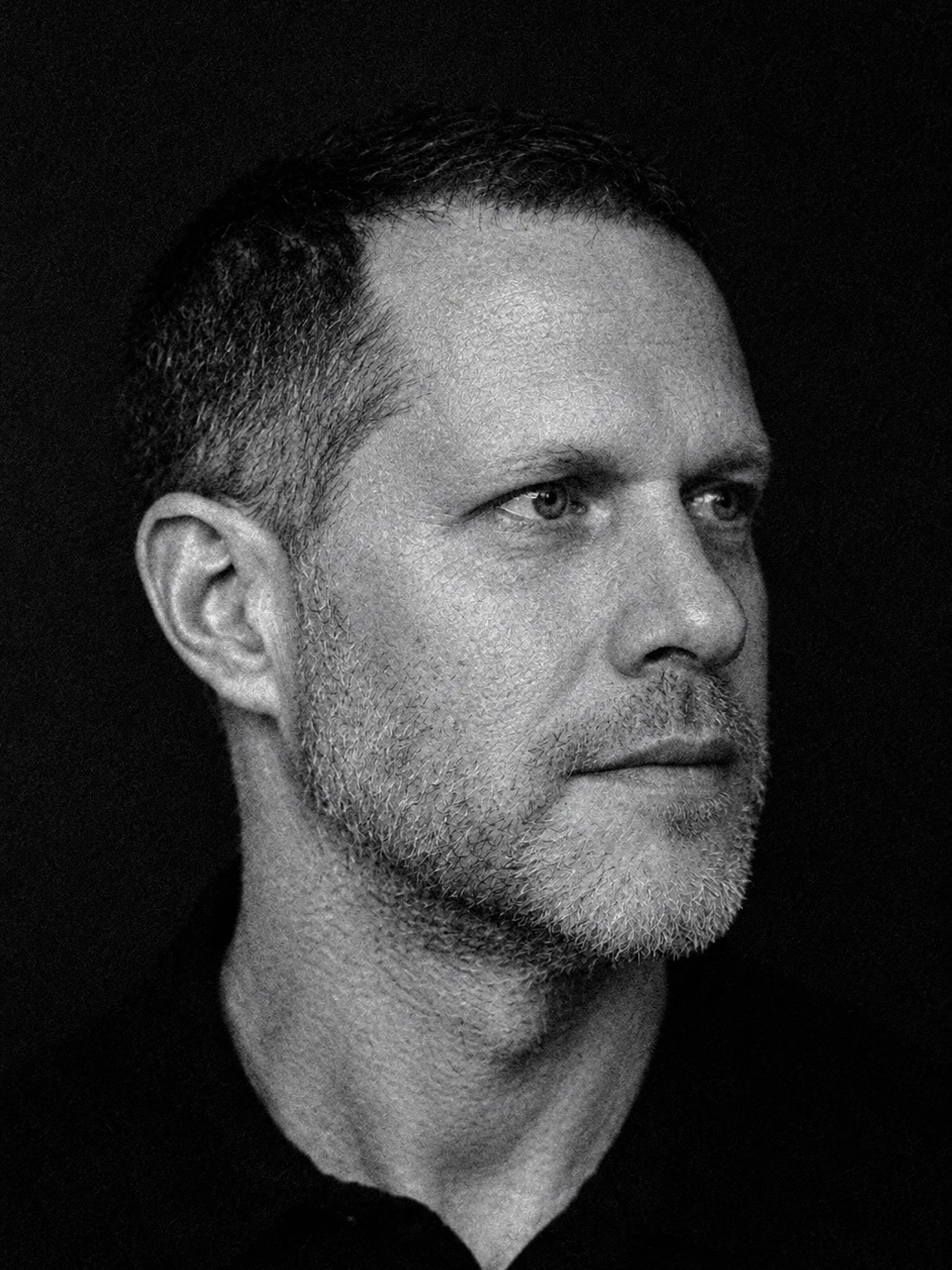
Nadim Elgarhy, founder.

Nadim Elgarhy, a black-and-white portrait
“Algorithme … relates to the very definite, predictable, logical, mathematical, while temps … is elusive, mysterious, misunderstood, we try to control it but we can’t.”

A degree in computer engineering and algorithms. A research interest in how we perceive time.

He founded Algorithme du Temps on the gap between its two words, and wrote the two papers that frame its work. Rêveries des Secondes turns the question at the heart of The Future of Time into a mechanism.

A watch that shows the time we live, and stays exact every minute.

12The film

The idea, told by its creator.

Look at a clock’s seconds hand, and for an instant, it seems to stop.

Neuroscientists call it chronostasis. The moment you look, your mind stretches it.

Our sense of time is not constant. Some seconds slip past unnoticed. Others stretch toward infinity.

Yet every watch we wear marks each one exactly the same.

The watch head hanging like a moon over a still dusk sea

13Register

Register your interest.

The watch head on a tilted sunset slab, a sun-beige ground

Leave your name and email, and we will write to you with news of Rêveries des Secondes.

Thank you. Your interest is registered; we will write to you.

We keep your name, email and message only to contact you about Rêveries des Secondes. They are stored on our own web host; we never sell, rent or share them. Every email has an unsubscribe link, or write to privacy@algorithmedutemps.com and we will delete them.

14Questions

What people ask.

What exactly does the seconds hand do?

It changes speed continuously. It slows, stops for an instant, runs backwards at the speed of an ordinary seconds hand, then races forward at up to three times normal speed. At every full minute it crosses twelve exactly on time.

Is it random?

No. It is fully mechanical and fully determined. Two cams, turning in 50 and 42.86 seconds, set every movement of the hand; they only line up again after five minutes, so the pattern repeats every five minutes. It feels random because nobody watches a seconds hand that long.

Will every piece move the same way?

No. Each of the 25 pieces receives its own pair of cams, computed for it alone. Every pair is held to the same rules, and every hand crosses twelve exactly at every minute.

Is the watch still accurate?

Yes. The hours and minutes are driven directly from the base movement, whose escapement and going train are untouched, and the seconds hand is exact at every full minute. The module changes how the seconds are shown, not how the watch keeps time.

How does it work?

A pinion on the movement’s seconds drives a small differential. The hand shows the movement’s own seconds plus an offset, which an anchor steers as it rests on two cams. You can watch the anchor and the cams through the aperture at six.

Which movement does it use?

A Sellita SW200-1 without date: automatic, 28,800 vibrations an hour. The module sits on its dial side, and was designed to adapt to other calibres.

Has this been done before?

Clockmakers have played with the seconds: the Swiss railway clock waits at twelve, the Corpus Clock in Cambridge slows, stops and catches up every five minutes. To Nadim Elgarhy’s knowledge, no seconds hand on the wrist slows, stops, runs backwards, races, and crosses twelve exactly every minute.

What does the name mean?

A rêverie is a mind left to wander. Rêveries des Secondes: the seconds, daydreaming.

I write about watches. How do I get in touch?

Write to press@algorithmedutemps.com. The press kit, with images and the full specifications, is in the press section below.

The case and crystal seen low from three-quarter, on black acrylic

15Press

Rêveries des Secondes is a seconds complication designed by Nadim Elgarhy for Algorithme du Temps. The press kit holds the story, the specifications, the research behind it and high-resolution images, which may be used for editorial coverage, credited “Algorithme du Temps”.

Étude Nº1 on black acrylic, its croc strap across the frame
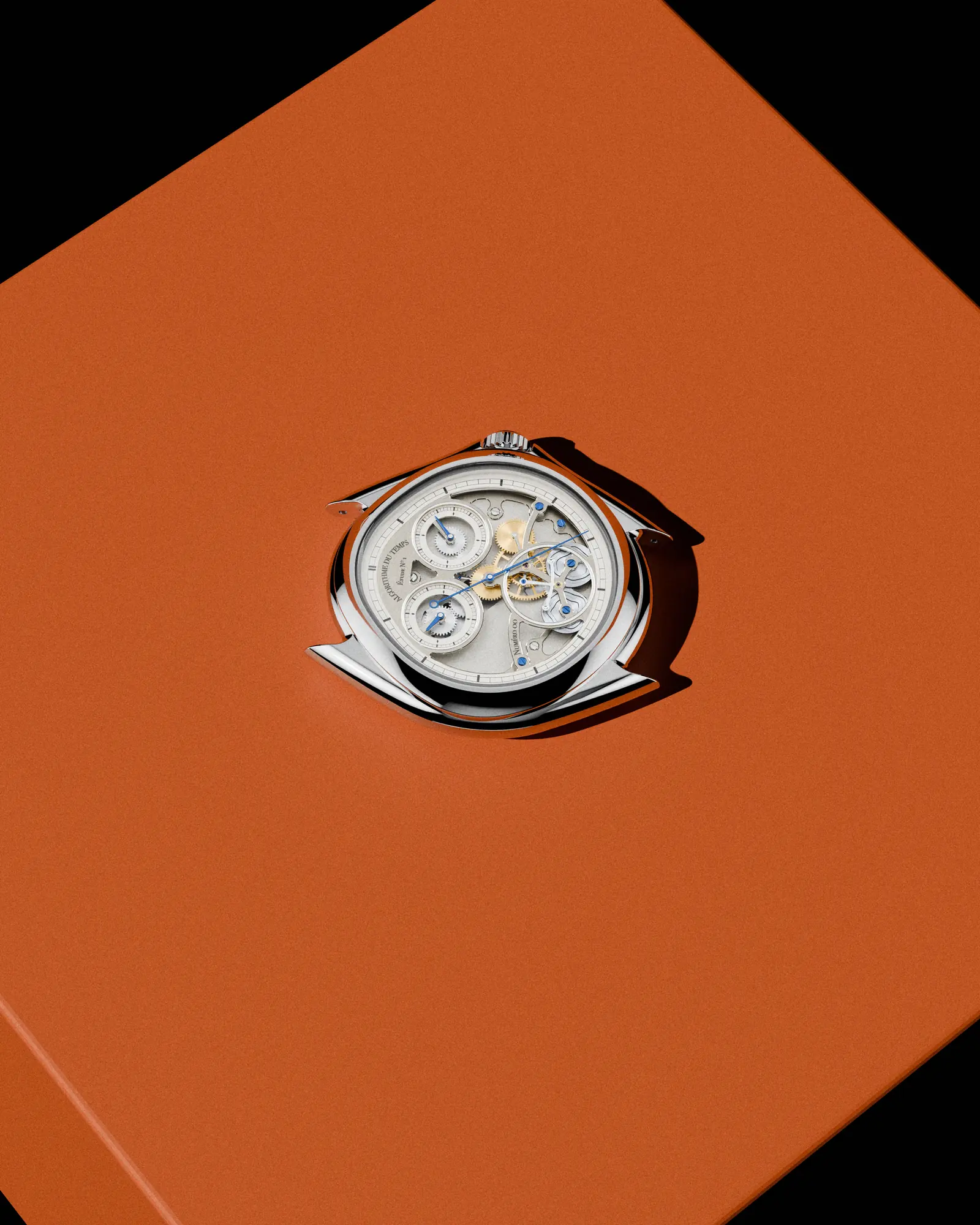
The watch head on an orange square, a black ground